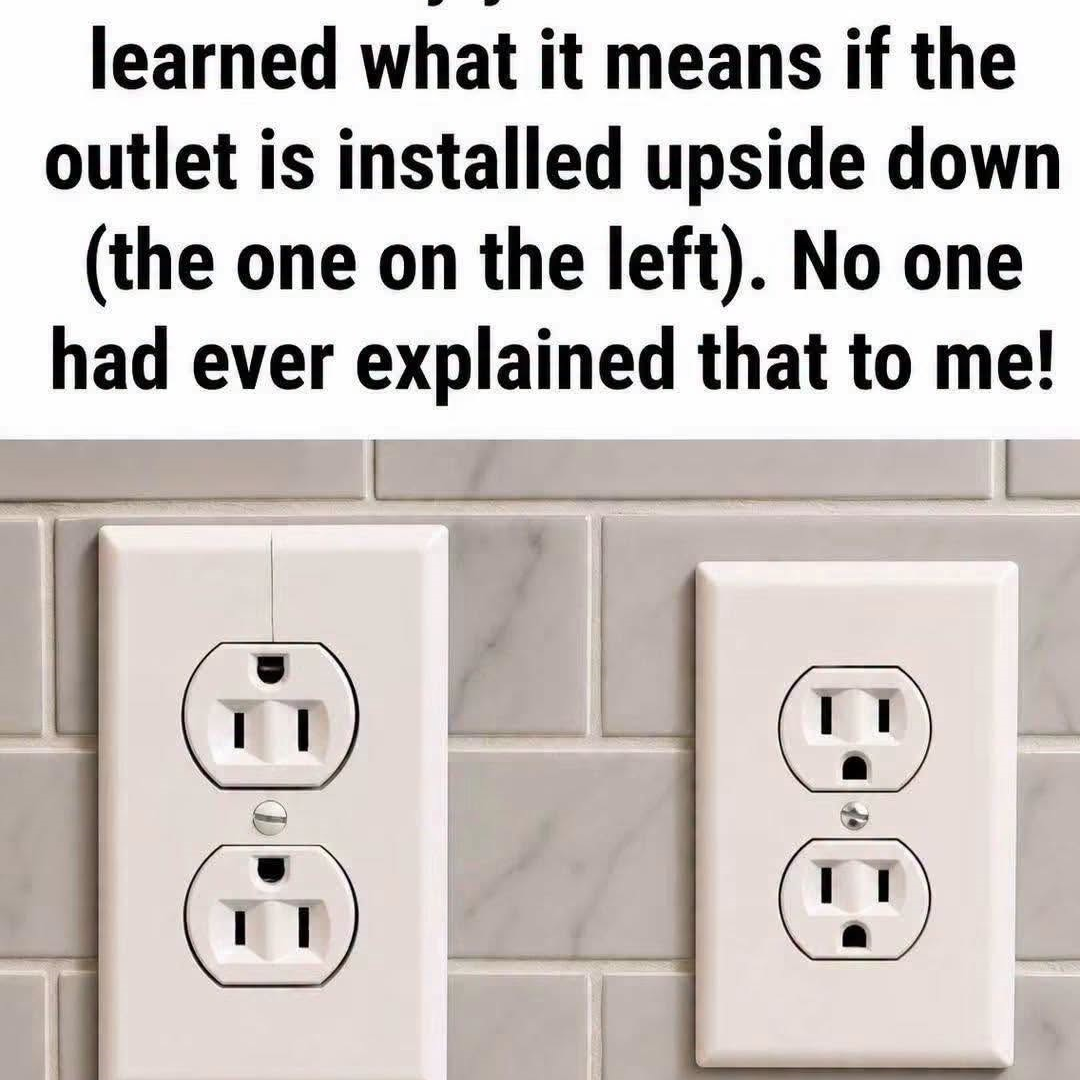
What It Really Means When an Outlet Is Installed “Upside Down” (Ground-Up vs. Ground-Down)
ground pin up. The right outlet is ground-down or ground pin down. Both are standard 120-volt receptacles. Both can be wired correctly. Both can be safe. The difference is orientation, and orientation is largely a matter of convention, local practice, installer preference, and—in some settings—a deliberate safety policy.
The phrase “upside down” is subjective. If you grew up seeing ground-down outlets, ground-up looks upside down. If you grew up in a building where ground-up was standard, the ground-down outlet might look odd. Neither orientation is inherently more “normal” than the other. What matters far more is whether the outlet is wired correctly, grounded properly, protected by the right circuit breaker, and used safely.
This guide explains what the “upside down” outlet really means, where the convention came from, why some electricians and hospitals prefer ground-up, what the electrical code actually requires, which myths are false, and when orientation genuinely matters for safety. It also explains how to inspect an outlet properly, when to call an electrician, and why “ground up” is not a universal sign of a problem.
The Short Answer: “Upside Down” Usually Means Ground-Up
The outlet on the left is not a special “hospital outlet,” not a 240-volt outlet, not a switched outlet, and not necessarily a sign of amateur wiring. It is a normal duplex