The Truth About Upside-Down Electrical Outlets: Why Some Are Installed Ground-Up
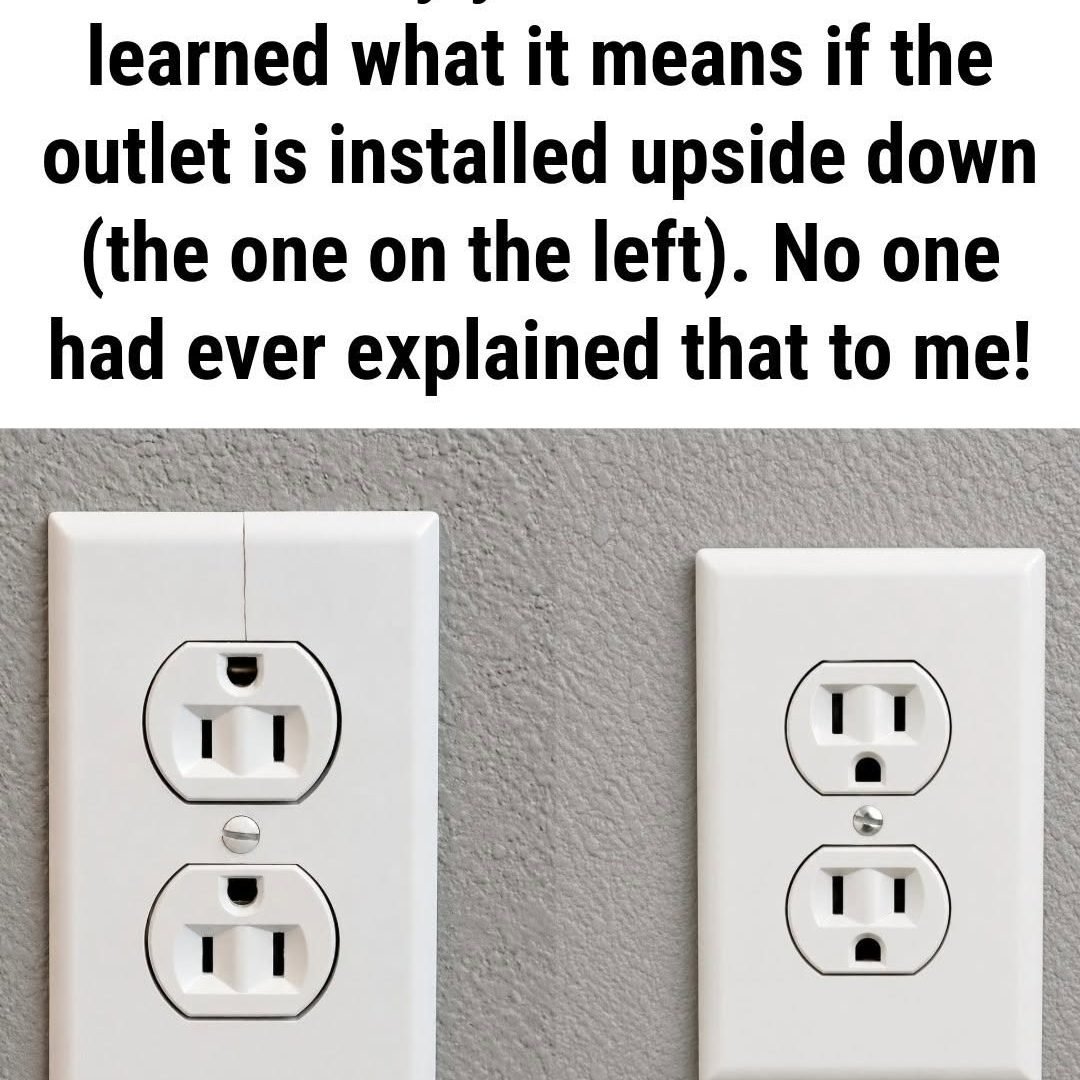
If you have ever looked closely at the electrical outlets in a room and noticed that one is installed differently from the rest, you are not alone. A viral social media post recently highlighted this exact curiosity, featuring two standard outlets side-by-side: one with the ground pin hole at the bottom, and one with it at the top. The caption reads, “I was today years old when I learned what it means if the outlet is installed upside down (the one on the left). No one had ever explained that to me!”
The post taps into a common household mystery. For many people, the standard “right side up” orientation has the two flat slots (hot and neutral) on top and the round ground pin hole at the bottom. When an outlet is flipped with the ground pin at the top, it is often assumed there must be a secret code, a mistake by the electrician, or a special function.
The reality is less mysterious but rooted in safety codes, practicality, and personal preference. There is no single universal rule that dictates one orientation over the other for residential homes, but there are specific, valid reasons why an electrician might choose to install an outlet “upside down.” Here is a detailed breakdown of why this happens, what it means, and whether you should change yours.
The Two Orientations Explained
To understand the debate, we need to define the two orientations:
Ground Down (The Standard): The round ground pin hole is at the bottom. This is the most common orientation in North American homes. It is aesthetically pleasing to most people, and it aligns with the text or logos printed on standard outlet faceplates.
Ground Up (“Upside Down”): The round ground pin hole is at the top. The two flat slots are at the bottom.
While the “ground down” orientation is the most familiar, the “ground up” orientation is actually the preferred standard in many commercial and healthcare settings. Here is why.
Reason 1: The “Falling Object” Safety Theory
The primary reason for installing an outlet with the ground pin facing up is safety, specifically regarding what happens if a plug is partially pulled out of the socket.
When an appliance is plugged in, the plug blades (hot, neutral, and ground) are exposed. If the plug is not fully inserted—perhaps it is loose, or someone has pulled it halfway out—there is a gap between the plug and the outlet faceplate.
If something metallic falls into that gap (like a piece of jewelry, a metal cooking utensil, or a tool), the outcome depends on the orientation:
Ground Down: The falling metal object is most likely to hit the two flat blades (hot and neutral) first. Because the hot blade is live, this can cause a massive short circuit, a shower of sparks, and potentially a severe shock to anyone touching the object or the appliance.
Ground Up: The falling metal object will hit the round ground pin first. The ground pin is designed to safely route electricity away into the earth. This means the object will hit a safe pathway before it ever touches the live electrical blades, dramatically reducing the risk of shock and preventing a dangerous short circuit. The breaker may still trip, but the risk of injury is much lower.
This safety logic is precisely why many hospitals, commercial kitchens, and industrial facilities require ground-up installation. It is seen as the “safer” orientation.
Reason 2: The “Switched Outlet” Indicator
In many homes, particularly in older construction or areas with limited ceiling lighting, a wall switch is designed to control the bottom half of a specific outlet (often used to plug in a lamp). If you flip the wall switch, the lamp turns on, and the top outlet remains constantly live.
While not a strict code requirement, some electricians install these switched outlets with the ground pin up as a subtle visual cue. If a homeowner or an electrician sees an upside-down outlet, they may immediately know that it is controlled by a wall switch. However, this is a convention rather than a rule, so it is not a reliable indicator in every home.
Reason 3: Right-Angle Plugs and Cords
Another highly practical reason for ground-up installation involves the design of certain plugs. Many heavy-duty appliances, such as window air conditioning units, space heaters, or thick extension cords, feature a right-angle plug.
These plugs are designed to hang straight down when the outlet is installed with the ground pin up. If the outlet is ground-down, the cord would have to bend awkwardly upwards, putting strain on the wire and potentially damaging it over time. Installing the outlet upside down allows the heavy cord to hang naturally and safely.
Reason 4: Personal Preference and Code Interpretation
The National Electrical Code (NEC) in the United States, which sets the standards for electrical installations, does not mandate a specific orientation for standard residential outlets. It simply requires that they be installed in a way that is safe and accessible.
Because the code is silent on the matter, the orientation often comes down to the personal preference of the electrician who installed it or the builder’s specifications. Some electricians prefer ground-up because they believe it is safer, while others default to ground-down because it is what most homeowners expect to see.
Does an Upside-Down Outlet Cause Any Problems?
No. From an electrical perspective, an outlet works exactly the same regardless of its orientation. Electricity flows through the wires regardless of which side is up. The only potential issues are aesthetic (it might look “wrong” to some people) and practical (some large, molded plugs might block the top or bottom outlet depending on how they are shaped).
Should You Flip Your Outlets?
If you have an outlet that is installed ground-up and you prefer it ground-down, you can technically flip it yourself. However, this is a task that requires working with live electrical wiring. If you are not experienced with home electrical work, it is strongly recommended to hire a licensed electrician.
If you do decide to flip an outlet, remember these critical safety steps:
Turn off the power at the circuit breaker before doing anything.
Use a voltage tester to confirm the power is off.
Take a photo of the wiring before you disconnect anything so you know exactly where each wire goes.
Frequently Asked Questions
Q: Is it against the law to have an upside-down outlet? No. In most residential jurisdictions, the electrical code does not mandate a specific orientation. Both ground-up and ground-down are legal and safe.
Q: Is one orientation actually safer than the other? Proponents of the ground-up orientation argue that it is safer because a falling object is more likely to hit the ground pin first, preventing a short circuit. While this is a valid safety theory, the difference in risk for a standard household is relatively small.
Q: Why do hospitals use upside-down outlets? Hospitals and commercial facilities often require ground-up installation as part of their safety protocols. The logic is that a metal object falling onto a partially exposed plug will hit the safe ground connection first, minimizing the risk of sparks or shocks in a critical environment.
Q: Does an upside-down outlet mean it is switched? Sometimes, but not always. Some electricians use the ground-up orientation to indicate that the outlet is controlled by a wall switch, but this is not a universal standard.
Q: What is the little hole in the middle of the outlet for? The small hole (often found between the two flat slots) is a tamper-resistant feature in modern outlets, designed to prevent children from sticking objects into the socket. In older outlets, it may be a grounding hole or simply a manufacturing artifact.
Conclusion
The “upside-down” outlet is one of those household mysteries that generates a lot of curiosity. While it may look unusual, it is rarely a mistake. In most cases, it is a deliberate choice made by an electrician for safety reasons, to accommodate heavy right-angle plugs, or to comply with specific building codes in commercial spaces.
Whether your outlets are ground-up or ground-down, the most important thing is that they are wired correctly and functioning safely. If you are ever unsure about the safety of your home’s electrical system, consulting a licensed electrician is always the best course of action.