The Kitchen Appliance You Should Unplug Before Bed: Separating Fact from Fire Safety Fiction
Meta Description: Viral posts warn about one specific kitchen appliance that causes fires overnight. Discover the truth about kitchen fire hazards, which appliances pose the highest risk, and how to protect your home.
Introduction
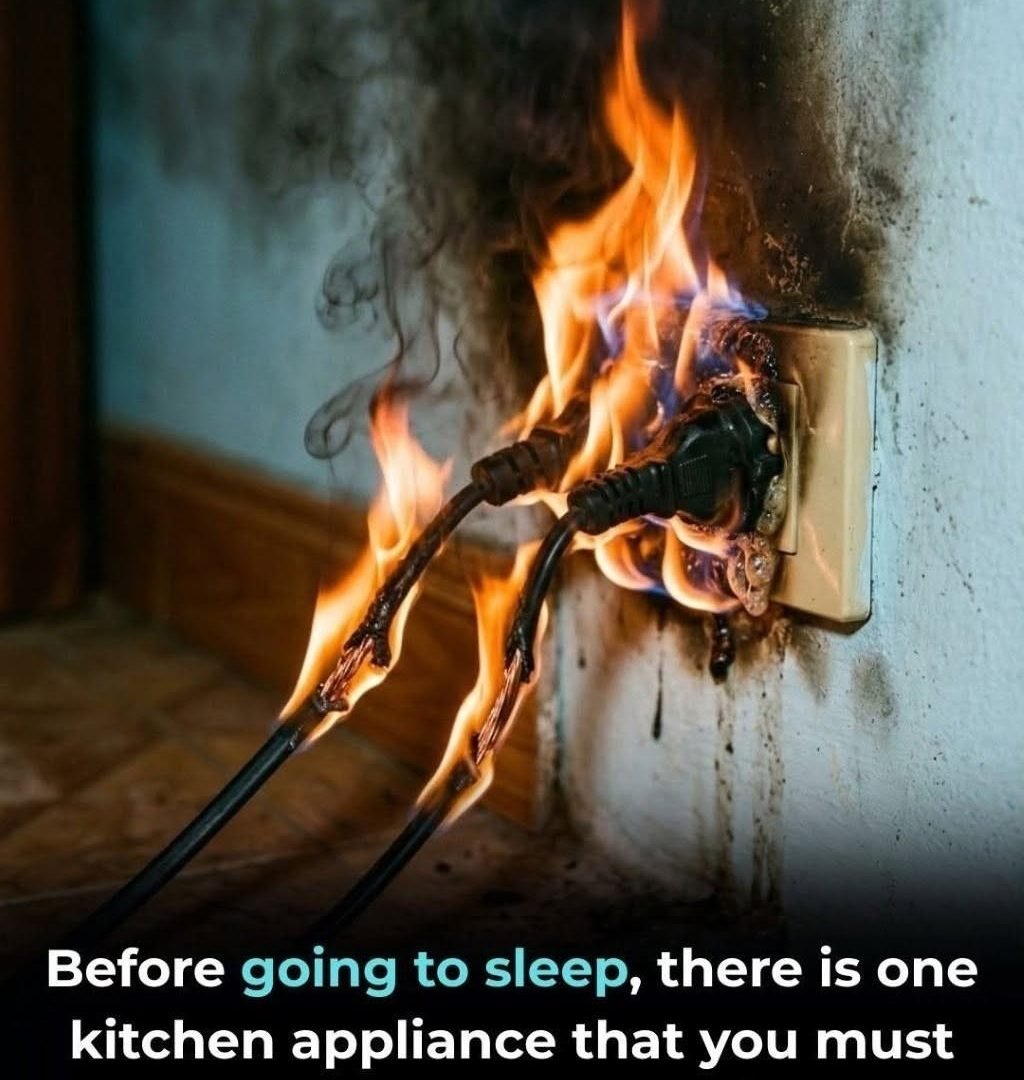
Social media is full of alarming images like the one above, warning that there is “one kitchen appliance” you must unplug before going to sleep to avoid a house fire. These posts often generate a lot of fear, but they rarely tell the whole story.
The reality of electrical fires is more nuanced. While it is true that certain appliances pose a higher risk than others, the danger usually comes from a combination of faulty wiring, overloaded outlets (as seen in the image), and appliances with exposed heating elements.
Here is a factual breakdown of which kitchen appliances you should actually unplug before bed, and the real science behind electrical kitchen fires.
The Most Likely Culprit: The Toaster or Toaster Oven
If there is one appliance that fire safety experts consistently warn against leaving plugged in and unattended, it is the toaster or toaster oven.
The Risk: Toasters use exposed heating coils to generate intense heat. Over time, crumbs accumulate at the bottom of the appliance. If the toaster is left plugged in and accidentally activated (by a pet, a child, or a mechanical fault), those dry crumbs can easily ignite, causing a fire.
The Rule: Always unplug your toaster or toaster oven when not in use, and clean out the crumb tray regularly.
Other High-Risk Appliances to Unplug Overnight
While the toaster is the most common offender, several other high-wattage appliances with heating elements should be unplugged before you go to sleep:
1. Air Fryers
Air fryers are essentially small, powerful convection ovens. They contain a heating element and a high-speed fan. If the internal thermostat fails or if the appliance is placed too close to combustible materials (like paper towels or curtains), it can overheat and catch fire.
2. Coffee Makers
Many people leave their coffee makers plugged in to use the timer function. However, if the water reservoir runs dry while the heating plate is still on, the machine can overheat, melt, and potentially ignite.
3. Electric Kettles
Similar to coffee makers, electric kettles rely on a heating element at the base. If the auto-shutoff mechanism fails and the kettle boils dry, it can become a serious fire hazard.
4. Slow Cookers (Older Models)
Modern slow cookers are generally safe to leave on while you are at work or asleep. However, older models (more than 10 years old) may not have the same safety features and can overheat if left on for extended periods.
The Real Danger: The Outlet and Wiring (As Seen in the Image)
The image above shows a wall outlet engulfed in flames with two plugs inserted. This highlights a critical point: often, the fire isn’t caused by the appliance itself, but by the electrical system.
Overloaded Outlets: Plugging too many high-wattage appliances (like a microwave and a toaster) into the same outlet or using extension cords can overload the circuit, causing the wires inside the wall to overheat and ignite.
Loose Connections: If a plug fits loosely into an outlet, it can create electrical arcing (sparks), which generates intense heat and can melt the plastic outlet, leading to a fire.
Frayed Cords: Appliances with damaged or frayed power cords expose live wires, which can short-circuit and start a fire.
Kitchen Fire Safety Checklist
To protect your home from electrical fires, follow these evidence-based safety tips:
Unplug Heating Appliances: As a general rule, if an appliance’s main job is to generate heat (toaster, air fryer, kettle), unplug it when you are not actively using it, especially before bed.
Check Your Outlets: If an outlet feels warm to the touch, smells like burning plastic, or if plugs fall out easily, stop using it immediately and call a licensed electrician.
Install GFCI Outlets: Kitchens should be equipped with Ground Fault Circuit Interrupter (GFCI) outlets. These are designed to shut off power instantly if they detect a surge or short circuit, preventing fires and shocks.
Keep Combustibles Away: Never place paper towels, dishcloths, or curtains near your stove, toaster, or air fryer.
Test Smoke Alarms: Ensure you have working smoke alarms in or near your kitchen, and test them monthly.
Conclusion
While viral posts often point to a single “dangerous” appliance, the truth is that any high-wattage kitchen appliance with a heating element can be a fire hazard if left plugged in unattended. Toasters and toaster ovens are the most common culprits due to accumulated crumbs and exposed coils. However, the most critical lesson from the image is to respect your home’s electrical system: avoid overloading outlets, check for loose plugs, and unplug heating appliances before you go to sleep.
Disclaimer: This article is for informational and educational purposes only and does not constitute professional electrical or fire safety advice. If you suspect faulty wiring in your home, please contact a licensed electrician immediately.