What It Really Means When an Outlet Is Installed “Upside Down” (Ground-Up vs. Ground-Down)
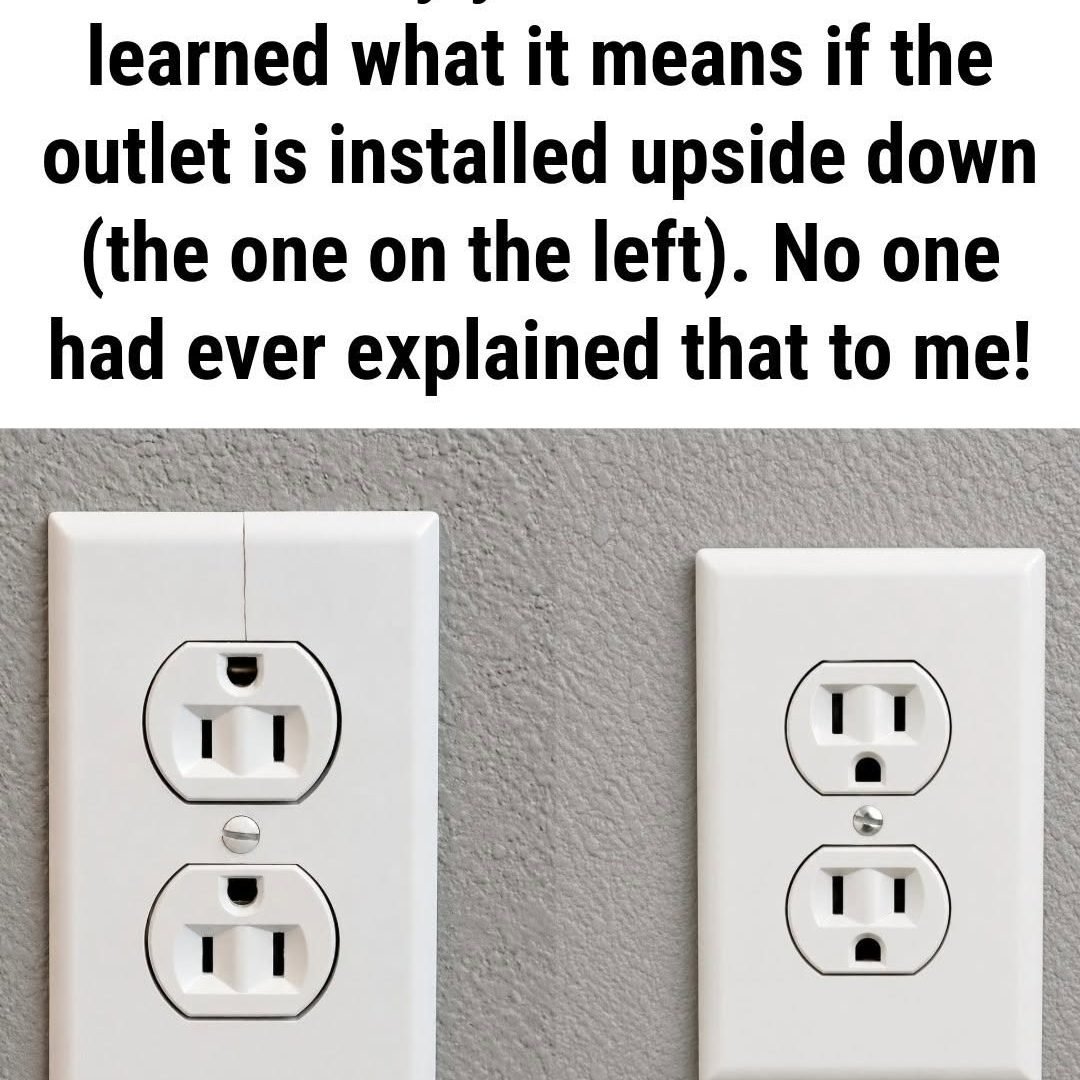
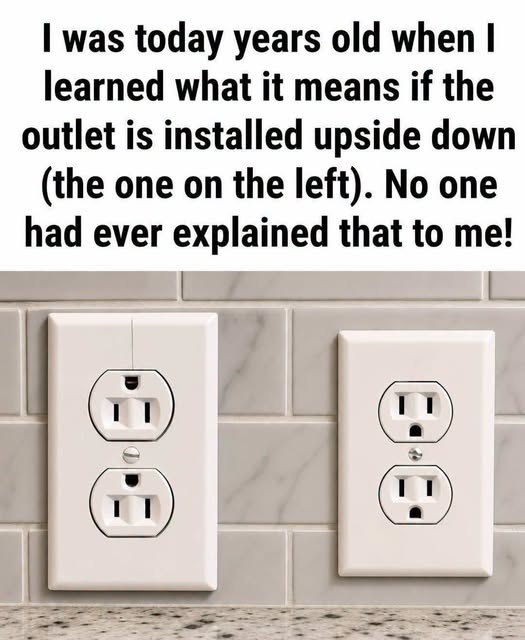
If the ground pin is at the top, the object hits the ground pin first. The ground pin is connected to the grounding system, which is designed to carry fault current safely back to the panel. If the object then contacts the hot blade, the resulting short circuit should trip the breaker. The object may spark or trip the circuit, but the grounding path is involved.
If the ground pin is at the bottom, the object hits the hot blade first. The object can become energized before it contacts the ground pin. If a person touches the energized object, they can receive a shock. The grounding pin may not be contacted at all.
This is why ground-up is often described as “safer” in the specific case of a falling metal object. It is not a perfect protection. It does not prevent all shocks. It does not replace tamper-resistant outlets, GFCI protection, or safe plug handling. It is one small layer of defense.
Why Ground-Down Is Still Common
Ground-down installation remains common for several reasons. It is the traditional residential convention in many areas. It matches the way many plug cords hang. It is what many homeowners and builders expect. Some electricians prefer it because it looks familiar and because right-angle cords are often designed for it.
Ground-down is not inherently unsafe. The safety difference between the two orientations is debated, and the metal-object scenario is only one of many electrical hazards. A correctly wired, grounded, tamper-resistant, GFCI-protected outlet is safe regardless of orientation. A poorly wired outlet is unsafe regardless of orientation.
Myths About “Upside Down” Outlets
Several myths circulate about ground-up outlets. Here are the most common.
Myth: An upside-down outlet means it was wired backward
False. Orientation and wiring are separate. A ground-up outlet can be wired correctly, and a ground-down outlet can be wired incorrectly. Only a tester or an electrician can confirm polarity and grounding.
Myth: Ground-up outlets are required by code everywhere
False. The NEC does not generally mandate ground-up in dwellings. Local codes and project specifications vary.
Myth: Ground-up means the outlet is “hospital-grade”
False. Hospital-grade is a durability rating, not an orientation. A hospital-grade receptacle can be installed either way.
Myth: Ground-up prevents all shocks
False. It may reduce one specific risk involving falling metal objects, but it does not prevent shocks from damaged cords, faulty appliances, missing grounds, or other hazards.
Myth: Ground-up means the outlet is switched
False. A switched outlet is controlled by a wall switch. Orientation does not indicate switching.
Myth: Ground-up means it is a 20-amp outlet
False. A 20-amp outlet has a T-shaped neutral slot. Orientation does not indicate amperage.
Myth: Ground-up is a sign of amateur work
Not necessarily. Many professional electricians install ground-up deliberately, especially in commercial and institutional settings.
Myth: Ground-down is always the “right” way
False. There is no universal right way in the NEC for ordinary dwellings. Local practice and specification govern.
When Orientation Might Matter More
There are situations where orientation is more than a cosmetic preference.
In healthcare facilities, laboratories, and industrial settings, ground-up may be specified for safety and standardization. In schools, public buildings, and commercial kitchens, house standards may require it. In homes with young children, tamper-resistant receptacles and outlet covers matter far more than orientation. In older homes with ungrounded outlets, the presence or absence of a ground path is far more important than whether the ground hole is up or down.