The One Kitchen Appliance You Must Unplug Before Bed to Prevent a Devastating Fire
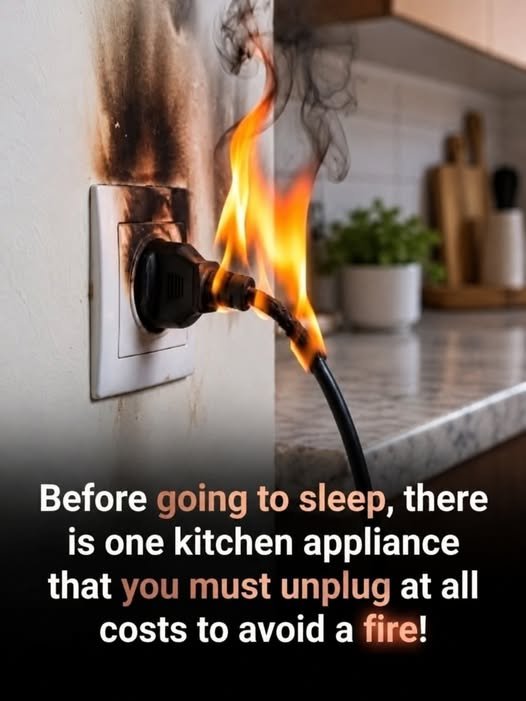
The image is a stark and terrifying reminder of what can happen when electricity and heat meet neglect. A blackened, melted wall outlet, charred around the edges, with a plug partially inserted and thick, acrid smoke curling upward. It is the aftermath of an electrical fire in its infancy—a fire that could have been prevented by a single, simple action. The text below the image delivers an urgent warning: “Before going to sleep, there is one kitchen appliance that you must unplug at all costs to avoid a fire!”
For millions of households, the kitchen is the heart of the home. It is where we gather, cook, and create memories. But it is also the room with the highest concentration of heat-generating appliances, water sources, and electrical outlets—a perfect storm for a domestic fire. While we often focus on the obvious dangers of leaving a stove on or a candle burning, we frequently overlook the silent, insidious threat posed by the small appliances that sit on our countertops, quietly drawing power even when they are not in use.
The “one kitchen appliance” that the warning refers to is most commonly the toaster (or toaster oven). However, the principle applies to several other appliances, including the coffee maker, electric kettle, and microwave. Each of these devices contains heating elements that can malfunction, overheat, or ignite nearby flammable materials if left plugged in overnight. The risk is not merely theoretical; electrical fires are one of the leading causes of home fires, and kitchen appliances are among the most frequent culprits. According to the National Fire Protection Association (NFPA), cooking equipment is involved in nearly half of all home fires, and electrical failures or malfunctions contribute to a significant portion of these incidents.
This comprehensive guide will explore the hidden dangers of leaving kitchen appliances plugged in overnight. We will delve into the science of electrical fires, examine the specific risks associated with common appliances, provide real-world case studies, and outline a practical, step-by-step safety protocol that every household should adopt. By the end of this article, you will understand exactly why unplugging your toaster (and other appliances) before bed is not an act of paranoia, but a critical, potentially life-saving habit.
The Science of Electrical Fires: How a Simple Plug Becomes a Deadly Threat
To understand why leaving an appliance plugged in is dangerous, we must first understand the mechanics of an electrical fire. Electricity itself does not burn; it is the heat generated by the flow of current that ignites surrounding materials.
The Role of Resistance and Heat
Every electrical circuit has resistance. When current flows through a wire or a connection, some of the electrical energy is converted into heat. In a healthy, properly functioning appliance, this heat is minimal and safely dissipated. However, several factors can cause a dangerous buildup of heat:
Loose Connections: If the plug does not fit snugly into the outlet, or if the internal wiring of the appliance is loose, the electrical contact is poor. This creates high resistance at the connection point, generating intense heat. Over time, this heat can melt the insulation on the wires, causing a short circuit and igniting nearby materials.
Overloaded Circuits: Plugging too many high-wattage appliances into a single outlet or extension cord can draw more current than the circuit is designed to handle. The wires overheat, the insulation melts, and a fire can start inside the wall or at the outlet.
Faulty Components: The heating elements inside appliances like toasters, coffee makers, and kettles are designed to reach high temperatures. If a thermostat or a safety switch fails, the heating element can continue to heat uncontrollably, melting the appliance’s casing and igniting anything nearby.
Dust and Debris: Kitchen appliances are often located near sources of dust, grease, and food particles. These materials are highly flammable. A spark from a faulty plug or a loose connection can easily ignite a buildup of dust or grease inside the appliance or behind the counter.
The “Standby” Myth
Many people believe that an appliance that is turned off is not drawing power. This is not entirely true. Many modern appliances, particularly those with digital displays, clocks, or remote controls, consume a small amount of electricity even when they are “off.” This is known as “standby power” or “vampire power.” While the amount is small, the internal components are still live and can be susceptible to power surges, voltage spikes, or component failures that can lead to a fire. The only way to completely eliminate this risk is to unplug the appliance from the wall.
The Most Dangerous Kitchen Appliances to Leave Plugged In
While any electrical appliance carries some risk, certain kitchen devices are particularly hazardous when left plugged in overnight. The following appliances should be unplugged after every use, especially before going to bed.
1. The Toaster and Toaster Oven: The Crumb Trap
The toaster is often cited as the most dangerous appliance to leave plugged in. The reason is simple: crumbs.
Toasters are designed with a heating element that glows red-hot to toast bread. Over time, crumbs accumulate at the bottom of the toaster. If a crumb falls onto the heating element, it can ignite. While a single crumb may simply burn and smoke, a buildup of crumbs can create a larger fire. If the toaster is left plugged in, a malfunction—such as the lever getting stuck in the down position—can cause the heating element to remain on indefinitely. This can ignite the crumbs, the plastic casing, and eventually the surrounding cabinetry.
Toaster ovens present an even greater risk because they are larger, have more exposed heating elements, and are often left with food residue or parchment paper inside. If the oven is accidentally turned on, or if a timer fails, the heat can quickly build up and ignite the contents. Unplugging the toaster oven eliminates the possibility of accidental activation or electrical fault.
2. The Coffee Maker: The Hidden Heater
Many coffee makers, especially drip models and espresso machines, contain a heating element that keeps the water hot or the coffee warm. If the machine is left plugged in, the heating element can cycle on and off to maintain temperature. If the water reservoir runs dry, the heating element can overheat, melting the plastic and potentially igniting the machine. Additionally, the thermal fuse or thermostat can fail, leading to a runaway heating event. Unplugging the coffee maker before bed ensures that it cannot activate unexpectedly.
3. The Electric Kettle: The Boil-Dry Risk
Electric kettles are designed to boil water and then shut off automatically. However, the safety switch can fail. If the kettle is left plugged in and is accidentally turned on with no water inside, the heating element will rapidly overheat. This can melt the kettle, scorch the base, and potentially start a fire. Even if the kettle is empty and off, a power surge can damage the internal electronics, creating a shock or fire hazard. Unplugging it is the safest course of action.
4. The Microwave: A Surge Suspect
While microwaves are generally very safe, they are complex electronic devices with high-voltage capacitors. A power surge, a lightning strike, or a component failure can cause the microwave to activate unexpectedly or short-circuit. If there is metal inside the microwave (like a forgotten fork or aluminum foil), this can cause a fire. Unplugging the microwave when not in use eliminates this risk. It also saves a small amount of standby power.
5. The Dishwasher and Washing Machine
The image background shows what appears to be a washing machine, which is a reminder that large appliances also pose a risk. Dishwashers and washing machines are connected to water lines and have heating elements for drying. A faulty water valve or a heating element malfunction can cause a flood or a fire. While these appliances are typically hardwired or plugged into dedicated circuits, it is a good practice to turn them off or unplug them if you are going away for an extended period. For daily use, ensuring they are not left running overnight is a critical safety habit.
Real-World Case Studies: When the Unthinkable Happens
The warnings are not hypothetical. Every year, thousands of home fires are caused by electrical appliances. Here are a few representative examples that illustrate the devastating consequences of leaving an appliance plugged in.
Case Study 1: The Toaster Fire
In 2019, a family in Ohio lost their home to a fire that started in the kitchen. The fire investigation revealed that the cause was a toaster that had been left plugged in. The toaster had a faulty lever that failed to pop up, causing the heating elements to remain on. The heat ignited the wooden countertop, and the fire quickly spread to the cabinets and the rest of the house. The family escaped unharmed, but their home was destroyed. The simple act of unplugging the toaster would have prevented the entire disaster.
Case Study 2: The Coffee Maker Catastrophe
In 2021, a couple in the UK narrowly escaped a fire that started in their kitchen overnight. They had left their coffee maker plugged in and switched on, intending to have hot coffee ready when they woke up. The machine’s water reservoir ran dry, and the heating element overheated, melting the plastic and igniting the machine. The smoke alarms woke them in time, but the kitchen was severely damaged. The fire service emphasized that coffee makers should never be left unattended or left on overnight.
Case Study 3: The Kettle Boil-Dry
In 2022, a fire in a London apartment was traced to an electric kettle that had been left plugged in. The kettle’s automatic shut-off switch had failed, and it had been accidentally turned on with no water. The kettle melted, and the intense heat ignited the plastic countertop and nearby dish towels. The occupants were alerted by a neighbor who saw smoke coming from the window. The fire service issued a warning about the importance of unplugging small appliances when not in use.
These cases highlight a common thread: a single moment of forgetfulness, a faulty component, and a lack of unplugging can lead to devastating consequences.
The Psychology of Appliance Use: Why We Forget to Unplug
If unplugging appliances is so important, why do so many of us forget? The answer lies in our daily habits and the psychology of convenience.
The Invisibility of Risk
We use our toaster, coffee maker, and kettle every day without incident. This repeated exposure creates a sense of complacency. The risk feels abstract and distant because nothing bad has ever happened. Our brains are wired to underestimate the likelihood of rare events, especially when the consequences are severe. This is known as the “optimism bias”—the belief that bad things happen to other people, not to us.
The Convenience Factor
Unplugging an appliance takes only a few seconds, but in the rush of daily life, those seconds feel like a hassle. We leave the coffee maker on because we want a hot cup later. We leave the toaster plugged in because we use it every morning. The convenience of being ready to go outweighs the perceived low risk of a fire.
The “It’s Off” Misconception
Many people believe that turning an appliance off is sufficient. However, as we have seen, “off” does not mean “safe.” The internal components are still connected to the power supply, and a fault can occur at any time. Unplugging is the only way to guarantee that the appliance is completely isolated from the electrical grid.
The Ultimate Safety Protocol: A Step-by-Step Guide
To protect your home and your family, adopt the following safety protocol as a non-negotiable part of your nightly routine.
Step 1: Conduct a Nightly “Unplug Sweep”
Before you go to bed, walk through your kitchen and unplug all small appliances. This includes:
The toaster and toaster oven
The coffee maker and espresso machine
The electric kettle
The microwave (if you are not using the clock)
Any other small appliances that are not in use, such as a blender, food processor, or rice cooker.
Step 2: Check the Large Appliances
Ensure that the dishwasher and washing machine are not running overnight. If they are, wait for the cycle to finish, or use a delay timer to run them during the day when you are awake and alert. Check that the stove is turned off and that there are no flammable items (like dish towels or paper) on the stovetop.
Step 3: Inspect Cords and Plugs
Regularly inspect the cords and plugs of all your kitchen appliances. Look for signs of wear, fraying, cracking, or discoloration. If a cord is damaged, replace it immediately. Do not use an appliance with a damaged cord. Ensure that plugs fit snugly into the outlet. If an outlet is loose or feels warm, have it checked by a qualified electrician.
Step 4: Keep Flammable Materials Away
Never place flammable materials—such as dish towels, paper towels, curtains, or wooden cutting boards—near or on top of appliances that generate heat. The area around the toaster, coffee maker, and kettle should be kept clear.
Step 5: Install and Maintain Smoke Alarms
Working smoke alarms are your first line of defense. Install smoke alarms on every level of your home, including the kitchen and near sleeping areas. Test them monthly and replace the batteries at least once a year. Consider installing a smart smoke alarm that sends an alert to your phone.
The Financial and Environmental Benefits of Unplugging
Unplugging your appliances is not just about safety; it also saves money and reduces your environmental impact.
Savings on Your Energy Bill
As mentioned earlier, many appliances consume “standby power” even when they are turned off. This phantom energy consumption can account for up to 10% of your household electricity bill. By unplugging appliances, you eliminate this waste. For a typical household, this can add up to significant savings over the course of a year.
Reducing Your Carbon Footprint
The less electricity you consume, the lower your carbon footprint. Unplugging appliances reduces the demand for power generation, which in turn reduces greenhouse gas emissions. It is a small but meaningful way to contribute to a more sustainable future.
When to Replace Your Appliances
Old appliances are more likely to have faulty wiring, worn-out components, and outdated safety features. If your toaster, coffee maker, or kettle is more than 10 years old, consider replacing it with a newer model that has built-in safety features such as automatic shut-off, thermal fuses, and cool-touch exteriors. Look for appliances that have been certified by recognized testing laboratories (such as UL in the United States or CE in Europe).
Conclusion: A Simple Habit That Saves Lives
The image of the charred, smoking outlet is a powerful reminder of the hidden dangers that lurk in our kitchens. The warning is clear: one kitchen appliance—most likely the toaster, but also the coffee maker, kettle, or microwave—can be the spark that ignites a devastating fire. The solution is equally clear: unplug it before you go to sleep.
This is not a matter of paranoia or excessive caution. It is a simple, evidence-based safety practice that takes only a few seconds but can save your home, your possessions, and, most importantly, your life. The risk of a fire is low, but the consequences are catastrophic. By making unplugging a nightly habit, you eliminate that risk entirely.
Make the “unplug sweep” a part of your evening routine. Teach your children and other family members to do the same. It is a small act of responsibility that yields enormous peace of mind. Sleep soundly knowing that the appliances in your kitchen are safely disconnected, and that you have done everything in your power to protect the ones you love.
Frequently Asked Questions
Which kitchen appliance is the most dangerous to leave plugged in?
The toaster and toaster oven are often considered the most dangerous because of the buildup of flammable crumbs and the presence of exposed heating elements. However, coffee makers, electric kettles, and microwaves also pose significant risks if left plugged in, especially if they have faulty components or are accidentally turned on.
Why can’t I just turn the appliance off?
Turning an appliance off does not disconnect it from the power supply. Many appliances still draw standby power and have live internal components. A power surge, a faulty switch, or a component failure can cause the appliance to activate or overheat even when it is “off.” Unplugging is the only way to ensure complete safety.
Does unplugging appliances really save money?
Yes. Many appliances consume “phantom” or standby power even when turned off. This can account for up to 10% of your electricity bill. Unplugging them eliminates this waste and reduces your energy costs.
How often should I inspect my appliance cords?
You should inspect cords and plugs monthly, or more frequently if you use the appliance daily. Look for fraying, cracks, discoloration, or a loose fit in the outlet. Replace damaged cords immediately.
What should I do if I see a spark or smoke from an outlet?
If you see sparks, smoke, or smell burning from an outlet or an appliance, immediately unplug the appliance (if it is safe to do so) and turn off the power at the circuit breaker. Do not use the outlet again until it has been inspected by a qualified electrician. If a fire has started, evacuate the home and call emergency services.
Can I leave my phone charger plugged in overnight?
While phone chargers are generally low-risk, they can still overheat if they are damaged or if they are covered by bedding or pillows. It is best to charge your phone in a well-ventilated area and unplug the charger when not in use. Avoid leaving it under your pillow.
Are there any appliances that are safe to leave plugged in?
Some appliances, like refrigerators and freezers, are designed to run continuously and should remain plugged in. However, small appliances with heating elements should always be unplugged when not in use.
What is the best way to remind myself to unplug appliances?
Create a nightly routine. For example, make it the last thing you do before you go to bed. You can also use a smart plug that can be scheduled to turn off at a certain time, or place a sticky note on the appliance as a visual reminder.
What should I do with old appliances?
If an appliance is old, damaged, or no longer works safely, do not use it. Dispose of it properly according to local regulations. Many communities have electronics recycling programs.