🔌 I Was Today Years Old When I Learned What It Means If the Outlet Is Installed Upside Down (The One on the Left)
We look at electrical outlets every single day. They are so common that we rarely stop to think about why they look the way they do. But have you ever noticed that some outlets are installed with the grounding pin hole at the bottom, while others have it at the top?
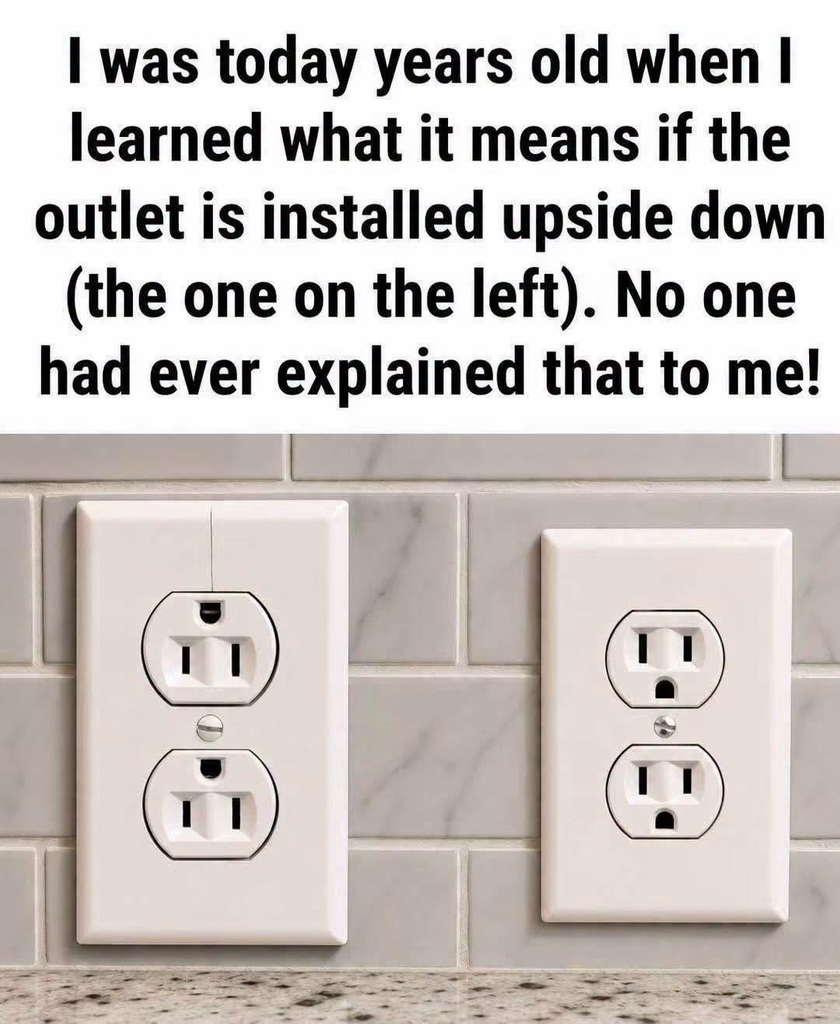
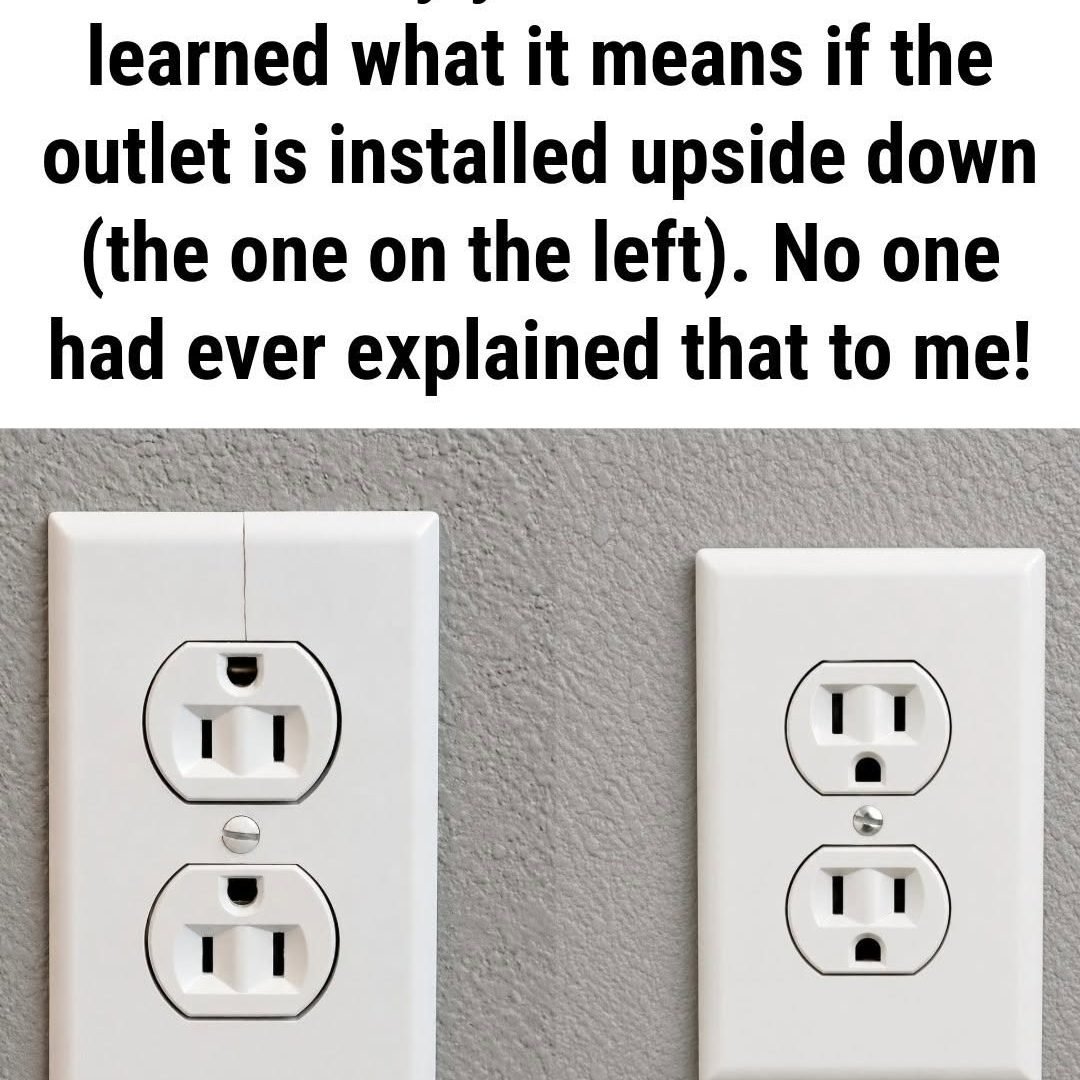
The image above shows two outlets side by side. The one on the left is installed “upside down” (with the ground pin hole at the top). Most people assume it’s just a mistake or a matter of personal preference. But there is actually a very practical, safety-related reason behind it.
Here is the truth about why some outlets are installed this way. 👇
🔬 The Truth About “Upside Down” Outlets
The short answer: It’s a safety feature, not a mistake.
Why it matters: In a standard North American outlet, the ground pin is the round hole. The two flat slots are the “hot” and “neutral” connections. If the outlet is installed with the ground pin at the bottom (like the one on the right), and a plug is partially pulled out, a falling object (like a metal utensil or a piece of jewelry) could land on the prongs and cause a short circuit or a spark.
If the outlet is installed with the ground pin at the top (like the one on the left), the ground pin acts as a barrier. If something falls, it hits the ground pin first, which is grounded and safe, rather than the live prongs. This greatly reduces the risk of electrical shock or fire.
Why do most homes have them “right side up”? Most electricians install them with the ground pin down because it’s the traditional way, and many people think it looks better. However, the National Electrical Code (NEC) allows either orientation. Some electricians prefer the ground-up orientation for safety, especially in commercial buildings and hospitals.
The verdict: Installing an outlet with the ground pin up is a simple, smart safety measure. It doesn’t affect how the outlet works — it just makes it safer. If you’re having new outlets installed, you might want to ask your electrician to install them ground-up.
❓ Frequently Asked Questions
Does installing an outlet upside down affect how it works? No — it works exactly the same. The orientation only affects safety in the event of a falling object.
Is it code to install outlets with the ground pin up? The National Electrical Code (NEC) allows either orientation. It does not require one way or the other.
Why do hospitals have outlets installed upside down? Hospitals often use the ground-up orientation for safety. It reduces the risk of sparks or shocks if metal objects fall near the outlet.
Can I flip my outlets myself? Yes — but only if you are comfortable working with electricity and have turned off the power at the breaker. If you’re not experienced, hire a licensed electrician.
Which way is “correct”? There is no single “correct” way. Both are allowed. The ground-up orientation is considered safer by many electricians.
Does it matter for childproofing? Yes — ground-up outlets can be slightly safer in homes with young children, as the ground pin is less accessible.
Why do some people think it looks weird? It’s simply because we’re used to seeing them the other way. It’s a matter of habit, not function.
Are there other safety features in outlets? Yes — modern outlets may include tamper-resistant shutters (TRR), GFCI protection, and AFCI protection.