Why Some Electrical Outlets Are Installed Upside Down
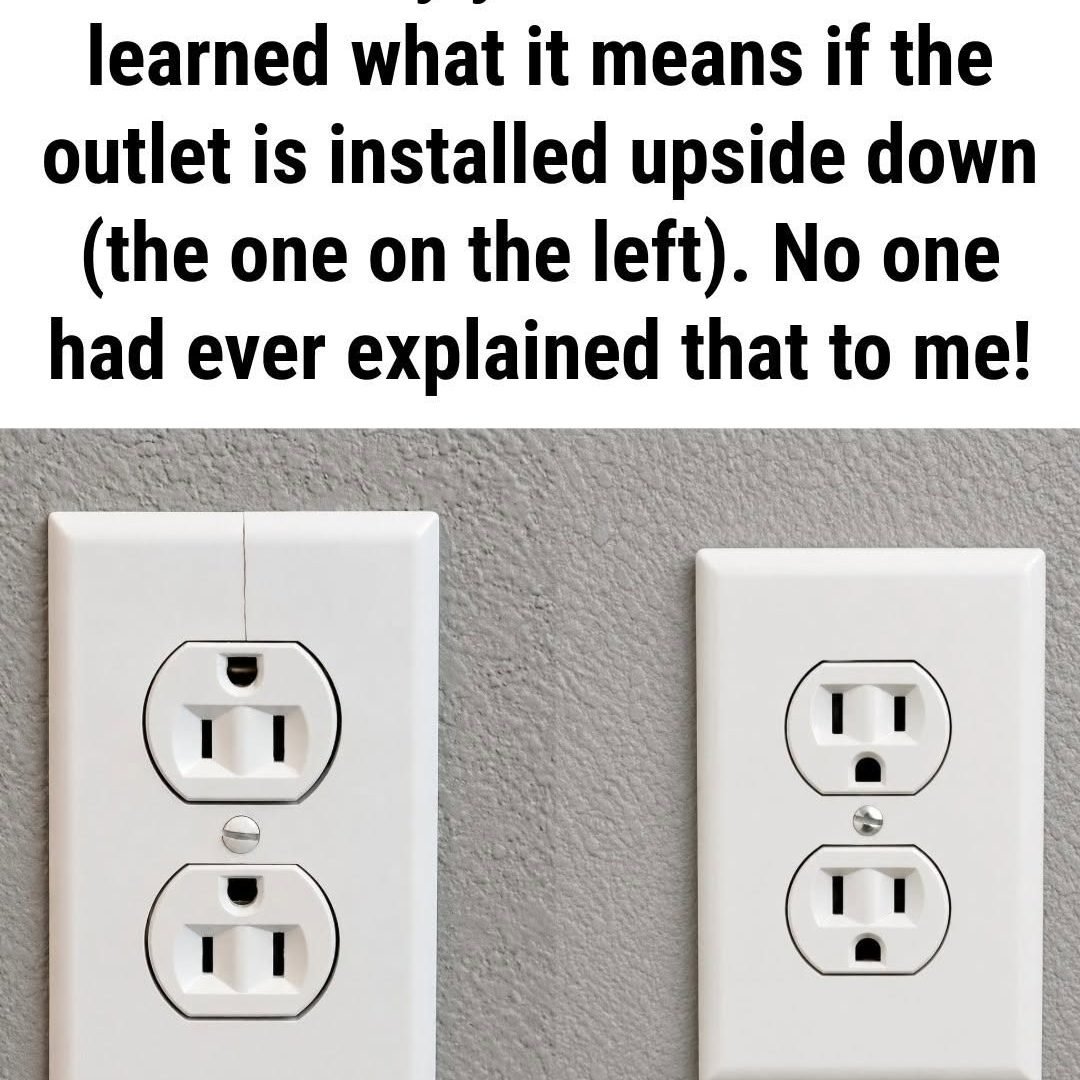
The image above compares two standard North American electrical outlets side by side. The one on the left has the grounding pin hole at the top, while the one on the right has it at the bottom. The caption notes that many people have never had this difference explained to them.
While the traditional orientation places the ground pin at the bottom, the “upside down” installation is not a mistake. It is a deliberate choice with practical, safety-related reasoning.
The Logic Behind the Upside-Down Installation
The primary argument for installing an outlet with the ground pin on top is safety.
In this orientation, if a plug is partially pulled out of the socket and a conductive object—such as a metal ruler, a piece of wire, or a knife—falls between the plug and the wall, it is more likely to contact the ground pin first. The ground pin is designed to safely divert electricity away, which would trip the circuit breaker or blow a fuse rather than causing a shock or a fire.
If the outlet is installed in the traditional orientation (ground pin down), a falling object is more likely to contact the two live and neutral blades, creating a short circuit or a dangerous electrical arc.
The Counterargument
Those who prefer the ground pin down point out that in this orientation, the two flat prongs are on top, and a falling object would contact them first. While this is true, the ground pin-up orientation is often recommended in commercial and industrial settings where the risk of objects falling onto partially plugged cords is higher.
It is worth noting that the National Electrical Code (NEC) in the United States does not mandate a specific orientation for standard outlets. Both methods are code-compliant, and the choice often comes down to local preference or the electrician’s judgment.
Other Factors to Consider
Beyond safety, there are a few other reasons why an outlet might be installed upside down:
Switched Outlets: In some homes, outlets are controlled by a wall switch. The orientation can sometimes help indicate which outlet is switched.
Cord Strain: Some appliances with right-angle plugs may fit better in one orientation over the other.
Aesthetics: Some homeowners simply prefer the look of the ground pin at the top.
Conclusion
Seeing an outlet installed with the ground pin on top is not a sign of poor workmanship. It is often a deliberate safety measure, particularly in settings where falling objects are a concern. Understanding the reasoning behind this orientation can help you appreciate the thought that goes into even the smallest details of home electrical systems.