Freshness Code on Tomato Puree: What the Packaging Code Really Means
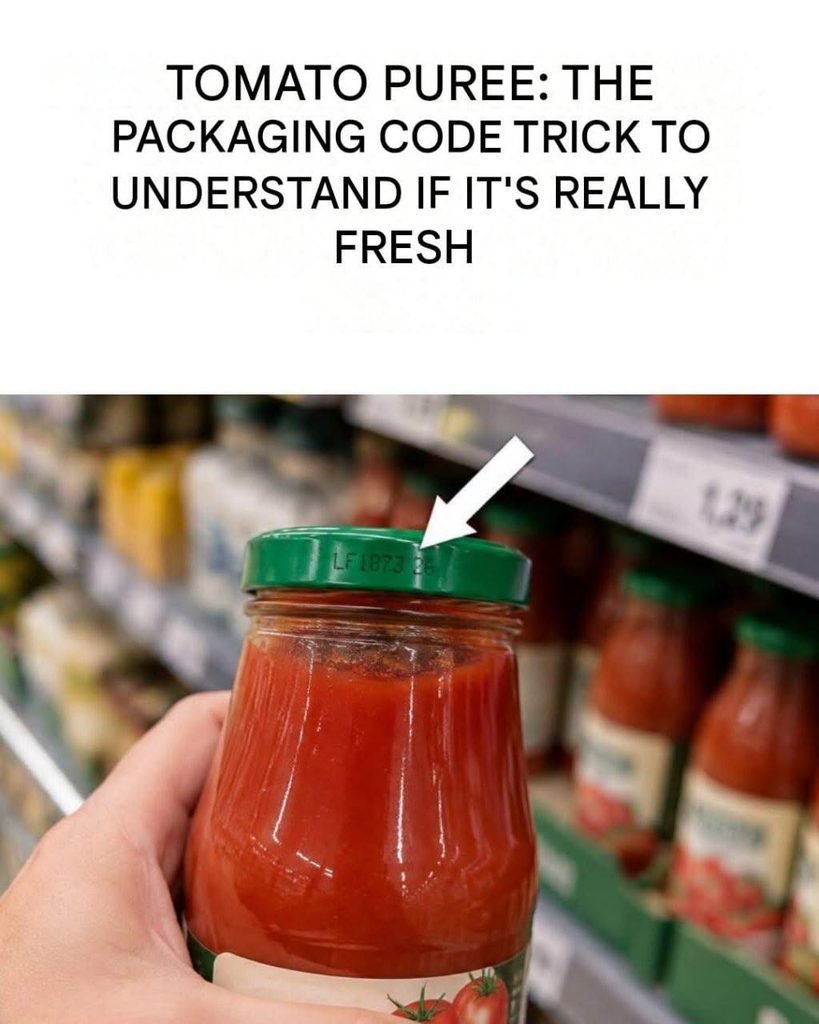
When shopping for tomato puree, most people focus only on the expiration date printed on the label. However, there is a hidden code stamped on the lid or bottle that can reveal exactly when the product was made, and this information is far more useful for judging freshness. Understanding this code helps you choose a better-quality product and avoid buying puree made from tomatoes processed months earlier.
Where to Find the Code
The lot code is typically stamped on the lid, the neck of the bottle, or directly on the label. It is usually preceded by the letter “L,” which stands for “Lotto” or “Lot” in Italian. This code identifies the specific batch of production and is a legal requirement for traceability .
How to Read the Code
The code usually consists of a letter and a number. In many cases, the letter represents the year of production, while the three digits represent the day of the year on which the tomatoes were processed.
For example, a code like “L K215” would indicate that the product was made on the 215th day of a specific year. The number 215 corresponds to roughly the 3rd of August, which is during the peak tomato harvest season in Italy .
The Years Associated With Each Letter
The letter assigned to each year follows a convention that manufacturers update annually. These are the codes to know:
Letter
Year
G
2024
R
2025
K
2026
These codes are frequently used in Italy for canned tomato products .
What the Number Means
The three digits indicate the day of the year on which the product was packaged, counting from January 1st. This is known as the Julian date system .
A number between 180 and 290 corresponds to the period from mid-July to late September, which is the peak season for tomato harvesting and processing in Italy. Products with codes in this range are more likely to have been made with fresh, seasonal tomatoes .
If the number falls outside this range, such as in the winter months, the tomatoes were still harvested in summer but stored in aseptic containers before being packaged later. This practice is common and does not affect food safety, but the product is not technically “fresh” in the strict sense of being processed immediately after harvest .
Other Things to Check Before Buying
Beyond the lot code, there are a few other things you can do to ensure you are getting a quality product.
Check the Ingredients: A high-quality tomato puree should have a short ingredient list, ideally containing only tomatoes. Some brands may add a small amount of salt or citric acid as a natural preservative .
Verify the Origin: Look for a statement like “100% Italian tomato” or “Origin: Italy” on the label. This guarantees that the raw material comes from Italian farms .
Inspect the Seal: The lid should be well-sealed and concave. If the lid makes a clicking sound when pressed or appears bulging, it means air has entered the jar and the product may not be properly preserved .
A Note on Variations
It is important to remember that there is no universal standard for lot codes. Each manufacturer can adopt its own system, so the letter-to-year correspondence and the number format may vary between brands . While the system described above is widely used, it is always a good idea to check with the specific brand if you need definitive information about a particular product.