Meta Description: Learn to make authentic Hungarian smoked sausage (kolbász) with paprika, garlic, and caraway. A complete guide to curing, cold-smoking, and drying.
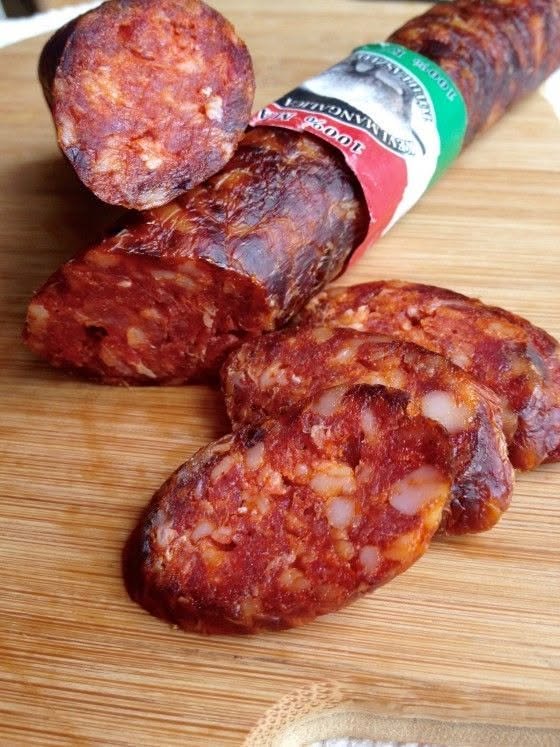
Suggested Featured Image Alt Text: Sliced traditional Hungarian smoked sausage (kolbász) with a deep red color and visible fat, on a wooden board.
Introduction
Hungarian smoked sausage, known as kolbász, is one of the most recognizable and beloved products of Central European charcuterie. It is a sausage of remarkable character: dense and sliceable, stained a deep, appetizing red from generous amounts of Hungarian paprika, and perfumed with garlic, black pepper, and often caraway. The version in the photograph shows the classic profile of a dry, cold-smoked sausage—a textured, marbled interior with visible flecks of fat, a wrinkled, mahogany-brown casing, and a firm, dry surface that promises a concentrated, savory flavor.
Unlike fresh sausages that are cooked before eating, traditional Hungarian kolbász is a cured, fermented, cold-smoked, and air-dried product. It is designed to be sliced thin and eaten as a cold cut, or used as a flavor base in cooked dishes. The process is an art of preservation as much as it is a recipe, relying on salt, time, cool temperatures, and the aromatic smoke of hardwood to transform raw pork into a shelf-stable delicacy. The two most famous regional styles, Gyulai and Csabai, have protected geographical status and represent the pinnacle of this tradition, but the craft of making kolbász at home is also a cherished part of Hungarian rural life.
This guide is designed for the serious home cook and charcuterie enthusiast who wants to understand and recreate this traditional product. It covers the cultural background, the essential ingredients, the critical food-safety considerations, and a detailed, step-by-step method for making a home-cured and smoked kolbász. It is a project that requires patience, specific equipment, and a disciplined approach to temperature and humidity, but the reward is a sausage of extraordinary depth and authenticity. Whether you are a seasoned sausage maker or an ambitious beginner, this guide provides a thorough and practical path to a genuinely Hungarian kolbász.
Recipe Overview
Detail
Information
Preparation time
2–3 hours (grinding, mixing, stuffing)
Curing/Fermentation time
3–5 days
Smoking time
2–3 days of cold smoking (or multiple sessions)
Drying time
4–8 weeks
Total time
Approximately 8–12 weeks
Yield
About 5 pounds (2.25 kg) of finished sausage
Difficulty level
Advanced
Cooking method
Curing, fermentation, cold smoking, air-drying
Cuisine
Hungarian
Course
Charcuterie / Preserved Meat
Estimated calories per 1 oz (28 g) serving
Approximately 90–120 kcal (estimate; varies with fat content)
This is a long-form project, and the timeline is governed by the natural processes of curing and drying. The active work is concentrated in the first day, while the subsequent weeks require only monitoring and maintaining the proper environment. It is essential to read the entire guide, including the safety warnings, before beginning.
What Is Hungarian Kolbász?
Kolbász is the Hungarian word for sausage, but in common usage, it refers specifically to a seasoned, cured, smoked, and dried pork sausage . It belongs to a broader family of Hungarian sausages that includes fresh sausages (házi kolbász), liver sausages (hurka), and blood sausages, but the dried, smoked kolbász is the most iconic and shelf-stable form. The sausage is typically made from coarsely ground pork shoulder and firm pork fat (back fat or belly), seasoned heavily with sweet and sometimes hot Hungarian paprika, garlic, salt, black pepper, and caraway seeds.
The defining characteristics of a traditional kolbász are its deep red color from paprika, its firm, sliceable texture, and its complex, smoky, and savory flavor. The curing and drying process concentrates these flavors and creates a dense, chewy bite. It is fundamentally different from a fresh sausage or a cooked emulsified sausage like a hot dog. The two most celebrated regional varieties are Gyulai kolbász and Csabai kolbász. Gyulai is often made in pairs (pároskolbász), is slightly thinner, and is flavored with a notable amount of black pepper along with paprika and caraway. Csabai, on the other hand, is typically sold as a single, thicker sausage and is known for being spicier, with a much more pronounced paprika flavor. Both are protected geographical indications (PGI) within the European Union, signifying their connection to their regions of origin.
Kolbász is a versatile ingredient. It is most commonly served as part of a cold platter (hidegtál) with bread, fresh peppers, tomatoes, and pickles. It is also a fundamental flavoring agent in Hungarian cooking, adding depth and smokiness to dishes like lecsó (a pepper and tomato stew), rakott krumpli (layered potato and egg casserole), bean soups (Jókai bableves), and potato stews (paprikás krumpli).
Ingredients You Will Need
The following recipe is for a traditional, paprika-forward kolbász in the style of the Great Hungarian Plain. It yields about 5 pounds (2.25 kg) of finished sausage. Please read the safety notes carefully before beginning.
For the Sausage Meat
4 lbs (1.8 kg) pork shoulder, well-chilled, cut into 1-inch cubes
1 lb (450 g) firm pork back fat or fatty pork belly, well-chilled, cut into 1-inch cubes
45 g (about 3 tablespoons) fine sea salt (Use a scale for accuracy; this is 2.5% of the total meat weight)
1 teaspoon (about 4 g) pink curing salt #2 (This is essential for long-curing safety; do not omit or substitute)
40 g (about 4 tablespoons) Hungarian sweet paprika
10 g (about 1 tablespoon) Hungarian hot paprika (optional, for a spicier sausage)
15 g (about 1½ tablespoons) freshly ground black pepper
10 g (about 1 tablespoon) caraway seeds, lightly crushed
6–8 cloves garlic, finely minced or grated into a paste
1 teaspoon (about 3 g) dextrose or granulated sugar (optional, aids fermentation)
1 cup (240 ml) ice-cold water or dry white wine
For the Casing
About 10 feet (3 meters) of natural hog casing, 32–36 mm in diameter, soaked and rinsed
Equipment for the Process
Meat grinder with a coarse (6–8 mm) grinding plate
Sausage stuffer (or a grinder with a stuffing attachment)
Digital kitchen scale (essential for accurate salt and cure measurements)
Instant-read thermometer
Large mixing bowls
Cold smoker (capable of maintaining temperatures below 85°F / 30°C)
Hardwood for smoking (beech, oak, or fruitwood; avoid resinous woods like pine)
Curing chamber or a cool, humid space for drying (a spare refrigerator with a humidity controller, or a dedicated curing chamber)
Important Safety Note on Curing: Making dry-cured, cold-smoked sausage at home carries inherent risks, primarily the potential for Clostridium botulinum growth. The use of pink curing salt #2 (which contains sodium nitrite and sodium nitrate) is non-negotiable for this recipe. It inhibits the growth of harmful bacteria during the long, cool drying phase. Weigh all ingredients, especially the salt and cure, with a digital scale; do not use volume measurements for these critical components. If you are not prepared to follow strict temperature, humidity, and hygiene protocols, we recommend making fresh sausage (házi kolbász) instead, which is cooked before eating.
Choosing the Best Ingredients
The quality of a kolbász is determined by the quality of its pork and paprika.
Pork. The ideal pork for kolbász comes from a heritage breed like Mangalica, which is renowned for its rich marbling and high-quality fat. The fat is crucial; it provides flavor, texture, and aids in preservation. If Mangalica is unavailable, use the best-quality pork shoulder you can find, ensuring a ratio of roughly 70–75% lean meat to 25–30% fat. The fat should be firm (back fat is ideal), not soft, and the meat should be well-chilled, almost frozen, before grinding to ensure a clean cut and prevent smearing.
Paprika. This is the soul of the sausage. Use fresh, high-quality Hungarian sweet paprika (édes nemes) for its vibrant color and sweet, aromatic flavor. A smaller amount of hot paprika (csípős) can be added for heat. Avoid generic or stale paprika, which will taste dusty and lack the necessary intensity.
Garlic. Fresh garlic is essential. It should be firm and free of sprouts. Mashing it into a paste with a little salt helps distribute it evenly throughout the meat mixture.
Caraway. Caraway seeds are a signature flavor in many Hungarian sausages. Lightly crushing them in a mortar and pestle releases their oils and ensures their flavor is evenly distributed.
Curing Salt. As noted, use pink curing salt #2 (also called Prague Powder #2 or Instacure #2). It is a blend of salt, sodium nitrite, and sodium nitrate. The nitrate breaks down slowly over time into nitrite, providing a continuous protective barrier against botulism during the long drying process. Do not confuse it with pink curing salt #1, which is for short-term cures only.
Kitchen Equipment
You do not need a professional charcuterie setup, but the following equipment is essential for a safe and successful result.
Essential Equipment:
Digital Scale: Accuracy is paramount. You cannot measure curing salt or precise salt percentages by volume.
Meat Grinder: A sturdy grinder with a coarse plate is necessary for the proper texture.
Sausage Stuffer: A dedicated stuffer or a grinder attachment makes filling the casings much easier.
Cold Smoker: You need a smoker that can generate smoke at a very low temperature, ideally below 85°F (30°C). A dedicated cold-smoking unit, a smoke generator, or a well-controlled offset smoker can work. A standard hot smoker will cook the sausage and ruin the texture.
Curing Chamber: This is the most challenging piece of equipment. You need a space that can maintain a temperature of 50–59°F (10–15°C) and a relative humidity of 75–85% for several weeks. A spare refrigerator fitted with a temperature controller and a humidifier is a common home solution.
Useful but Optional Equipment:
Vacuum Sealer: Useful for storing the finished sausage.
Hygrometer: To monitor the humidity in your curing chamber.
Butcher’s Twine: For tying the sausages into links and hanging them.
Step-by-Step Cooking Instructions
Stage 1: Prepare the Meat and Equipment
Chill the meat and fat thoroughly. Cut the pork shoulder and fat into 1-inch cubes and spread them on a baking sheet. Place them in the freezer for 1–2 hours, until they are firm and partially frozen but not solid. This ensures a clean grind and prevents the fat from smearing.
Soak the casings. While the meat chills, soak the natural hog casings in a bowl of warm water for at least 30 minutes. Rinse them thoroughly inside and out by running water through them. Set aside in fresh water.
Prepare your workspace. Clean and sanitize all surfaces and equipment. Have your scale, spices, and stuffer ready.
Stage 2: Grind and Mix
Grind the meat. Set up your meat grinder with a coarse (6–8 mm) plate. Grind the chilled pork and fat together into a large, chilled bowl. Work quickly to keep the mixture cold. If the mixture becomes warm, return it to the freezer for 15–20 minutes before proceeding.
Weigh and add the cure and salt. Weigh the ground meat mixture. Calculate 2.5% of that weight in fine sea salt and 0.25% in pink curing salt #2. For example, if you have 5 lbs (2268 g) of ground meat, you need about 57 g of sea salt and about 5.7 g of curing salt #2. Add both to the meat and mix thoroughly with clean hands or a sturdy spatula until the mixture becomes sticky and cohesive.
Add the remaining seasonings. Add the sweet paprika, hot paprika (if using), black pepper, crushed caraway, garlic paste, and dextrose (if using). Mix well to distribute the spices evenly. The mixture should be a deep, rich red.
Add the liquid. Gradually add the ice-cold water or wine, mixing until it is fully absorbed. The mixture should be moist but not soupy.
Rest the mixture. Cover the bowl and refrigerate for at least 1 hour, or overnight, to allow the flavors to meld and the cure to begin its work.
Stage 3: Stuff the Casings
Load the stuffer. Load the soaked casings onto the stuffing tube of your sausage stuffer. Fill the stuffer with the meat mixture, pressing down to remove any air pockets.
Stuff the sausages. Stuff the casings firmly but not overly tight, as the meat will expand during curing and drying. Leave about 2 inches of empty casing at the end, and prick any large air bubbles with a sterilized needle.
Form the links. Twist the stuffed casing into links of your desired length (traditionally 10–12 inches for Gyulai, shorter for Csabai). Alternatively, leave them as one long coil. Tie the ends securely with butcher’s twine.
Hang to dry (surface). Hang the sausages in a cool, dry, and well-ventilated place (around 50–59°F / 10–15°C) for 12–24 hours. This allows the surface of the casing to dry slightly, which helps it take on smoke more effectively.
Stage 4: Ferment and Cold Smoke
Ferment (Optional but Recommended). For a more developed flavor, hang the sausages in a space at 68–72°F (20–22°C) and 85–90% humidity for 24–48 hours. This allows beneficial bacteria to produce lactic acid, which adds tang and further protects the sausage. If you skip this step, proceed directly to smoking.
Prepare your cold smoker. Set up your smoker to generate cold smoke. The temperature inside the smoking chamber must remain below 85°F (30°C) at all times. Use hardwood like beech, oak, or applewood. Do not use softwoods or resinous woods.
Cold smoke the sausages. Hang the sausages in the smoker and apply smoke for 2–3 days (about 48–72 hours), or in multiple 8–12 hour sessions over several days. The sausages should develop a deep, reddish-brown color and a strong, smoky aroma. Rotate the sausages occasionally for even exposure.
Stage 5: Dry and Age
Move to the curing chamber. After smoking, transfer the sausages to your curing chamber. The ideal conditions are a temperature of 50–59°F (10–15°C) and a relative humidity of 75–85%.
Dry for 4–8 weeks. The sausages will lose about 30–40% of their original weight. This weight loss is the key indicator of doneness. Weigh the sausages before drying and check them weekly. They are ready when they are firm to the touch, have a wrinkled surface, and have lost the target amount of weight. This process can take anywhere from 4 to 8 weeks, depending on the thickness of the sausage and the conditions in your chamber.
Check for quality. A white, powdery mold (Penicillium nalgiovense) on the surface is normal and desirable; it contributes to flavor and protects the sausage. Mold that is green, black, or fuzzy is a sign of spoilage and the sausage should be discarded.
Important Cooking Tips
Temperature Control is Everything: The entire process—from grinding to smoking to drying—depends on keeping the meat and the environment cold. Warm temperatures encourage the growth of harmful bacteria and cause the fat to smear, ruining the texture.
Use a Scale, Not Cups: Curing is a science. The ratios of salt and curing salt are critical for both flavor and safety. A digital scale is not optional.
Keep Everything Sanitized: Clean and sanitize all equipment, surfaces, and your hands thoroughly before you begin. This reduces the introduction of unwanted bacteria.
Patience is Key: Drying cannot be rushed. Attempting to speed up the process with higher temperatures or lower humidity will result in a hard, dry exterior and a soft, spoiled interior. Let the sausage dry at its own pace.
Smoke Cold, Not Hot: The goal of cold smoking is to flavor the sausage, not to cook it. If the temperature in your smoker rises above 85°F (30°C), you risk rendering the fat and cooking the meat, which will ruin the final texture.
Common Mistakes to Avoid
Omitting the Curing Salt: This is the most dangerous mistake. Pink curing salt #2 is essential to prevent the growth of Clostridium botulinum during the long, anaerobic drying process. Never substitute it with regular salt or pink curing salt #1.
Using Warm Meat or Fat: Warm fat will smear during grinding, creating a greasy, mushy texture. The meat and fat must be well-chilled, almost frozen, before grinding.
Inaccurate Measurements: Relying on volume measurements (cups, spoons) for salt and cure can lead to an unsafe product. Always use a digital scale to weigh ingredients, especially the cure.
Smoking at Too High a Temperature: A hot smoke will cook the sausage, melt the fat, and create a crumbly, greasy product instead of a firm, sliceable one.
Poor Airflow During Drying: Sausages need consistent, gentle airflow to dry evenly. If they are hung too close together or in a stagnant space, they can develop spoilage on the surface.
Rushing the Drying Process: Drying too quickly can cause “case hardening,” where the outside of the sausage dries and hardens before the inside has lost enough moisture, trapping moisture and creating a spoilage risk.
Ignoring Mold: While white mold is good, green, black, or fuzzy mold indicates spoilage. Discard any sausage with questionable mold. Do not try to wipe it off and keep the sausage.
Variations and Substitutions
Gyulai Style: For a sausage closer to the Gyulai style, use a slightly higher proportion of black pepper and form the sausage into pairs. Keep the diameter slightly thinner. Csabai Style: For a Csabai-style sausage, increase the amount of hot paprika and make a thicker, single sausage. The flavor should be more intensely paprika-forward and spicier. Mangalica Pork: If you can source Mangalica pork, use it. Its high fat content and rich flavor are considered the gold standard for Hungarian charcuterie. Different Woods: While beechwood is traditional, other hardwoods like oak, hickory, or applewood can be used to create different smoky profiles. Spicier Version: Increase the hot paprika to 20 g or add a small amount of cayenne pepper for a significantly spicier sausage.
What to Serve with Kolbász
Traditional Hungarian kolbász is most commonly served as part of a cold platter (hidegtál). Slice it thinly and serve it with:
Fresh bread (especially a crusty white or sourdough loaf)
Fresh peppers (green or red) and tomatoes
Pickles (especially pickled peppers or gherkins)
Mustard (a sharp Hungarian or Dijon mustard)
A glass of pálinka (fruit brandy) or a full-bodied red wine like Egri Bikavér
It is also an excellent addition to a cheese board or a charcuterie platter. In cooked dishes, use sliced or diced kolbász to add flavor to:
Lecsó (pepper and tomato stew)
Rakott krumpli (layered potato and egg casserole)
Jókai bableves (bean soup)
Paprikás krumpli (potato stew)
How to Store and Reheat Leftovers
Once your kolbász is fully dried, it can be stored in several ways. The key is to protect it from excessive moisture and heat.
Short-Term Storage: Wrap the whole sausage in parchment paper or butcher’s paper and store it in a cool, dry, well-ventilated place (like a cellar or a cool pantry) for several weeks to a few months. Do not wrap it tightly in plastic, as it needs to breathe.
Long-Term Storage: For longer storage, slice the sausage and vacuum-seal it. It can be kept in the refrigerator for several months or in the freezer for up to a year. The texture may become slightly softer after freezing, but the flavor will remain excellent.
Reheating: Kolbász is traditionally eaten at room temperature or cold. It does not need to be reheated. If you are using it in a cooked dish, simply add it according to the recipe. If you want to serve it warm on its own, a quick sear in a dry skillet can crisp the edges, but this is not traditional.
Make-Ahead and Meal-Preparation Tips
This is inherently a make-ahead recipe. The entire process is a form of preservation. However, you can break the project into stages:
Day 1: Grind, mix, and stuff the sausages. Hang them to dry the surface.
Days 2–4: Cold smoke the sausages.
Weeks 2–8: Dry and age the sausages in the curing chamber.
You can also make a large batch and freeze the finished sausages for later use. Having a supply of homemade kolbász in the freezer is a convenient way to add authentic Hungarian flavor to your cooking at a moment’s notice.
Troubleshooting Guide
Why is my sausage too soft in the center? The sausage has not dried for long enough. The drying process takes time, and the interior must lose moisture along with the exterior. Continue drying until the sausage has lost 30–40% of its weight and feels firm throughout.
Why did my fat smear during grinding? The meat and fat were not cold enough. They should be almost frozen before grinding. Work quickly and return the mixture to the freezer if it starts to warm up.
Why is my sausage case-hardened (hard outside, soft inside)? The drying environment was too warm or too dry, causing the exterior to dry too quickly and seal in moisture. This is a spoilage risk. Ensure your curing chamber is at the correct temperature (50–59°F / 10–15°C) and humidity (75–85%). Discard any case-hardened sausage that has been drying for a long time, as it may be unsafe.
Why is there green or black mold on my sausage? This is a sign of spoilage, often caused by too much humidity or poor airflow. Discard the affected sausage immediately. Ensure your curing chamber is well-ventilated and the humidity is not excessively high. White mold is fine.
Can I make kolbász without a smoker? Cold smoking is a defining characteristic of traditional kolbász. You can make a dried, unsmoked sausage (similar to some salamis), but the flavor will be quite different. There is no perfect substitute for the cold-smoking process.
Can I use a regular oven to dry the sausage? No. A regular oven cannot maintain the low temperatures and high humidity required for safe drying. You need a dedicated curing chamber or a carefully controlled spare refrigerator.
How do I know when the sausage is fully cured? The most reliable indicator is weight loss. Weigh the sausages before drying and aim for a 30–40% reduction. The sausage should also be firm to the touch and have a wrinkled casing.
These values are estimates and will vary with the fat content of the meat and the exact proportions used. Kolbász is a high-fat, high-sodium product and should be enjoyed in moderation as part of a balanced diet.
Frequently Asked Questions
What is the difference between Gyulai and Csabai kolbász? Gyulai kolbász is often thinner, sold in pairs, and has a noticeable black pepper flavor alongside paprika and caraway. Csabai kolbász is typically a single, thicker sausage and is known for being spicier and more intensely paprika-forward. Both have protected geographical status.
Is Hungarian kolbász the same as salami? No. While both are cured, fermented, and dried sausages, kolbász is typically coarser in texture, has a different spice profile (heavy on paprika and garlic), and is usually cold-smoked. Hungarian salami (szalámi), such as Pick Szeged, is more finely ground, fermented differently, and often covered in a white noble mold.
Can I eat kolbász raw? Yes. Traditional dried, smoked kolbász is a ready-to-eat product. The curing, smoking, and drying process makes it safe to consume without cooking.
How long does homemade kolbász last? Properly dried and stored in a cool, dry place, it can last for several months. Vacuum-sealed and refrigerated, it can last even longer. Always check for signs of spoilage before eating.
Can I make kolbász with beef or other meats? Traditional kolbász is made with pork. Some recipes may include a small amount of beef, but pork fat is essential for the correct texture and flavor. Using other meats will significantly change the character of the sausage.
What is the white mold on the outside of the sausage? That is likely Penicillium nalgiovense, a beneficial mold that is encouraged during the curing of many dry sausages. It helps protect the sausage from harmful molds and contributes to the flavor. It is safe to eat.
Is it safe to make kolbász at home? It can be safe if you follow strict protocols for hygiene, temperature control, and the use of curing salts. The process carries risks if these protocols are not followed. It is not a beginner project, and thorough research is essential.
Final Recipe Summary
Making traditional Hungarian smoked sausage at home is a rewarding journey into the heart of Central European charcuterie. It is a craft of patience and precision, transforming simple ingredients—pork, paprika, garlic, and salt—into a product of remarkable depth and complexity. The result is a kolbász that rivals the best artisan products, with a deep red color, a firm, sliceable texture, and a smoky, savory flavor that is distinctly Hungarian. Whether you enjoy it thinly sliced on a cold platter or use it to enrich a comforting stew, a homemade kolbász is a testament to the enduring traditions of Hungarian cuisine. It is a project for the dedicated cook, but one that offers a profound connection to the past and a deeply satisfying culinary achievement.
Printable Recipe Card
Traditional Hungarian Smoked Sausage (Kolbász)
A cured, cold-smoked, and air-dried pork sausage with sweet paprika, garlic, and caraway.
Prep time
2–3 hours
Curing/Smoking/Drying time
8–12 weeks
Total time
Approximately 8–12 weeks
Yield
5 lbs (2.25 kg)
Cuisine
Hungarian
Course
Charcuterie
Ingredients
4 lbs (1.8 kg) pork shoulder, cubed
1 lb (450 g) pork back fat, cubed
45 g (3 tbsp) fine sea salt
1 tsp pink curing salt #2
40 g (4 tbsp) Hungarian sweet paprika
10 g (1 tbsp) Hungarian hot paprika (optional)
15 g (1½ tbsp) black pepper
10 g (1 tbsp) caraway seeds, crushed
6–8 cloves garlic, minced
1 tsp dextrose (optional)
1 cup (240 ml) ice-cold water or white wine
10 ft (3 m) hog casing, 32–36 mm
Instructions
Chill the cubed meat and fat in the freezer for 1–2 hours until firm.
Grind the meat and fat with a coarse plate.
Weigh the ground meat. Add 2.5% of its weight in sea salt and 0.25% in pink curing salt #2. Mix thoroughly until sticky.
Add paprika, pepper, caraway, garlic, and dextrose (if using). Mix well. Add the cold liquid and mix until absorbed.
Cover and refrigerate for 1 hour or overnight.
Stuff the mixture into soaked hog casings. Form into links and tie the ends.
Hang the sausages in a cool, dry place for 12–24 hours to dry the surface.
Cold smoke at below 85°F (30°C) for 2–3 days over hardwood.
Transfer to a curing chamber at 50–59°F (10–15°C) and 75–85% humidity.
Dry for 4–8 weeks, until the sausages have lost 30–40% of their weight and are firm to the touch.
Store in a cool, dry place or vacuum-seal and freeze.
Safety Note: This recipe requires the use of pink curing salt #2 and precise temperature control. Follow all safety guidelines carefully.
Internal Linking Suggestions
Anchor text: “traditional Hungarian chicken paprikash” — link to a recipe for the classic creamy paprika chicken dish, a perfect pairing for a cold platter.
Anchor text: “how to make Hungarian nokedli dumplings” — link to a recipe for the soft egg dumplings that are a staple side dish in Hungarian cuisine.
Anchor text: “Hungarian winter salami (téliszalámi)” — link to a guide on Pick Szeged winter salami, another famous Hungarian cured meat.
Anchor text: “classic Hungarian bean soup (Jókai bableves)” — link to a recipe for the hearty bean soup that often features smoked kolbász.
Anchor text: “homemade charcuterie and curing guides” — link to a category page with more resources on sausage making and meat preservation.
External Source Suggestions
For food-safety guidance on curing and smoking meats, the USDA Food Safety and Inspection Service provides essential information on nitrites, nitrates, and safe handling practices. For Hungarian culinary terminology and traditional context, TasteAtlas and Wikipedia offer useful overviews of kolbász, Gyulai, and Csabai sausages. For ingredient sourcing, Hungarian paprika and pink curing salt #2 are available from specialty spice merchants and charcuterie supply stores. These sources are suggestions for further reading and verification, not endorsements of specific brands or claims.