Kidney Failure Warning Signs: Separating Fact from Fiction About the “23 Signs” of Kidney Disease
Kidney Failure Warning Signs: Separating Fact from Fiction About the “23 Signs” of Kidney Disease
Kidneys are the unsung heroes of the human body. These two bean-shaped organs, located just below the rib cage on either side of the spine, filter about 200 quarts of blood every single day. They remove waste products, balance electrolytes, regulate blood pressure, and produce hormones that keep your bones strong and your blood healthy.
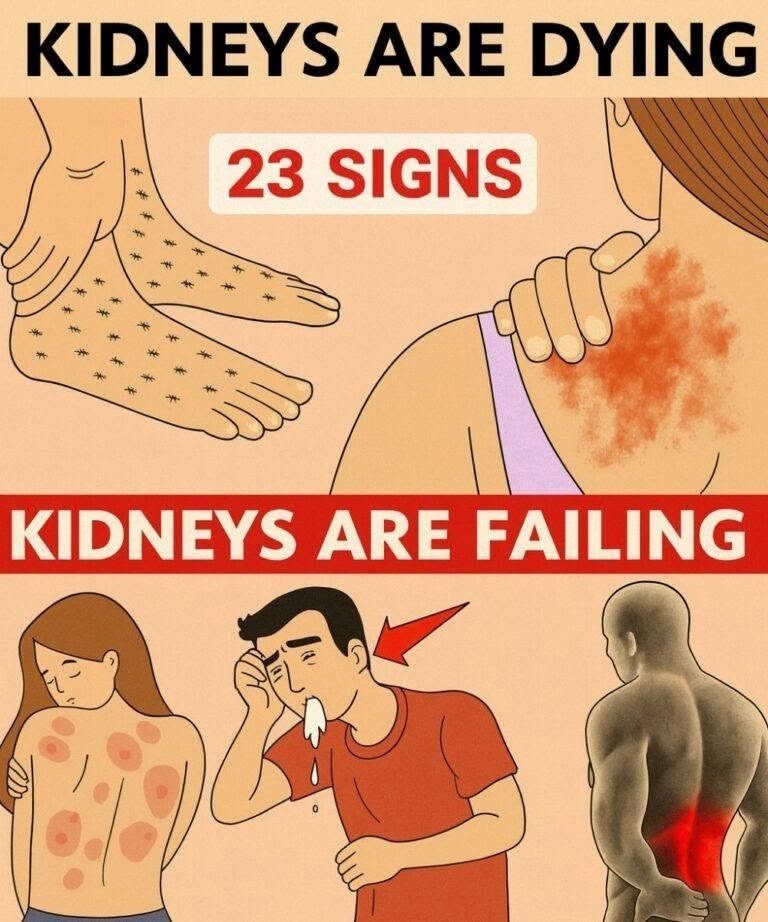
Because they are so vital, any sign that they might be failing is naturally alarming. Recently, a viral social media graphic has caused significant anxiety by featuring a collage of distressing images—including a lower back glowing red, a person vomiting, and various severe skin rashes—accompanied by the bold, terrifying text: “KIDNEYS ARE DYING: 23 SIGNS” and “KIDNEYS ARE FAILING.”
While it is true that kidney disease can eventually manifest with physical symptoms, the way this viral post presents them is highly misleading. It suggests that kidney failure announces itself with a sudden, explosive array of these dramatic physical signs. In reality, kidney disease is often called a “silent killer” because the vast majority of people experience no symptoms at all until the disease is in its advanced stages.
This comprehensive guide will deconstruct the claims in the viral image, explain the actual medical realities behind these symptoms, identify the true early warning signs of kidney disease, and provide a clear, evidence-based path for protecting your kidney health.
Deconstructing the Viral Image: What the Illustrations Actually Mean
The viral post relies on a tactic of fear-mongering by lumping together a wide variety of non-specific symptoms and presenting them as definitive proof of kidney failure. Let’s break down the specific illustrations shown in the image.
1. The Lower Back Pain (Right Image)
One of the most common misconceptions is that any lower back pain is a sign of kidney trouble. The image shows a man with a glowing red spot on his lower back.
The Reality: The kidneys are located in the “flank” area—the sides of your body between your ribs and your hips, closer to the back. While kidney problems can cause flank pain, the pain is usually felt in the back or side, not a single spot in the center of the lower back. Furthermore, kidney pain is often accompanied by fever, painful urination, or a dull ache that doesn’t change with movement. Most lower back pain is musculoskeletal (caused by muscles, ligaments, or spine issues) and has nothing to do with the kidneys.
2. The Skin Rashes and Lesions (Bottom Left)
The image shows a person covered in large, red, circular lesions.
The Reality: While severe skin issues can occur in advanced kidney disease, they do not typically present as large, ring-shaped rashes. The skin changes associated with kidney disease are usually intensely dry, itchy skin (a condition called uremic pruritus), caused by the buildup of toxins and phosphorus in the blood. Other skin changes can include hyperpigmentation or, in very rare and severe cases, calcium deposits in the skin. The rashes in the image look more like psoriasis or an allergic reaction, which are not primary signs of kidney failure.
3. Vomiting and Nausea (Center)
The illustration of a man vomiting is a valid symptom, but it requires context.
The Reality: Nausea and vomiting are symptoms of uremia—the buildup of waste products in the blood. However, this is typically a symptom of advanced kidney failure (Stage 4 or 5), not an early sign. By the time a person is vomiting due to kidney issues, the kidneys have usually already lost a significant amount of their function.
4. Skin Sores and Mites (Top Left)
The image shows a pair of feet with dark spots or dots on them.
The Reality: This likely represents diabetic neuropathy or skin infections. Diabetes is the leading cause of kidney disease. However, the spots on the feet are a sign of diabetes complications, not a direct sign of kidney failure itself.
The Reality: Kidney Disease is Often Silent
The most critical piece of information missing from the viral post is that early-stage Chronic Kidney Disease (CKD) is usually asymptomatic.
According to the Centers for Disease Control and Prevention (CDC), as many as 9 in 10 adults with CKD do not know they have it. The kidneys are incredibly resilient and can adapt to a significant amount of damage. You can lose up to 90% of your kidney function before you begin to experience the severe symptoms shown in the graphic.
This is why relying on physical symptoms to diagnose kidney disease is a dangerous strategy. You cannot wait until you feel sick to get your kidneys checked.
The True Warning Signs of Kidney Disease
Instead of the dramatic, late-stage symptoms in the viral post, doctors look for these more subtle indicators.
1. Changes in Urination
This is often the most direct sign of kidney trouble.
Foamy Urine: If your urine is consistently very foamy or bubbly, it can indicate proteinuria—excess protein leaking into the urine because the kidney’s filters (glomeruli) are damaged.
Frequent Urination: Needing to urinate more often, especially at night (nocturia), can be a sign of kidney damage.
Blood in the Urine (Hematuria): The urine may appear pink, red, or brown.
Difficulty Urinating or Reduced Output: A dramatic decrease in urine volume can indicate acute kidney failure.
2. Swelling (Edema)
When the kidneys fail to remove excess fluid and sodium from the body, it can accumulate in the tissues. This typically manifests as swelling in the lower legs, ankles, feet, and sometimes the face (especially around the eyes in the morning).
3. Persistent Fatigue and Weakness
Healthy kidneys produce a hormone called erythropoietin, which tells the body to make red blood cells. When kidneys are damaged, they produce less of this hormone, leading to anemia. Anemia causes profound fatigue, weakness, and difficulty concentrating.
4. Shortness of Breath
This can have two causes in kidney disease. First, fluid can build up in the lungs (pulmonary edema). Second, anemia (from lack of red blood cells) reduces the amount of oxygen circulating in the body, causing breathlessness with minimal exertion.
5. High Blood Pressure
The kidneys play a crucial role in regulating blood pressure. Damage to the kidneys can cause blood pressure to rise, and high blood pressure, in turn, causes further kidney damage—creating a dangerous cycle.
The Most Reliable Way to Detect Kidney Disease
Because the physical signs are often silent or ambiguous, the only way to know for sure if your kidneys are healthy is through a simple blood and urine test.
The eGFR Blood Test
The estimated Glomerular Filtration Rate (eGFR) is the most accurate measure of kidney function. It is calculated using the level of a waste product called creatinine in your blood. The eGFR estimates how much blood passes through the glomeruli (the tiny filters in the kidneys) every minute.
A normal eGFR is typically around 90 or higher.
An eGFR below 60 for three months or more indicates Chronic Kidney Disease.
The Urine Albumin-to-Creatinine Ratio (UACR)
This test checks for the presence of albumin (a type of protein) in your urine. Healthy kidneys filter out waste but keep proteins in the blood. If albumin is found in the urine, it is an early sign that the kidney filters are damaged.
Who Is at Risk for Kidney Disease?
While anyone can develop kidney issues, certain groups are at a significantly higher risk and should be screened annually.
People with Diabetes: Diabetes is the leading cause of kidney disease. High blood sugar damages the blood vessels in the kidneys.
People with High Blood Pressure: Hypertension is the second leading cause. It puts immense strain on the delicate filtration system.
People with a Family History: If you have a parent or sibling with kidney disease, your risk is higher.
People Over 60: The risk increases with age.
People with Heart Disease or Obesity: These conditions place massive stress on the cardiovascular system, including the kidneys.
What You Can Do to Protect Your Kidneys
The good news is that kidney disease is not inevitable. You can take proactive steps to protect your renal health.
Manage Blood Sugar: If you have diabetes, keep your blood sugar tightly controlled.
Control Blood Pressure: Keep your blood pressure in the target range (typically below 130/80). This often involves a combination of medication, diet, and exercise.
Stay Hydrated: Drink plenty of water. While you don’t need to force yourself to drink gallons, staying well-hydrated helps the kidneys clear sodium and toxins.
Eat a Balanced Diet: Reduce your sodium intake and avoid highly processed foods. A diet rich in fruits, vegetables, and lean proteins supports kidney health. If you already have CKD, you may need to restrict certain nutrients like phosphorus and potassium.
Avoid Overuse of NSAIDs: Nonsteroidal anti-inflammatory drugs (like ibuprofen and naproxen) can cause significant kidney damage if used heavily over long periods. Use them only as directed and with caution.
Stop Smoking: Smoking damages blood vessels, including those in the kidneys, and increases the risk of kidney disease.
Frequently Asked Questions
Q: Is lower back pain a definitive sign of kidney failure? No. Most lower back pain is due to muscles, ligaments, or the spine. Kidney pain is usually felt in the “flank” (the sides, between the ribs and hips) and is often accompanied by fever, painful urination, or a dull ache, not just a localized pain in the center of the lower back.
Q: Can kidney disease cause skin rashes? Advanced kidney disease can cause severe itching (uremic pruritus) and dry skin. However, large, circular rashes or lesions are typically not a primary sign of kidney disease and may indicate other conditions like psoriasis or infections.
Q: How long can you live with kidney failure without knowing it? Because the kidneys have a large reserve capacity, you can lose up to 90% of their function before symptoms like fatigue, nausea, and swelling become noticeable. This is why it can go unnoticed for years.
Q: What are the first signs of kidney failure? The earliest signs are often revealed by blood and urine tests (elevated creatinine, protein in the urine), not physical symptoms. When symptoms do appear early, they are often subtle, such as increased fatigue, swelling in the ankles, or changes in urination patterns.
Q: Is vomiting a symptom of kidney disease? Yes, but it is usually a sign of advanced kidney failure (uremia). It occurs when the kidneys can no longer filter waste products, and the buildup of toxins causes nausea and vomiting.
Q: How often should I get my kidneys checked? If you are healthy and have no risk factors, a check at your annual physical is sufficient. If you have diabetes, high blood pressure, or a family history of kidney disease, you should have your kidneys checked (via eGFR and urine tests) at least once a year.
Conclusion
The viral image claiming that specific physical signs like skin rashes, lower back pain, and foot sores are definitive proof that your kidneys are “dying” is a dangerous oversimplification. While it is vital to pay attention to your body, kidney disease is a silent condition that rarely gives such dramatic physical warning signs until it is very advanced.
If you are concerned about your kidney health, do not rely on internet memes or diagnostic guessing games. Instead, prioritize a simple blood and urine test with your healthcare provider. Early detection is the key to slowing or stopping the progression of kidney disease. By managing your blood pressure, blood sugar, and lifestyle habits, you can take the most effective, science-backed steps to protect these vital organs for years to come.Kidneys are the unsung heroes of the human body. These two bean-shaped organs, located just below the rib cage on either side of the spine, filter about 200 quarts of blood every single day. They remove waste products, balance electrolytes, regulate blood pressure, and produce hormones that keep your bones strong and your blood healthy.
Because they are so vital, any sign that they might be failing is naturally alarming. Recently, a viral social media graphic has caused significant anxiety by featuring a collage of distressing images—including a lower back glowing red, a person vomiting, and various severe skin rashes—accompanied by the bold, terrifying text: “KIDNEYS ARE DYING: 23 SIGNS” and “KIDNEYS ARE FAILING.”
While it is true that kidney disease can eventually manifest with physical symptoms, the way this viral post presents them is highly misleading. It suggests that kidney failure announces itself with a sudden, explosive array of these dramatic physical signs. In reality, kidney disease is often called a “silent killer” because the vast majority of people experience no symptoms at all until the disease is in its advanced stages.
This comprehensive guide will deconstruct the claims in the viral image, explain the actual medical realities behind these symptoms, identify the true early warning signs of kidney disease, and provide a clear, evidence-based path for protecting your kidney health.
Deconstructing the Viral Image: What the Illustrations Actually Mean
The viral post relies on a tactic of fear-mongering by lumping together a wide variety of non-specific symptoms and presenting them as definitive proof of kidney failure. Let’s break down the specific illustrations shown in the image.
1. The Lower Back Pain (Right Image)
One of the most common misconceptions is that any lower back pain is a sign of kidney trouble. The image shows a man with a glowing red spot on his lower back.
The Reality: The kidneys are located in the “flank” area—the sides of your body between your ribs and your hips, closer to the back. While kidney problems can cause flank pain, the pain is usually felt in the back or side, not a single spot in the center of the lower back. Furthermore, kidney pain is often accompanied by fever, painful urination, or a dull ache that doesn’t change with movement. Most lower back pain is musculoskeletal (caused by muscles, ligaments, or spine issues) and has nothing to do with the kidneys.
2. The Skin Rashes and Lesions (Bottom Left)
The image shows a person covered in large, red, circular lesions.
The Reality: While severe skin issues can occur in advanced kidney disease, they do not typically present as large, ring-shaped rashes. The skin changes associated with kidney disease are usually intensely dry, itchy skin (a condition called uremic pruritus), caused by the buildup of toxins and phosphorus in the blood. Other skin changes can include hyperpigmentation or, in very rare and severe cases, calcium deposits in the skin. The rashes in the image look more like psoriasis or an allergic reaction, which are not primary signs of kidney failure.
3. Vomiting and Nausea (Center)
The illustration of a man vomiting is a valid symptom, but it requires context.
The Reality: Nausea and vomiting are symptoms of uremia—the buildup of waste products in the blood. However, this is typically a symptom of advanced kidney failure (Stage 4 or 5), not an early sign. By the time a person is vomiting due to kidney issues, the kidneys have usually already lost a significant amount of their function.
4. Skin Sores and Mites (Top Left)
The image shows a pair of feet with dark spots or dots on them.
The Reality: This likely represents diabetic neuropathy or skin infections. Diabetes is the leading cause of kidney disease. However, the spots on the feet are a sign of diabetes complications, not a direct sign of kidney failure itself.
The Reality: Kidney Disease is Often Silent
The most critical piece of information missing from the viral post is that early-stage Chronic Kidney Disease (CKD) is usually asymptomatic.
According to the Centers for Disease Control and Prevention (CDC), as many as 9 in 10 adults with CKD do not know they have it. The kidneys are incredibly resilient and can adapt to a significant amount of damage. You can lose up to 90% of your kidney function before you begin to experience the severe symptoms shown in the graphic.
This is why relying on physical symptoms to diagnose kidney disease is a dangerous strategy. You cannot wait until you feel sick to get your kidneys checked.
The True Warning Signs of Kidney Disease
Instead of the dramatic, late-stage symptoms in the viral post, doctors look for these more subtle indicators.
1. Changes in Urination
This is often the most direct sign of kidney trouble.
Foamy Urine: If your urine is consistently very foamy or bubbly, it can indicate proteinuria—excess protein leaking into the urine because the kidney’s filters (glomeruli) are damaged.
Frequent Urination: Needing to urinate more often, especially at night (nocturia), can be a sign of kidney damage.
Blood in the Urine (Hematuria): The urine may appear pink, red, or brown.
Difficulty Urinating or Reduced Output: A dramatic decrease in urine volume can indicate acute kidney failure.
2. Swelling (Edema)
When the kidneys fail to remove excess fluid and sodium from the body, it can accumulate in the tissues. This typically manifests as swelling in the lower legs, ankles, feet, and sometimes the face (especially around the eyes in the morning).
3. Persistent Fatigue and Weakness
Healthy kidneys produce a hormone called erythropoietin, which tells the body to make red blood cells. When kidneys are damaged, they produce less of this hormone, leading to anemia. Anemia causes profound fatigue, weakness, and difficulty concentrating.
4. Shortness of Breath
This can have two causes in kidney disease. First, fluid can build up in the lungs (pulmonary edema). Second, anemia (from lack of red blood cells) reduces the amount of oxygen circulating in the body, causing breathlessness with minimal exertion.
5. High Blood Pressure
The kidneys play a crucial role in regulating blood pressure. Damage to the kidneys can cause blood pressure to rise, and high blood pressure, in turn, causes further kidney damage—creating a dangerous cycle.
The Most Reliable Way to Detect Kidney Disease
Because the physical signs are often silent or ambiguous, the only way to know for sure if your kidneys are healthy is through a simple blood and urine test.
The eGFR Blood Test
The estimated Glomerular Filtration Rate (eGFR) is the most accurate measure of kidney function. It is calculated using the level of a waste product called creatinine in your blood. The eGFR estimates how much blood passes through the glomeruli (the tiny filters in the kidneys) every minute.
A normal eGFR is typically around 90 or higher.
An eGFR below 60 for three months or more indicates Chronic Kidney Disease.
The Urine Albumin-to-Creatinine Ratio (UACR)
This test checks for the presence of albumin (a type of protein) in your urine. Healthy kidneys filter out waste but keep proteins in the blood. If albumin is found in the urine, it is an early sign that the kidney filters are damaged.
Who Is at Risk for Kidney Disease?
While anyone can develop kidney issues, certain groups are at a significantly higher risk and should be screened annually.
People with Diabetes: Diabetes is the leading cause of kidney disease. High blood sugar damages the blood vessels in the kidneys.
People with High Blood Pressure: Hypertension is the second leading cause. It puts immense strain on the delicate filtration system.
People with a Family History: If you have a parent or sibling with kidney disease, your risk is higher.
People Over 60: The risk increases with age.
People with Heart Disease or Obesity: These conditions place massive stress on the cardiovascular system, including the kidneys.
What You Can Do to Protect Your Kidneys
The good news is that kidney disease is not inevitable. You can take proactive steps to protect your renal health.
Manage Blood Sugar: If you have diabetes, keep your blood sugar tightly controlled.
Control Blood Pressure: Keep your blood pressure in the target range (typically below 130/80). This often involves a combination of medication, diet, and exercise.
Stay Hydrated: Drink plenty of water. While you don’t need to force yourself to drink gallons, staying well-hydrated helps the kidneys clear sodium and toxins.
Eat a Balanced Diet: Reduce your sodium intake and avoid highly processed foods. A diet rich in fruits, vegetables, and lean proteins supports kidney health. If you already have CKD, you may need to restrict certain nutrients like phosphorus and potassium.
Avoid Overuse of NSAIDs: Nonsteroidal anti-inflammatory drugs (like ibuprofen and naproxen) can cause significant kidney damage if used heavily over long periods. Use them only as directed and with caution.
Stop Smoking: Smoking damages blood vessels, including those in the kidneys, and increases the risk of kidney disease.
Frequently Asked Questions
Q: Is lower back pain a definitive sign of kidney failure? No. Most lower back pain is due to muscles, ligaments, or the spine. Kidney pain is usually felt in the “flank” (the sides, between the ribs and hips) and is often accompanied by fever, painful urination, or a dull ache, not just a localized pain in the center of the lower back.
Q: Can kidney disease cause skin rashes? Advanced kidney disease can cause severe itching (uremic pruritus) and dry skin. However, large, circular rashes or lesions are typically not a primary sign of kidney disease and may indicate other conditions like psoriasis or infections.
Q: How long can you live with kidney failure without knowing it? Because the kidneys have a large reserve capacity, you can lose up to 90% of their function before symptoms like fatigue, nausea, and swelling become noticeable. This is why it can go unnoticed for years.
Q: What are the first signs of kidney failure? The earliest signs are often revealed by blood and urine tests (elevated creatinine, protein in the urine), not physical symptoms. When symptoms do appear early, they are often subtle, such as increased fatigue, swelling in the ankles, or changes in urination patterns.
Q: Is vomiting a symptom of kidney disease? Yes, but it is usually a sign of advanced kidney failure (uremia). It occurs when the kidneys can no longer filter waste products, and the buildup of toxins causes nausea and vomiting.
Q: How often should I get my kidneys checked? If you are healthy and have no risk factors, a check at your annual physical is sufficient. If you have diabetes, high blood pressure, or a family history of kidney disease, you should have your kidneys checked (via eGFR and urine tests) at least once a year.
Conclusion
The viral image claiming that specific physical signs like skin rashes, lower back pain, and foot sores are definitive proof that your kidneys are “dying” is a dangerous oversimplification. While it is vital to pay attention to your body, kidney disease is a silent condition that rarely gives such dramatic physical warning signs until it is very advanced.
If you are concerned about your kidney health, do not rely on internet memes or diagnostic guessing games. Instead, prioritize a simple blood and urine test with your healthcare provider. Early detection is the key to slowing or stopping the progression of kidney disease. By managing your blood pressure, blood sugar, and lifestyle habits, you can take the most effective, science-backed steps to protect these vital organs for years to come.