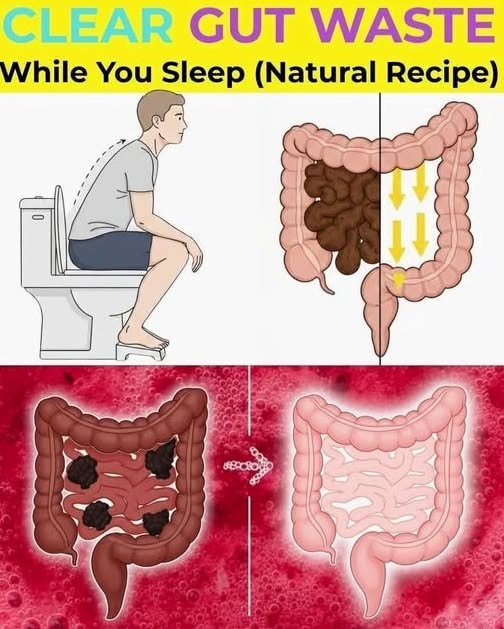
In the digital age, health information spreads like wildfire, but unfortunately, so does medical misinformation. A highly circulated social media graphic features a dramatic, almost horror-movie depiction of the human digestive system. On the left, a colon is shown clogged with dark, lumpy masses of “impacted waste.” An arrow points to a scientifically inaccurate “after” picture: a perfectly pink, pristine, and empty colon. The bold text promises a “Natural Recipe” that will “CLEAR GUT WASTE While You Sleep.”
For anyone who has struggled with bloating, constipation, or simply feeling sluggish, this image is designed to be deeply compelling. It taps into a modern obsession with “detoxing” and a fear of unseen toxins accumulating in our bodies. It promises a simple, passive solution: take this recipe before bed, and wake up with a brand-new digestive tract.
However, from a gastroenterological standpoint, the central premise of this graphic is entirely false. It exploits age-old myths about “autointoxication” to sell supplements, teas, and dubious diet plans. While the image does accidentally include one scientifically proven tip (the footstool shown in the top left), the overarching message is dangerous.
Understanding the true function of the colon, the dangers of aggressive “cleansing,” and the evidence-based ways to support digestive health is essential for protecting your gut and your overall well-being.
Deconstructing the Viral Claim: The “Impacted Waste” Myth
The foundational lie of the colon cleanse industry is the claim that your colon is storing layers of hardened, putrefied fecal matter that requires a special elixir to dissolve. The graphic visualizes this as dark, rock-like clusters stuck to the walls of the intestine.
The Reality of Colon Physiology
The human colon is an incredibly efficient, muscular tube—about five feet long—that absorbs water and electrolytes from digested food, turning the remaining liquid waste into solid stool. The inner lining of the colon is made of a mucosal layer that constantly sheds and regenerates itself.
The colon is not a static pipe that gathers sediment over decades. It is a dynamic organ that moves contents continuously via wave-like muscle contractions known as peristalsis. The transit time for food to travel from your mouth to the toilet is typically between 24 and 72 hours. At any given time, a healthy colon contains only about 1 to 2 kilograms (roughly 2 to 4 pounds) of stool in transit.
The idea that the average person is walking around with 10, 15, or even 20 pounds of “old” feces plastered to their intestinal walls is a myth. This concept, popularized in the early 20th century as “autointoxication” (the belief that the colon produces toxins that poison the body), was thoroughly debunked by modern medicine decades ago. The liver and kidneys are the body’s true detoxification systems, and they do not need help from a laxative tea to function.
The Dangers of Overnight “Cleanses”
The viral post implies that a specific nighttime “recipe” (often containing laxative herbs like senna, cascara sagrada, or high-dose magnesium/saltwater) will flush this waste away. Using such aggressive methods to “cleanse” the colon is not only unnecessary but potentially harmful.
1. Dehydration and Electrolyte Imbalance
Most “detox” recipes work by forcing the colon to expel its contents rapidly through severe diarrhea. This causes massive fluid loss. Along with water, you lose vital electrolytes like sodium, potassium, and magnesium. Depleting these minerals can lead to muscle cramps, fatigue, heart palpitations, and in severe cases, dangerous cardiac arrhythmias and kidney failure.
2. Disruption of the Gut Microbiome
Your colon is home to trillions of bacteria, fungi, and other microorganisms that make up your gut microbiome. These “good” bacteria are essential for digesting certain fibers, synthesizing vitamins (like Vitamin K and B vitamins), and regulating the immune system. Aggressive cleansing can wash away these beneficial microbes, leading to an overgrowth of harmful bacteria and worsening digestive issues.
3. Laxative Dependency
Frequent use of stimulant laxatives can damage the nerve cells in the colon that control muscle contractions. Over time, the colon can become “lazy” and lose its ability to move stool naturally, leading to a dependence on laxatives to have a bowel movement at all.
The One Accurate Element: The Importance of Posture
While the “cleanse” narrative is completely false, the graphic does contain one piece of evidence-based advice: the diagram of the person sitting on the toilet with their feet elevated on a small stool (top left).
The Science of the Squat
The human body is anatomically designed to defecate in a squatting position, not a seated one. When you sit upright on a modern toilet, a sling-like muscle called the puborectalis remains constricted. This muscle wraps around the lower rectum like a loop, keeping it kinked to maintain continence.
When you elevate your feet on a stool, raising your knees above your hips, you enter a semi-squatting position. This posture relaxes the puborectalis muscle, straightening the rectum and allowing stool to pass more easily and completely. Using a footstool while leaning slightly forward is a simple, free, and highly effective way to improve bowel movements and reduce straining, which can prevent hemorrhoids.
What Actually Supports a Healthy Gut
If you want to improve your digestion, reduce bloating, and promote regularity, you do not need a “detox” tea. You need to support your body’s natural physiological processes through sustainable lifestyle habits.
1. Prioritize Dietary Fiber
Fiber is the fuel for a healthy gut. Soluble fiber (found in oats, beans, apples, and carrots) absorbs water to form a gel, softening stool. Insoluble fiber (found in whole grains, nuts, and leafy greens) adds bulk and helps food move through the digestive tract. The American Heart Association recommends aiming for 25 to 30 grams of fiber per day.
2. Stay Properly Hydrated
Fiber cannot do its job without water. If you increase your fiber intake without drinking enough fluids, you can actually worsen constipation. Water keeps the stool soft and helps maintain the mucosal lining of the intestines.
3. Embrace Physical Movement
Exercise stimulates peristalsis—the muscle contractions that move food through the digestive tract. Even a daily 20-minute walk can significantly improve bowel regularity and reduce bloating.
4. Mind Your Microbiome
Incorporate fermented foods into your diet. Foods like yogurt, kefir, sauerkraut, and kombucha contain probiotics, which are live beneficial bacteria that support gut health. These are far more effective and gentler than harsh colon cleanses.
5. Establish a Routine
Your body loves consistency. The gastrocolic reflex is a natural phenomenon that stimulates the urge to have a bowel movement after eating. Try to eat meals at regular times, and give yourself a quiet, unhurried window in the morning to use the bathroom without rushing.
When to Seek Medical Attention
If you are experiencing chronic constipation or changes in your bowel habits, a “natural recipe” from the internet is not the solution. You should consult a doctor if you experience:
Constipation that lasts for more than three weeks despite dietary changes.
Severe abdominal pain or cramping.
Blood in your stool or black, tarry stools.
Unexplained weight loss.
A sudden, persistent change in your bowel habits.
These could be signs of conditions like Irritable Bowel Syndrome (IBS), Inflammatory Bowel Disease (IBD), or in rare cases, colorectal cancer. A doctor can provide an accurate diagnosis and a safe treatment plan.
Frequently Asked Questions
Q: Do I have weeks or months of old waste stuck in my colon? No. This is a myth. The colon constantly moves waste through the body. The average transit time is 1 to 3 days, and the colon does not accumulate layers of “old” feces on its walls.
Q: Can I use a “natural recipe” to clean my colon while I sleep? No. Products or recipes that promise overnight cleansing are usually just strong laxatives. They force diarrhea, which can cause dehydration, electrolyte imbalances, and damage your gut microbiome. There is no medical reason to “clean” a healthy colon.
Q: Why does the image show a footstool on the toilet? This is the only accurate part of the graphic. Using a footstool to elevate your knees above your hips mimics a squatting posture, which relaxes the puborectalis muscle and makes bowel movements easier and more complete.
Q: Are colonic hydrotherapy (colon irrigation) treatments safe? Medical professionals generally advise against routine colonic irrigation for healthy individuals. It carries risks of bowel perforation, infection, and electrolyte imbalance. It should only be performed under strict medical supervision for specific procedures like a colonoscopy.
Q: How can I naturally relieve constipation? The most effective natural methods are increasing dietary fiber (from whole foods), drinking plenty of water, exercising regularly, and establishing a consistent bathroom routine. If these lifestyle changes do not help, speak with a doctor.
Conclusion
The viral image promising to “clear gut waste while you sleep” is a textbook example of how fear-based marketing exploits a basic misunderstanding of human biology. Your colon is not a toxic waste dump requiring a midnight flush; it is a self-regulating, highly efficient organ.
Attempting to “cleanse” it with harsh laxatives or unproven recipes can lead to dehydration, electrolyte imbalances, and long-term damage to your digestive system. Instead of falling for internet myths, focus on the proven fundamentals: eating a fiber-rich diet, staying hydrated, staying active, and adopting good bathroom posture. If you have persistent digestive concerns, trust a medical professional rather than a social media graphic. Your gut—and your entire body—will function best when it is nourished and supported, not aggressively purged.