You’re Doing It All Wrong: The Right Way to Read “Best By” Dates and Other Food Labels
To understand how to read the date on a can, you must first understand the broader landscape of food labeling. In the United States, there is no federal law—aside from regulations on infant formula—that mandates food date labels. The exception is infant formula, where dates are strictly regulated. For everything else, manufacturers are largely free to determine how and when to print dates.
This has resulted in a confusing array of terms. Here are the three most common date labels you will encounter:
1. “Best If Used By” or “Best Before” (Quality Date)
The date shown in the viral image falls into this category. This is not a safety date. It is the manufacturer’s estimate of how long the product will retain its optimal flavor, texture, color, and nutritional value.
What it means: The food is at its absolute best quality before this date.
What it doesn’t mean: It does not mean the food is dangerous or will instantly spoil the day after the date passes. A can of soup or a box of cereal that is a year past its “Best By” date might still be perfectly safe to eat, though it may have lost some of its vibrant flavor or have a slightly softer texture.
2. “Use By” (Safety Date)
The “Use By” date is the only label that is primarily concerned with food safety. It is typically found on highly perishable items, such as fresh meats, poultry, seafood, and some dairy products.
What it means: The manufacturer recommends consuming the product before this date to ensure it is safe to eat.
What it doesn’t mean: Even with a “Use By” date, proper storage is critical. If you leave a package of chicken in a hot car for hours, the “Use By” date becomes irrelevant; the food is unsafe. Conversely, if properly refrigerated, some items can remain safe slightly past this date.
3. “Sell By” (Retail Date)
The “Sell By” date is specifically for grocery store inventory management. It is a date for the retailer, not the consumer.
What it means: The store should pull the product from the shelves by this date for inventory rotation purposes.
What it doesn’t mean: It does not mean the product has spoiled. You should not immediately throw away a product once you bring it home just because the “Sell By” date has passed. It is typically safe to consume the product for several days after this date, provided it has been kept refrigerated.
The Science of Canned Food: Why “Best By” Dates Are Misleading
The image prominently features a canned good. Canned food is one of the most misunderstood categories when it comes to date labels. The process of canning was invented by Nicolas Appert in the early 19th century, and it remains one of the most effective methods of food preservation ever devised.
The Canning Process
To understand why a can’s “Best By” date is largely arbitrary, you have to look at how canned food is made. The process involves sealing raw or partially cooked food in an airtight container and then subjecting it to high heat (usually via steam or boiling water).
This heat treatment kills all microorganisms—including bacteria, yeasts, and molds—that could cause spoilage or foodborne illness. Because the can is sealed airtight, the vacuum prevents new bacteria from entering. As long as the seal remains intact, the food inside is essentially sterile.
Why Do Cans Have Dates Then?
If the food is sterile, why do manufacturers put a date on the lid? Because even in a sterile environment, chemical and physical changes occur over time.
Nutrient degradation: Over a long period, some vitamins, particularly water-soluble vitamins like Vitamin C, can degrade.
Texture and flavor changes: The food may lose some of its firmness, become mushier, or develop a slightly metallic taste.
Color changes: The pigment of certain foods may fade or change.
The “Best By” date is the manufacturer’s way of saying, “We guarantee the best quality up to this point.” It is an estimate of peak freshness, not a countdown to toxicity.
How Long Do Canned Goods Actually Last?
The U.S. Department of Agriculture (USDA) has specific guidelines for the shelf life of canned goods.
High-Acid Foods: Canned fruits, pickles, sauerkraut, and tomatoes have a high acid content, which naturally slows down spoilage. These cans are generally recommended to be used within 12 to 18 months for optimal quality.
Low-Acid Foods: Canned meats, poultry, fish, soups, stews, and vegetables (like green beans or corn) have a lower acid content. These are generally recommended to be used within 2 to 5 years for optimal quality.
However, these are quality guidelines, not safety deadlines. The USDA notes that canned foods that are stored in a cool, dry place, and that remain in good condition, can be consumed safely for years—often decades—beyond their printed date. The nutritional value may diminish, but the food will not make you sick as long as the seal remains intact.
How to Read the Codes on a Can
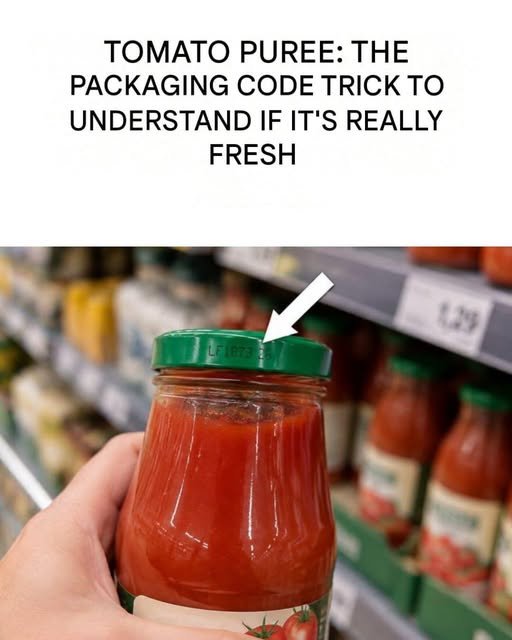
The “Best Before” date shown in the image is just one piece of information stamped on the lid. Often, you will find a complex string of letters and numbers next to the date. These are lot codes or production codes.
The Julian Date
In the food industry, the Julian date is a common way to track production. It is a three-digit number that represents the day of the year the product was manufactured.
001 is January 1st.
152 is June 1st.
365 is December 31st.
You might see a code like “152 23” stamped on a lid. This means the product was produced on the 152nd day of 2023. This code allows the manufacturer to trace the product in the event of a recall. While it is useful for the company, it does not alter the fact that the “Best By” date is a quality estimate, not a safety warning.
The Myth of the Bulging Can: When to Actually Throw It Away
While you can safely eat a can of green beans that is three years past its “Best By” date, there are specific situations where a can is genuinely dangerous and must be discarded immediately.
The Botulism Risk
The biggest risk associated with canned goods is botulism, a rare but potentially fatal illness caused by a toxin produced by the bacterium Clostridium botulinum. This bacterium thrives in low-oxygen environments and can survive in improperly canned low-acid foods.