You’re Doing It All Wrong: The Right Way to Read “Best By” Dates and Other Food Labels
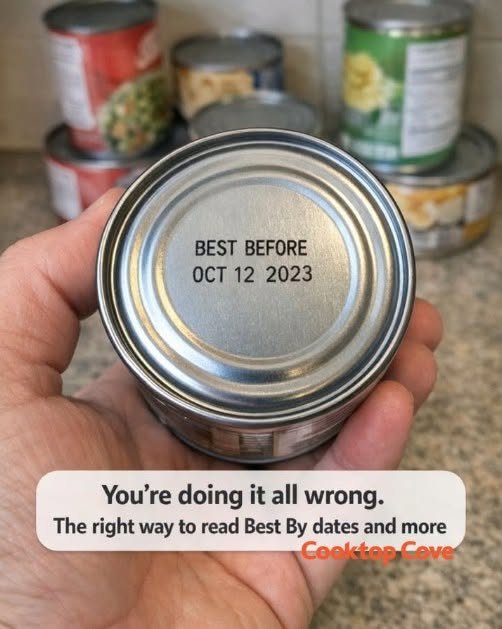
Look into any pantry in America, and you will likely find a collection of canned goods tucked away on the shelves. Some are recent purchases, while others might be relics from several years ago, their lids stamped with dates that have long since passed. A viral image recently highlighted this exact scenario, showing a hand holding a can of food with the text “BEST BEFORE OCT 12 2023” stamped clearly on the lid. The bold overlay reads: “You’re doing it all wrong. The right way to read Best By dates and more.”
For decades, consumers have been conditioned to treat food date labels as absolute laws. If a can is past its “Best By” date, the immediate instinct is to toss it into the trash, assuming it has spoiled, become dangerous to eat, or lost all nutritional value. However, this widespread belief is largely a misunderstanding of what these labels actually mean. The truth is that food date labeling in the United States is a complex, often confusing system that is only loosely regulated. The dates stamped on packaging are rarely indicators of food safety; instead, they are the manufacturer’s best guess at peak quality.
Understanding the nuances of food dating is not just about saving money; it is a critical step in combating the massive global issue of food waste. The misinterpretation of these labels leads millions of perfectly safe, nutritious items to be discarded every single day. By learning how to properly read “Best By,” “Sell By,” and “Use By” dates, and by understanding the science of food preservation, you can confidently extend the life of your pantry staples, reduce your grocery bill, and make smarter, more sustainable choices for your household.
This comprehensive guide will decode the mystery behind food date labels. We will explore the history of the canned food industry, break down the exact meaning of the different date terms, examine the specific case of the “Best Before” date on canned goods, and provide a detailed guide on how to determine if a can of food is truly safe to eat.