Tomato Puree: The Packaging Code Trick to Understand If It’s Really Fresh
Every trip to the grocery store is filled with small decisions. You stand in the aisle, pick up a jar of tomato puree, and instinctively flip it over to check the expiration date. We have been conditioned to believe that the date printed on a package is the ultimate arbiter of food safety and quality. But what if the real secret to getting the freshest product is not the printed date on the label, but the cryptic string of numbers and letters stamped directly onto the lid?
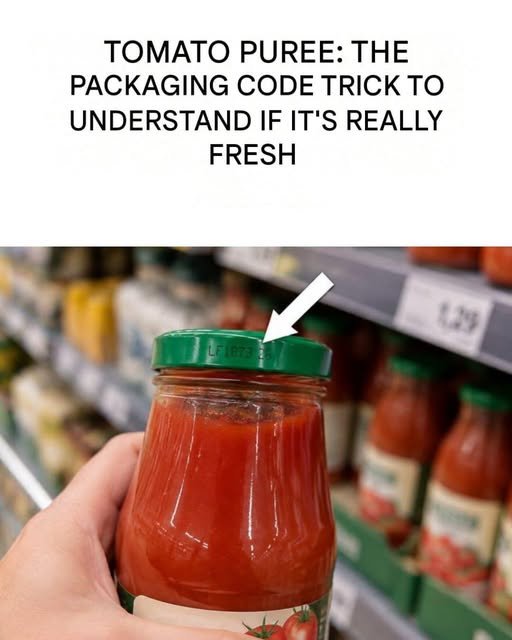
A viral social media post recently highlighted this exact phenomenon. The image shows a hand holding a jar of tomato puree with a green lid, accompanied by the bold text: “TOMATO PUREE: THE PACKAGING CODE TRICK TO UNDERSTAND IF IT’S REALLY FRESH.” An arrow points to a small, barely noticeable code stamped onto the metal lid. The implication is that this code holds the key to knowing the true age of the product, a secret that savvy shoppers use to bypass the often-confusing “best by” labels.
The claim taps into a very real consumer desire: the quest for the freshest, highest-quality ingredients. It also highlights a massive amount of confusion surrounding food expiration dates. Are the dates on the label reliable? What do the numbers on the lid actually mean? And is it truly possible to determine the freshness of a jarred, shelf-stable product like tomato puree just by looking at a few digits?
The answer is a fascinating mix of food science, manufacturing logistics, and consumer education. The “trick” is not a secret hack, but rather a basic literacy in industrial date coding. Understanding these codes can help you navigate the grocery store more effectively, reduce food waste in your home, and ultimately make better choices about the products you buy.
This comprehensive guide will decode the mystery of the packaging code. We will explore the various formats of date labeling, explain the science of how shelf-stable tomato puree stays fresh, break down exactly how to read the codes on your jars and cans, and provide practical, evidence-based tips for selecting, storing, and consuming tomato products.