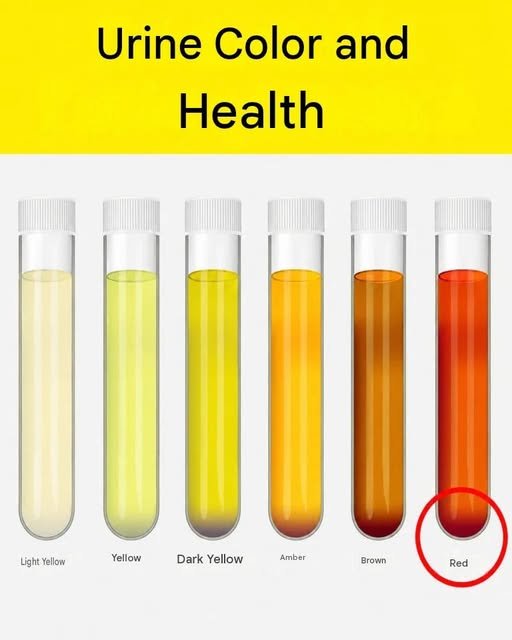
What Your Urine Color Reveals About Your Health: A Practical Guide to Reading the Chart
Urine is one of the body’s most accessible signals. Most people look at it every day without thinking much about what they see, yet its color can offer useful clues about hydration, diet, medications, and, in some cases, medical conditions that need attention. The chart in this image shows six common shades, from clear and pale yellow through dark yellow, orange, brown, and red. Each shade points to different possibilities, and understanding them can help you decide whether a change is harmless or worth discussing with a doctor. This guide explains what drives urine color, what each shade typically means, and when a color change calls for medical advice. Urine color is a helpful indicator, but it is not a diagnostic tool on its own, and this article is written for general education rather than to replace professional care. The chart labels the third sample “Ravgul,” which appears to be a non-English word for an orange shade, and this article treats it as orange. Keep that in mind as we walk through each color, because the most common explanations are often simpler than they first appear.