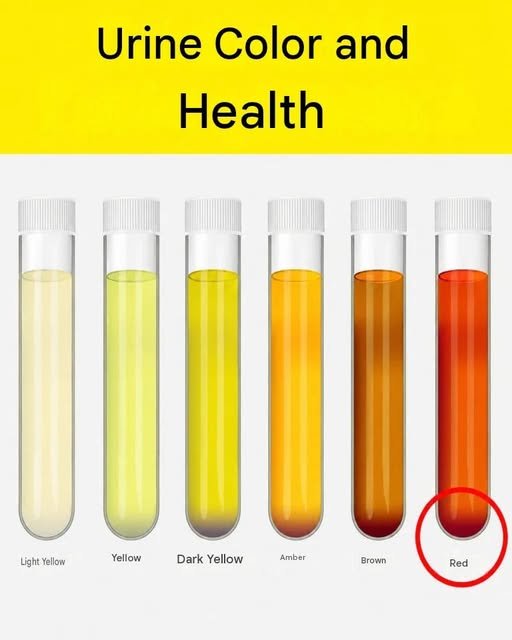
What Your Urine Color Reveals About Your Health: A Practical Guide to Reading the Chart
Dark Yellow: The Most Common Signal of Dehydration
Dark yellow urine is the shade most people see when they are not drinking enough fluid. It indicates that the kidneys are working to conserve water, concentrating waste and pigment into a smaller volume. In many cases, simply drinking more water will lighten the color within a few hours, which is a useful test in itself. If your urine returns to pale yellow after increasing your fluid intake, dehydration was the likely cause.
Dehydration can arise from many everyday situations, including hot weather, physical activity, travel by air, a hot bath or sauna, fever, diarrhea, or a busy schedule that leaves little room for drinking. Older adults and people who take diuretic medications may be more vulnerable, since their bodies may signal thirst less clearly or lose fluid more readily.
Persistent dark yellow urine, even after drinking adequately, may have other explanations. Some medications and supplements can darken urine, and certain conditions affect how well the kidneys concentrate it. If the color does not respond to increased fluids over several days, or if it comes with symptoms such as dizziness, reduced urination, or severe thirst, medical advice is appropriate.
Amber and Orange Shades
The chart’s third sample is labeled with a non-English word that appears to refer to an orange or amber tone. Urine in this range is usually concentrated, often from dehydration, but it can also reflect specific substances. Some medications used to treat urinary discomfort contain a dye that turns urine bright orange, and certain antibiotics and laxatives can cause similar changes. Rifampin, a medication used for tuberculosis, is well known for coloring urine orange-red and can also tint tears and other body fluids.
Diet and supplements contribute too. High doses of vitamin B2, also called riboflavin, produce a very bright yellow or neon shade in urine. This is harmless and is simply the body excreting excess vitamin. Beta-carotene from large amounts of carrots or certain supplements can cause a yellow-orange tint.
Because orange urine has many possible sources, the most useful step is to think back over recent changes. Did you start a new medication or supplement? Have you eaten an unusual amount of a particular food? Are you drinking less than usual? If the cause is not clear and the color persists, it is worth mentioning to a healthcare provider, particularly if other symptoms are present.
Foods and Supplements That Change Urine Color
Many people are surprised by how much diet can affect urine color. Beets are the most famous example and can turn urine pink or red in some people, a phenomenon sometimes called beeturia. The effect is harmless, and it is more common in people who have lower iron stores, though it does not occur in everyone. Rhubarb, blackberries, and foods containing artificial food dyes can also alter color temporarily.
Fava beans can produce dark or brown urine in people with a particular inherited enzyme deficiency, and this is a reason to be careful about the source of such a change. Most people will not experience this, but it illustrates how individual biology shapes the outcome.
A practical approach is to keep a simple record of what you ate and drank in the day or two before a color change. If the shift lines up with a specific food, and your urine returns to normal when you stop eating it, diet is the probable explanation. Patterns like this are valuable information to share with a doctor if a concern arises.
Medications That Affect Urine Color
Medications are a common cause of unusual urine color and are often overlooked. Certain drugs can tint urine due to their pigments or the way the body metabolizes them. Phenazopyridine, sometimes used for urinary pain, produces a bright orange color. Some antibiotics, including metronidazole, can turn urine dark brown or greenish. Anticancer drugs, antimalarials, and certain laxatives can also change color in some people.
If you notice a change after starting a new prescription or over-the-counter product, read the packaging or ask a pharmacist. Pharmacists are well placed to say whether a change is a known side effect. Never stop a prescribed medication on your own without speaking to the prescriber, as some drugs require careful management.
Medication-related color changes are usually harmless, but they can occasionally mask or resemble more serious problems, especially blood in the urine. This is one reason why red or brown urine should always be checked rather than assumed to be caused by a drug.