Which Melon Would You Choose? There’s Only One Really Ripe One!
Picking a ripe watermelon can feel like a gamble. You knock on it, you lift it, you stare at it — but how do you really know if it’s sweet and juicy inside?
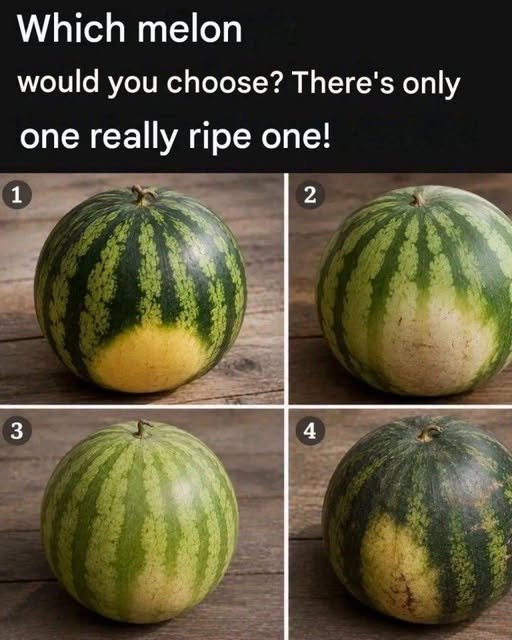
The image above shows four watermelons. Only one is truly ripe. Can you guess which one? Here’s the answer and the grower’s trick behind it. 👇
Disclaimer: This post is for informational purposes only. These tips are based on traditional grower knowledge and may not guarantee sweetness in every melon.
🔬 The Answer: Watermelon #1
Watermelon #1 is the ripe one.
Why? Look at the field spot — the large, creamy yellow patch on the bottom of the melon. This is where the watermelon rested on the ground while ripening. A creamy yellow or orange field spot means the watermelon was left on the vine long enough to fully ripen and develop its natural sugars.
Why the others are not ripe:
Watermelon #2: The field spot is white or pale green, meaning it was picked too early.
Watermelon #3: The field spot is very small and pale, indicating it wasn’t fully ripened on the vine.
Watermelon #4: The field spot is yellowish but the melon has dark, bruised spots and an uneven shape — signs of overripeness or damage.
💡 Other Tips for Choosing a Sweet Watermelon
1. The “Hollow” Sound Knock on the watermelon. A deep, hollow sound means it’s ripe and juicy. A dull thud means it’s underripe or overripe.
2. The “Webbing” Look for brown, web-like scars on the skin. These are caused by bees pollinating the flower and are a sign of a sweet melon.
3. The Weight A ripe watermelon feels heavy for its size. This means it’s full of water and juice.
4. The Shape Choose a watermelon that is symmetrical and free of bruises, soft spots, or cuts.
5. The “Tail” If the watermelon still has a small tail (the stem), it should be dry and brown. A green tail means it was picked too early.
❓ Frequently Asked Questions
What is the field spot on a watermelon? It’s the creamy yellow or orange spot on the bottom of the watermelon where it rested on the ground. A yellow spot means it’s ripe.
Should I knock on a watermelon to test ripeness? Yes — a deep, hollow sound indicates ripeness. A dull thud means it’s not ready.
What does it mean if the field spot is white? It means the watermelon was picked too early and may not be as sweet.
What are the brown webs on a watermelon? They’re called “webbing” and are a sign of pollination. They often indicate a sweeter melon.
Should I choose a heavy or light watermelon? Choose a heavy one. A heavier watermelon means it’s full of water and juice.
Can I ripen a watermelon after I buy it? No — watermelons don’t ripen after they’re picked. That’s why choosing a ripe one at the store is so important.
What’s the best time of year to buy watermelon? Summer is peak watermelon season. Look for locally grown melons for the best flavor.
How do I store a watermelon? Store it whole at room temperature for up to a week, or cut it and refrigerate it in an airtight container for up to 5 days.