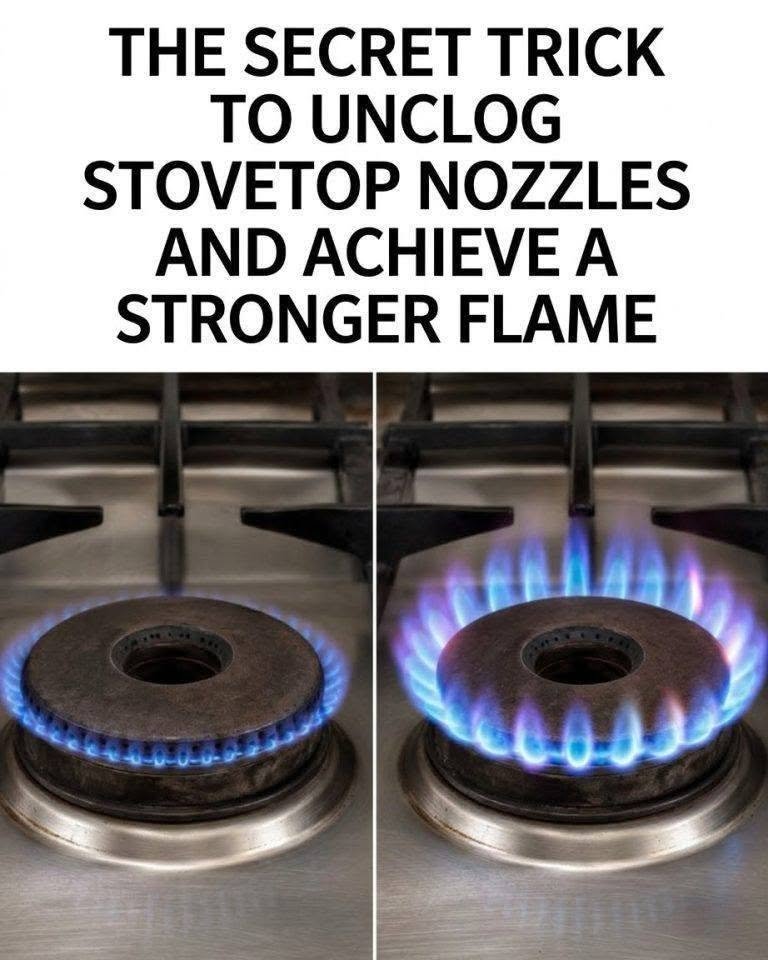
The Secret Trick to Unclog Stovetop Nozzles and Achieve a Stronger Flame!
Before you panic and call an expensive repair technician, there is a secret—a remarkably simple, highly effective maintenance trick—that can restore your stovetop to its former glory. The culprit behind a weak flame is almost always a clogged set of nozzles and burner ports. Over time, grease splatters, food spills, dust, and even moisture accumulate in the tiny holes where the gas escapes. This restricts the flow of gas and prevents the proper mixture of gas and oxygen, resulting in a weak, inefficient, and unsightly flame.
This comprehensive guide will walk you through the ultimate, professional-grade cleaning trick to unclog your stovetop nozzles, ensure a perfect gas-to-air ratio, and achieve a powerful, roaring blue flame. By following these step-by-step instructions, you will not only improve your cooking experience but also enhance the safety and energy efficiency of your kitchen.
Understanding Your Gas Stovetop: The Anatomy of the Flame
To master the cleaning process, you must first understand exactly what you are cleaning. A gas stovetop is a marvel of simple, effective engineering. It relies on a precise mixture of gas and air to create a clean-burning flame.
The Key Components
The Gas Orifice (The True Nozzle): Located beneath the surface, the gas orifice is a tiny, precision-machined brass fitting. It controls the exact volume of gas that enters the burner. Crucial Note: You should never poke, drill, or enlarge the brass orifice. It is calibrated at the factory to provide a specific BTU output. Tampering with it can cause dangerous gas leaks or incomplete combustion.
The Burner Head and Cap: The burner head is the metal component that distributes the gas. The cap sits on top, forcing the gas to exit through the small slots or holes around the perimeter.
The Burner Ports (The “Nozzles”): These are the small holes or slots around the edge of the burner head. They are the actual exits for the flame. When people refer to clogged nozzles, they are almost always referring to these ports.
The Igniter: The small ceramic and metal component that generates a spark to light the gas.
The Air Shutter: A small mechanism that controls the amount of air mixed with the gas before combustion.
The Science of the Blue Flame
A healthy gas flame should be predominantly blue. The blue color indicates complete combustion—the gas is burning efficiently, producing maximum heat and minimal byproducts.
When the burner ports are clogged, the gas flow is restricted. This alters the delicate gas-to-air ratio. The gas may not have enough oxygen to burn completely, resulting in a yellow or orange flame. This “lazy” flame not only produces less heat but also creates soot, which can damage your cookware and contribute to indoor air pollution. Restoring the clean, unhindered flow of gas through the ports is the secret to achieving that powerful, blue flame.