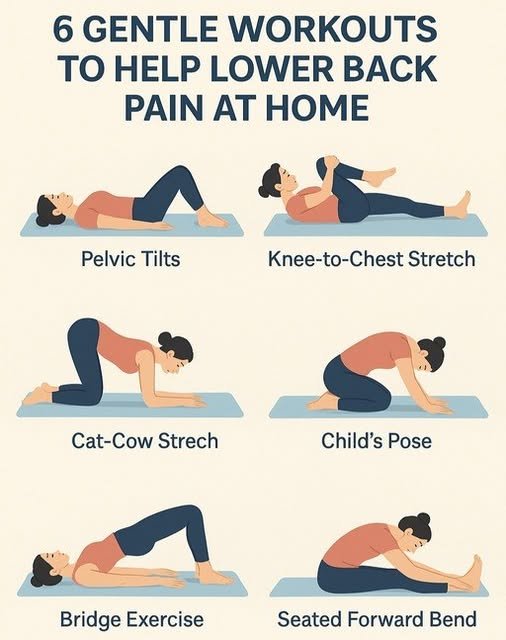
Pelvic Tilts, Knee-to-Chest Stretch, Cat-Cow Stretch, Child’s Pose, Bridge Exercise, and Seated Forward Bend. These movements are not a cure for every type of back pain. They are low-impact exercises that can help improve mobility, reduce stiffness, activate supporting muscles, and encourage circulation. They are most appropriate for mild to moderate mechanical low back pain—pain related to muscles, joints, posture, or movement—when a healthcare professional has cleared you for gentle activity.
This guide explains how to perform each exercise safely, what it targets, common mistakes to avoid, useful modifications, and how to combine the exercises into a short home routine. It also explains who should be cautious, when to stop, and when lower back pain requires medical attention.
Understanding Lower Back Pain Before You Exercise
Lower back pain has many causes. Most cases are mechanical or non-specific, meaning there is no serious underlying disease. Common contributors include muscle strain, joint irritation, poor sleep, prolonged sitting, deconditioning, stress, and sudden increases in activity. Some people have disc-related pain, arthritis, spinal stenosis, or nerve irritation. Less commonly, back pain can be a sign of infection, fracture, cancer, or another serious condition.
Gentle exercise is generally helpful for uncomplicated mechanical back pain, but it is not appropriate for every situation. Do not exercise through severe pain, and do not ignore warning signs. If you have unexplained weight loss, fever, loss of bowel or bladder control, numbness in the groin, progressive weakness in the legs, severe pain after a fall, or a history of cancer, seek medical care before exercising.
If you have had back surgery, a recent fracture, osteoporosis, a hip replacement, severe arthritis, or a diagnosed spinal condition, ask your doctor or physical therapist which movements are safe. Some exercises in this guide may need to be modified or avoided.
How Gentle Exercise Helps Lower Back Pain
Gentle movement can help in several ways:
Reduces stiffness: Motion encourages synovial fluid to circulate in the joints and reduces the feeling of “locking up.”
Activates supporting muscles: The core, glutes, and spinal stabilizers help support the lower back.
Improves mobility: Gentle stretching can restore range of motion in the hips and spine.
Calms the nervous system: Slow breathing and controlled movement can reduce pain sensitivity and stress.
Builds confidence: Gradual movement helps people trust their backs again.
Exercise is not a substitute for medical care. It is one part of a broader plan that may include sleep, posture, stress management, and gradual activity.
Safety Rules for Exercising With Lower Back Pain
Before starting, follow these general rules:
Get clearance if needed. Ask a doctor or physical therapist if you have a diagnosed condition, recent injury, surgery, or severe pain.
Start slowly. Use small ranges of motion and fewer repetitions.
Breathe. Do not hold your breath. Slow, steady breathing helps relax muscles.
Stop if pain worsens. Mild discomfort may occur, but sharp pain, numbness, tingling, or pain radiating down the leg is a signal to stop.
Use a mat or carpeted floor. Avoid slippery surfaces.
Keep movements gentle. Do not bounce, force, or push through pain.
Modify as needed. Use pillows, chairs, or wall support.
Be consistent. Short, frequent sessions are often better than long, intense ones.
1. Pelvic Tilts
Pelvic tilts are one of the gentlest and safest exercises for lower back pain. They help mobilize the lower spine, activate the deep abdominal muscles, and reduce stiffness.
How to Do It
Lie on your back with your knees bent and feet flat on the floor, hip-width apart.
Place your arms at your sides or on your lower abdomen.
Gently flatten your lower back against the floor by tilting your pelvis slightly upward. Imagine your tailbone curling toward your belly.
Hold for 3 to 5 seconds while breathing normally.
Release and return to a neutral position.
Repeat 8 to 12 times.
What It Targets
Pelvic tilts activate the transverse abdominis and gently mobilize the lumbar spine. They are useful for people who feel stiff after lying down or sitting.
Common Mistakes
Pushing too hard and lifting the hips.
Holding the breath.
Clenching the buttocks excessively.
Moving too quickly.
Modifications
If lying flat is uncomfortable, place a small pillow under the head or knees. If getting down to the floor is difficult, pelvic tilts can be done standing with the back against a wall.
2. Knee-to-Chest Stretch
The knee-to-chest stretch gently lengthens the lower back and glutes. It can relieve tension and improve flexibility.
How to Do It
Lie on your back with your knees bent and feet flat.
Bring one knee toward your chest, using your hands to hold behind the thigh or knee.
Keep the other foot flat on the floor or extend it gently.
Hold for 20 to 30 seconds while breathing slowly.
Lower the leg and repeat on the other side.
Do 2 to 3 repetitions per side.
What It Targets
This stretch targets the lower back, glutes, and hip extensors. It can be helpful for people who feel tight after prolonged sitting.
Common Mistakes
Pulling too hard and compressing the hip.
Lifting the head and neck off the floor.
Holding the breath.
Doing it immediately after a recent hip replacement without clearance.
Modifications
If you cannot reach your knee, use a towel or strap around the thigh. If both knees to the chest is uncomfortable, do one leg at a time. People with knee pain may prefer to keep the knee slightly less flexed.
3. Cat-Cow Stretch
Cat-Cow is a gentle spinal mobility exercise. It moves the spine through flexion and extension and helps coordinate breath with movement.
How to Do It
Start on your hands and knees in a tabletop position. Place wrists under shoulders and knees under hips.
Inhale as you drop your belly, lift your chest, and look slightly upward (Cow).
Exhale as you round your back, tuck your chin, and draw your belly in (Cat).
Move slowly between the two positions.
Repeat 8 to 10 times.
What It Targets
Cat-Cow mobilizes the spine, warms up the back muscles, and encourages breathing. It is a good warm-up before other exercises.
Common Mistakes
Moving too fast.
Forcing the neck into extreme extension.
Letting the elbows lock or the shoulders collapse.
Doing it on a hard floor without padding.
Modifications
If wrist pain is an issue, do the movement seated in a chair or standing with hands on thighs. If knee pain is present, place a folded blanket under the knees.
4. Child’s Pose
Child’s Pose is a resting stretch that gently lengthens the lower back and hips. It can be calming and useful between more active exercises.
How to Do It
Kneel on a mat with your big toes together and knees apart.
Sit back toward your heels.
Fold forward, extending your arms in front of you or resting them alongside your body.
Rest your forehead on the mat or on a pillow.
Breathe slowly and hold for 30 to 60 seconds.
What It Targets
Child’s Pose stretches the lower back, hips, and shoulders. It encourages relaxation and gentle spinal flexion.
Common Mistakes
Forcing the hips down if the knees or hips are tight.
Compressing the neck.
Holding the breath.
Doing it during pregnancy without modifying the knee position.
Modifications
Place a pillow under the hips or between the heels and buttocks. Keep the knees wide. If knee pain is severe, try a seated forward fold instead. Pregnant women should keep the knees wide and avoid deep compression.
5. Bridge Exercise
The bridge strengthens the glutes and core while gently extending the hips. Strong glutes can help support the lower back.
How to Do It
Lie on your back with knees bent and feet flat, hip-width apart.
Press through your feet and lift your hips a few inches off the floor.
Squeeze the glutes gently and keep the core engaged.
Hold for 3 to 5 seconds.
Lower slowly.
Repeat 8 to 12 times.
What It Targets
Bridges activate the gluteus maximus, hamstrings, and core stabilizers. They can help reduce reliance on the lower back muscles during daily movements.
Common Mistakes
Arching the lower back instead of using the glutes.
Lifting too high.
Pushing through the toes instead of the whole foot.
Holding the breath.
Modifications
Start with a small lift. If bridge causes back pain, try a glute squeeze lying flat or a standing hip hinge. People with neck or shoulder pain should keep the upper back supported.
6. Seated Forward Bend
The seated forward bend stretches the hamstrings and lower back. It can be helpful for people who feel tight in the back of the legs, but it must be done gently. This exercise is not suitable for everyone, especially people with acute disc pain or sciatica.
How to Do It
Sit on the floor or on a firm cushion with legs extended.
Bend the knees slightly.
Hinge forward from the hips, keeping the spine long.
Reach toward the shins, ankles, or feet, whichever is comfortable.
Hold for 20 to 30 seconds while breathing.
Return slowly.
What It Targets
This stretch targets the hamstrings, calves, and lower back. It can improve hip hinge mechanics.
Common Mistakes
Rounding the back forcefully.
Locking the knees.
Pulling with the arms instead of hinging from the hips.
Pushing into pain.
Modifications
Sit on a cushion to tilt the pelvis forward. Bend the knees more. Use a strap around the feet. If the stretch causes sharp pain or radiating leg pain, stop. Some people with sciatica feel worse in this position; choose a gentler hamstring stretch instead.
A 15-Minute Gentle Home Routine
This routine is a general example. Adjust based on your comfort and medical advice.
Breathing and settling: 1 minute. Lie on your back or sit comfortably. Breathe slowly.
Pelvic tilts: 8 to 12 repetitions.
Knee-to-chest stretch: 2 to 3 repetitions per side, 20 to 30 seconds each.
Cat-Cow: 8 to 10 slow repetitions.
Child’s Pose: 30 to 60 seconds.
Bridge: 8 to 12 repetitions, holding 3 to 5 seconds.
Seated forward bend: 2 repetitions, 20 to 30 seconds each, with bent knees.
Rest: 1 to 2 minutes of slow breathing.
Do this routine once or twice daily if comfortable. Stop if symptoms worsen.
Tips for Exercising at Home
Use a non-slip mat.
Keep a water bottle nearby.
Wear comfortable clothing.
Exercise at a time when you are not rushed.
Avoid exercising immediately after a large meal.
Keep movements slow and controlled.
Use pillows and chairs for support.
Do not compare your range of motion to someone else’s.
Track symptoms in a simple diary.
What Else Helps Lower Back Pain
Exercise is one part of a broader plan.
Stay active: Walking is one of the best activities for lower back pain.
Manage stress: Stress worsens muscle tension and pain perception.
Check posture: Adjust your chair, screen, and sleeping position.
Avoid prolonged sitting: Stand and move every 30 to 60 minutes.
Use heat or ice: Heat can relax muscles; ice can reduce acute inflammation.
Maintain a healthy weight: Excess weight increases load on the spine.
Quit smoking: Smoking impairs tissue healing and blood flow.
When to See a Doctor
Seek medical care if you have:
Severe or worsening pain.
Pain after a fall or trauma.
Numbness in the groin or saddle area.
Loss of bowel or bladder control.
Progressive weakness in the legs.
Fever, chills, or unexplained weight loss.
A history of cancer.
Pain that wakes you at night or does not improve with rest.
Pain radiating down the leg with numbness or weakness.
These symptoms may indicate a serious condition and require prompt evaluation.
Conclusion: Gentle Movement, Gradual Progress
Lower back pain can be frightening, but gentle movement is often part of the solution. Pelvic tilts, knee-to-chest stretches, Cat-Cow, Child’s Pose, bridges, and seated forward bends are simple exercises that can improve mobility, reduce stiffness, and support the muscles that protect the spine. They are not a cure, and they are not right for every type of back pain. Start slowly, breathe, modify as needed, and stop if pain worsens.
The goal is not to force the back into submission. It is to restore confidence, circulation, and control. With consistency and appropriate medical guidance, gentle home exercise can be a valuable part of a healthier, more comfortable back.
Frequently Asked Questions
Can these exercises cure lower back pain?
No single exercise cures all lower back pain. These gentle movements can reduce stiffness, improve mobility, and support muscles, but they are one part of a broader plan. See a healthcare professional for persistent or severe pain.
How often should I do these exercises?
Start once daily or every other day. If comfortable, you can do the routine twice daily. Consistency matters more than intensity.
What if an exercise causes pain?
Stop the exercise. Mild discomfort may occur, but sharp pain, numbness, tingling, or radiating leg pain is a signal to stop and seek advice.
Is Child’s Pose safe for everyone?
No. People with knee pain, hip pain, or pregnancy may need modifications. Use pillows and keep the knees wide. Ask a professional if unsure.
Can I do seated forward bends with sciatica?
Some people with sciatica feel worse in a forward bend. If it increases leg pain or tingling, stop and choose a gentler hamstring stretch.
Are bridges safe for lower back pain?
Bridges are generally safe when done gently and with good form. If they cause back pain, reduce the height or try a glute squeeze lying flat.
Should I exercise if my back pain is severe?
Do not exercise through severe pain. Seek medical advice first. Gentle movement may be appropriate once the acute phase has passed.
When should I see a doctor for lower back pain?
See a doctor for severe pain, pain after trauma, numbness in the groin, loss of bowel or bladder control, progressive leg weakness, fever, unexplained weight loss, or pain that does not improve.