Snake Bites: How to Identify Venomous vs. Non-Venomous and What to Do First
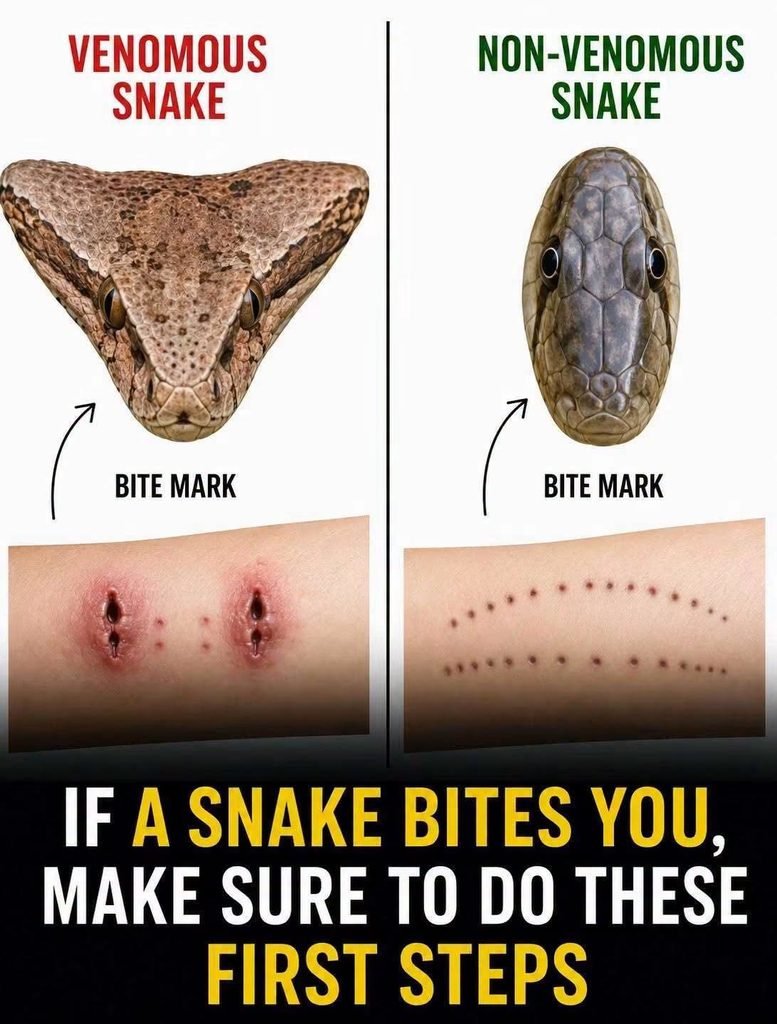
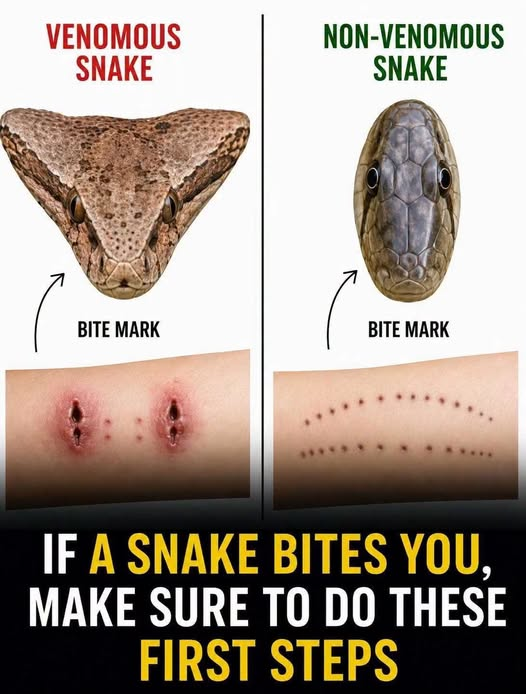
Snake bites can be a frightening experience, and knowing how to respond quickly is essential for safety. A recent informational graphic highlights the visual differences between venomous and non-venomous snake bites, along with the critical first steps to take if you are bitten.
Identifying the Bite Pattern
One of the most important things to know is that snake bites leave different marks depending on whether the snake is venomous.
According to the graphic, a venomous snake bite typically presents with two distinct puncture wounds, often accompanied by redness and swelling. These marks are from the fangs, which are designed to inject venom into the victim.
In contrast, a non-venomous snake bite usually shows a row of multiple small, shallow bite marks. These marks are from the snake’s teeth, which are used to grab and hold rather than inject venom. The pattern may appear as a series of small dots or scratches across the skin.
First Steps After a Snake Bite
If you or someone else is bitten by a snake, taking the right actions immediately can make a significant difference. Here are the essential first steps:
1. Stay Calm and Move Away
The first and most important step is to remain calm. Panic can increase your heart rate, which may cause venom to spread more quickly through the body if the snake was venomous. Move away from the snake to avoid additional bites.
2. Seek Medical Help Immediately
Call for emergency medical assistance right away. Even if you are unsure whether the snake was venomous, it is always safer to get professional medical evaluation and treatment. Time is critical when dealing with a venomous bite.
3. Keep the Affected Area Still
Keep the bitten limb immobile and positioned below the level of the heart. This helps slow the spread of venom through the bloodstream. Avoid any unnecessary movement of the affected area.
4. Do Not Cut, Suck, or Use a Tourniquet
There are many myths about treating snake bites that can actually cause more harm than good. Do not attempt to cut the wound, suck out the venom, or apply a tourniquet. These actions can damage tissues, introduce infection, and may worsen the situation.
5. Remove Tight Items
If the bite is on a limb, remove any tight clothing, jewelry, or watches before swelling begins. Once swelling starts, these items may become constricting and difficult to remove.
Conclusion
Understanding the difference between venomous and non-venomous snake bites can help you respond appropriately in an emergency. The most important takeaway is to stay calm, seek medical help immediately, and avoid harmful home remedies. Your safety and the safety of those around you should always come first.