Your Legs Will Fail You If You Ignore This: The Doctor’s Urgent Guide to Stronger Legs After 60
Your legs are the foundation of your entire body. They carry you through the world, support your heart, and act as a secondary pump for your circulatory system. When the muscles in your legs weaken, the consequences cascade through your entire physiology. Balance deteriorates, the risk of catastrophic falls skyrockets, and the ability to perform basic activities of daily living—like getting dressed, bathing, or cooking—is compromised.
This comprehensive guide is the answer to the doctor’s plea. It is a detailed, evidence-based blueprint for preserving and rebuilding leg strength after the age of 60. We will explore the biological mechanisms of muscle loss, the critical role of specific exercises and nutrition, the importance of balance training, and the exact steps you must take starting tomorrow to ensure your legs remain strong, stable, and resilient for decades to come.
The Silent Threat: Understanding Sarcopenia
To combat leg weakness, you must first understand the enemy. Sarcopenia is the age-related, involuntary loss of skeletal muscle mass and strength. It is a gradual process that typically begins around the age of 30, but it accelerates significantly after the age of 60.
The Biology of Muscle Loss
As we age, the body undergoes a series of physiological changes that contribute to muscle breakdown:
Anabolic Resistance: The body becomes less responsive to the signals that tell it to build muscle (like protein intake and resistance exercise). It requires a higher “dose” of these stimuli to achieve the same muscle-building effect as when you were younger.
Hormonal Shifts: Declines in hormones such as testosterone, estrogen, and growth hormone play a role in the loss of muscle mass and the increase in body fat.
Mitochondrial Dysfunction: The “powerhouses” of our cells, the mitochondria, become less efficient at producing energy, leading to muscle fatigue and a reduced capacity for physical work.
Neurological Decline: The motor neurons (the nerves that connect the brain to the muscles) die off, leading to a loss of muscle fibers, particularly the fast-twitch fibers responsible for power and quick reactions.
The Vicious Cycle of Inactivity
Sarcopenia does not happen in a vacuum. It is deeply intertwined with a decrease in physical activity. When a person feels their legs becoming weaker, they naturally become less active to avoid discomfort or fear of falling. Unfortunately, this is the worst possible strategy. Inactivity accelerates muscle breakdown. The less you use your muscles, the faster they atrophy. This creates a vicious cycle: weakness leads to inactivity, which leads to more weakness, which leads to a loss of independence.
Why Your Legs Are the Foundation of Your Health
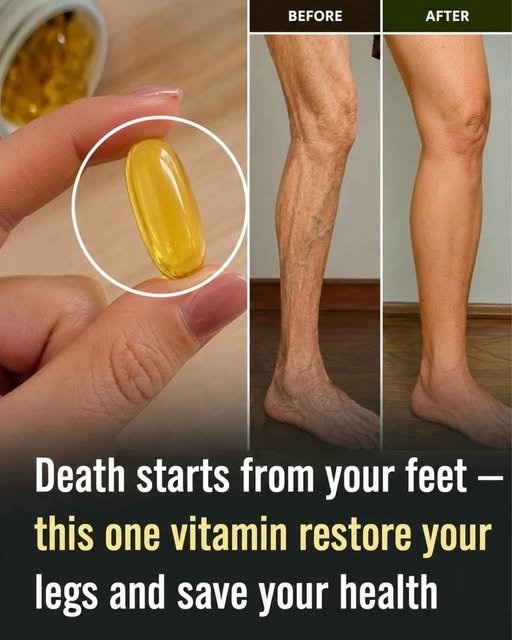
The doctor in the viral image is begging older adults to pay attention because the health of your legs is a microcosm of the health of your entire body.
The “Second Heart”
The muscles in your lower legs, particularly the calves, act as a “second heart.” When you walk or move, these muscles contract and squeeze the veins, helping to pump deoxygenated blood and lymphatic fluid back up to the heart against gravity. If these muscles weaken, circulation suffers, increasing the risk of blood clots, swelling (edema), and cardiovascular issues.
The Risk of Falls
The most immediate and terrifying consequence of leg weakness is the increased risk of falls. According to the Centers for Disease Control and Prevention (CDC), falls are the leading cause of injury-related death among adults aged 65 and older. Each year, millions of older adults fall, and one in five falls causes a serious injury, such as broken bones or a head injury. Weak legs, combined with poor balance, are the primary culprits. A hip fracture, often the result of a fall, can lead to a rapid decline in health, loss of independence, and a significantly increased risk of mortality within the following year.
Independence and Quality of Life
Strong legs mean you can get up from a chair without assistance, carry your groceries, play with your grandchildren, travel, and enjoy the hobbies you love. Leg weakness restricts your world, shrinking it down to the confines of your home.
The Doctor’s Orders: Actionable Steps to Start Tomorrow
What is the “this” that the doctor is begging you to do? It is a multi-pronged approach of resistance training, proper nutrition, and balance exercises. Here is exactly what you need to start doing tomorrow.
1. Embrace Progressive Resistance Training
Walking is excellent for cardiovascular health, but it is not enough to build strong legs. To combat sarcopenia, you must challenge your muscles against a resistance. This means lifting weights, using resistance bands, or utilizing your own body weight.
Beginner-Friendly Leg Exercises:
Sit-to-Stands (The Squat): This is the most functional exercise you can do. Sit in a sturdy chair. Stand up without using your hands. Sit back down slowly. Aim for 2 to 3 sets of 8 to 12 repetitions. As you get stronger, hold a light dumbbell to increase the resistance.
Calf Raises: Stand behind a chair, holding the back for balance. Slowly rise up onto your tiptoes, squeezing your calf muscles, then lower back down with control. Do 2 to 3 sets of 15 reps. This builds the “second heart” muscles and improves ankle stability.
Step-Ups: Find a sturdy step or stair. Step up with one foot, bringing the other foot to meet it. Step back down. Hold onto a rail for balance if needed. Do 10 reps per leg. This mimics the motion of climbing stairs.
Leg Extensions: Sit in a chair. Straighten one leg out in front of you, squeezing the quadriceps muscle at the top. Hold for a second, then lower slowly. You can add an ankle weight for resistance as you progress.
How to Progress: The key is progressive overload. This means you must gradually increase the challenge. If 10 sit-to-stands are easy, aim for 12. If body weight is easy, add a 5-pound dumbbell.
2. Prioritize Protein and Muscle-Building Nutrients
You cannot build a house without bricks, and you cannot build muscle without protein. Older adults have higher protein requirements than younger adults to combat anabolic resistance.
The Protein Rule: Aim for 1.2 to 1.6 grams of protein per kilogram of body weight per day. For a 150-pound person, that is roughly 80 to 100 grams of protein daily.
How to Distribute It: Do not save all your protein for dinner. To maximize muscle protein synthesis, aim for 25 to 30 grams of high-quality protein at each meal.