Why You Should Think Twice Before Hanging a Tea Towel on Your Oven Handle (and the Hidden Dangers You Never Knew)
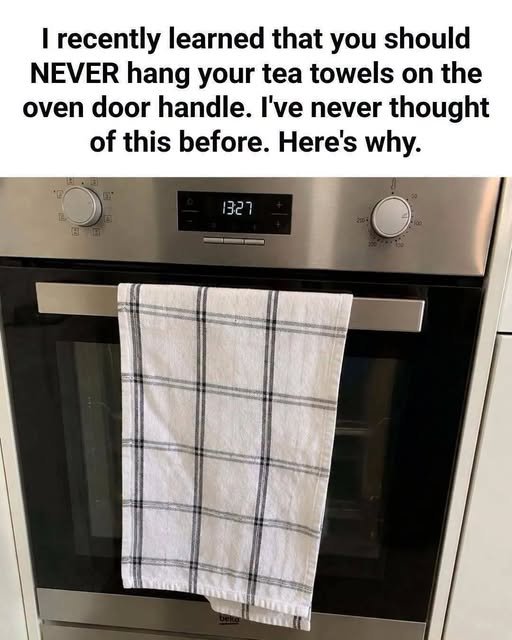
In many kitchens, counter space is at a premium. There is simply nowhere else to put a towel. People hang it on the oven handle because they lack a dedicated towel bar.
The Power of Tradition
We do it because our parents did it. It is a habit passed down through generations, a visual trope of the “cozy” kitchen. We do it without thinking, never questioning the safety or hygiene of the practice.
6. Safe Alternatives for Kitchen Towel Storage
So, if the oven handle is off-limits, where should you put your tea towels? Fortunately, there are several safe, convenient, and aesthetically pleasing alternatives.
1. The Wall-Mounted Towel Bar
This is the safest and most hygienic option. Install a simple towel bar on a section of wall that is far away from the oven and the stovetop. A bar allows the towel to dry completely, keeping it hygienic and safe. It is also a great way to display decorative towels.
2. Under-Cabinet Hooks
Installing small, adhesive, or screw-in hooks under the upper cabinets provides an excellent, out-of-the-way place to hang towels. This keeps them off the counter, away from the heat, and allows them to air dry naturally. It is a highly functional and space-saving solution.
3. Drawer Pulls
Hanging a towel on a drawer pull is a classic and safe alternative. Because the drawer is generally located lower down and away from the intense heat of the stove, the risk of fire or heat damage is significantly reduced. Just be sure not to hang it on a drawer that you need to open frequently.
4. A Freestanding Towel Stand
If you do not want to drill holes in your walls or cabinets, a freestanding towel rack is a perfect solution. You can place it in a corner, out of the way of the cooking zone.
5. The Dishwasher Handle
If your dishwasher is located away from the oven, hanging the towel on the handle is a much safer alternative. The dishwasher does not generate the extreme ambient heat that an oven does. Just ensure the towel is not blocking the dishwasher’s vents or controls.
6. Inside the Cabinet
If you have a designated cabinet for dishes, you can install a small towel bar on the inside of the cabinet door. This keeps the towel hidden and away from any heat source.
7. Best Practices for Kitchen Towel Hygiene
Wherever you choose to hang your towels, proper hygiene is paramount to prevent the spread of bacteria.
Segregate Your Towels
Use different towels for different tasks. Have one towel for drying hands, one for drying dishes, and one for wiping counters. Use color-coding to keep them separate.
Wash Frequently
In a busy kitchen, you should wash your tea towels every day or every two days. Do not wait until they smell. The warm, moist environment of the kitchen is a breeding ground for bacteria.
Use Hot Water
Wash towels in hot water (at least 140°F or 60°C) with a strong detergent to kill bacteria.
Dry Completely
Do not leave damp towels bundled up. Hang them so they can air dry completely. If you use a dryer, ensure they are completely dry before folding and putting them away.
Avoid Cross-Contamination
Never use a towel that has been used to wipe up raw meat juices on anything else. Wash it immediately.
Conclusion: A Small Change for a Safer Home
The realization that you should never hang a tea towel on your oven door handle might feel like an overreaction to a harmless habit. But when you break down the risks—the fire hazard, the risk of severe burns, the invisible hygiene dangers, and the threats to your loved ones—it becomes clear that this is a necessary safety shift.
Breaking this habit requires a conscious effort, but the reward is a safer, healthier, and more hygienic kitchen. By relocating your towels to a dedicated towel bar or a safe hook away from the heat source, you are removing a hidden danger from your home. A kitchen should be a place of comfort, creativity, and nourishment, not a potential source of disaster. Make the change today, and ensure that your tea towels are only ever used for their intended purpose: drying, wiping, and keeping your kitchen pristine.
Frequently Asked Questions
Is it really dangerous to hang a towel on the oven handle?
Yes. While it might seem harmless, it creates a fire hazard if the oven is turned on or if the towel comes into contact with the stovetop burners. It also traps heat and moisture, creating a breeding ground for bacteria.
What is the biggest risk?
The biggest immediate risk is fire. A towel left hanging can accidentally fall onto a hot burner or brush against a hot oven door, igniting rapidly.
Can a towel catch fire just from the heat of the oven?
Yes. If the oven is on high heat (like broiling) or if the towel is blocking the exhaust vents, the temperature can reach the ignition point of the fabric, especially if it is made of synthetic materials.
Why do towels hanging on the oven smell bad?
The oven handle provides a warm, humid environment. When a damp towel is hung there, bacteria multiply rapidly, creating a biofilm and producing a sour, musty odor.
Where should I hang my kitchen towels instead?
The safest places are wall-mounted towel bars, under-cabinet hooks, drawer pulls away from the oven, or freestanding towel stands.
What is the “chimney effect”?
The chimney effect refers to how a dangling towel can act like a wick, drawing a small flame up the fabric rapidly, causing the entire towel to catch fire in seconds.
Can hanging a towel damage my oven?
Yes. Blocking the ventilation holes can cause the oven’s electronic control board to overheat, leading to malfunction or damage to the appliance.
How often should I wash kitchen towels?
You should wash them every 1 to 2 days. If you use them to handle raw meat or wipe up spills, wash them immediately.
Are synthetic towels more dangerous than cotton ones?
Yes. Synthetic fabrics (like polyester) can melt and ignite at lower temperatures than natural fibers like cotton or linen. They also produce toxic fumes when burned.
What should I do if a towel catches fire on the stove?
If a fire starts, turn off the heat source immediately. Do not use water on a grease fire. Smother the fire with a metal lid or use a fire extinguisher designed for kitchen fires. Call emergency services if the fire does not extinguish immediately.