Meta Description: Master the craft of traditional Hungarian Kolbász. This in-depth guide covers the paprika-rich recipe, cold-smoking techniques, safe curing practices, and the art of air-drying for authentic flavor.
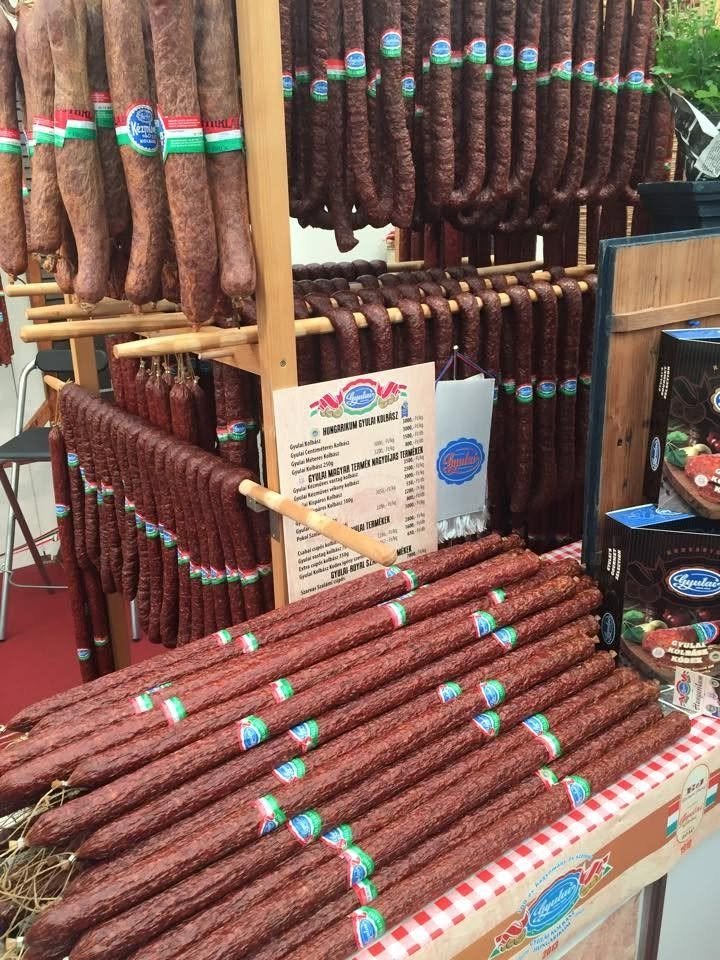
Suggested Featured Image Alt Text: Ropes of traditional Hungarian Kolbász hanging in a curing chamber, showing the deep red color and wrinkled, dry casing.
Introduction
The Hungarian Kolbász recipe is not a quick kitchen project; it is a commitment to an ancient craft. It is the story of pork, salt, garlic, and the lifeblood of Hungarian cuisine—sweet and spicy paprika—transformed through the patient alchemy of fermentation, cold smoking, and air-drying. The image of sausages hanging in strings, their casings wrinkled and their color a deep, paprika-infused red, is a familiar sight in Hungarian villages and markets, particularly after the traditional winter pig slaughter (disznóvágás).
This is a sausage that demands respect and precision. Unlike fresh sausages that are cooked before eating, Kolbász is a fermented, dry-cured product. It relies on a careful balance of salt, temperature, humidity, and time to create a safe, shelf-stable charcuterie with a complex, tangy, and deeply savory flavor. The process is governed by the principles of food science, and understanding these principles is as important as knowing the spice ratios.
This comprehensive guide will walk you through every aspect of creating authentic Magyar Kolbász. We will explore the distinct regional styles, such as the paprika-heavy Csabai and the pepper-and-cumin-scented Gyulai, and provide a detailed, safety-focused recipe. We will demystify the cold-smoking process and explain the critical parameters for safe fermentation and drying. This is a guide for the dedicated home charcutier who is ready to invest time and care into producing one of Central Europe’s most celebrated cured meats.
Cold Smoking Time: 2–3 days (several hours per day)
Drying Time: 2–4 weeks
Total Time: Approximately 1 month
Number of Servings: Varies by sausage size; approximately 4–5 pounds (1.8–2.2 kg) of finished sausage
Difficulty Level: Advanced
Cooking Method: Curing, Cold Smoking, Air-Drying
Cuisine: Hungarian
Course: Charcuterie, Appetizer, Ingredient
Estimated Calories per Serving: Approximately 250–300 kcal per 2-ounce (56 g) serving (estimate; will vary based on exact fat ratio).
What is Hungarian Kolbász?
Kolbász is a family of traditional Hungarian sausages that are typically cured, smoked, and air-dried. The word itself is generic, but in the context of charcuterie, it usually refers to a semi-dry or dry fermented sausage made primarily from pork, seasoned heavily with paprika and garlic. It is distinct from hurka (a fresh liver sausage) and disznósajt (head cheese).
The defining characteristics of a good Kolbász are its firm, sliceable texture, its intense red color from the paprika, and its complex flavor profile, which balances the sweetness of the pork, the heat of the paprika, the pungency of garlic, and the savory, tangy notes developed during fermentation and smoking. The sausage is not cooked during its production; it is consumed raw, having been preserved through the combined hurdles of salt, nitrites, low pH, smoke, and low water activity.
Hungarian Culinary Background
The tradition of making Kolbász is deeply intertwined with the Hungarian winter pig slaughter, a communal event that historically took place in the colder months to preserve meat without refrigeration. Every part of the pig was utilized, and the best cuts—the shoulder, the leg, and the hard back fat—were set aside for the sausages that would sustain the family through the year.
The two most famous protected-origin varieties are Csabai and Gyulai. The primary difference lies in their seasoning and shape. Csabai is renowned for its generous use of paprika, both sweet and hot, giving it a bold, spicy character. It is typically a thicker, single sausage. Gyulai, on the other hand, is a thinner sausage, traditionally sold in pairs, and is seasoned with black pepper and caraway in addition to paprika, resulting in a more complex, slightly piquant flavor profile.
The production of these sausages is a source of regional pride, and both cities—Békéscsaba and Gyula—have museums and festivals dedicated to their famous products. For the home cook, mastering Kolbász is a way to connect with this rich, agrarian heritage and to experience the deep, satisfying flavors that come from traditional preservation methods.
Ingredients You Will Need
A Critical Note on Safety: Making fermented, dry-cured sausage at home requires strict adherence to safety guidelines. The use of Curing Salt #1 (Prague Powder #1) is non-negotiable. It contains sodium nitrite, which prevents the growth of Clostridium botulinum, the bacteria that causes botulism. Do not substitute it with regular table salt or Himalayan pink salt.
For the Meat & Fat Base
4 lbs (1.8 kg) pork shoulder (Boston butt), well-chilled, cut into 1-inch cubes. The shoulder provides a good balance of lean meat and intramuscular fat.
1 lb (450 g) hard pork back fat (fatback), well-chilled, cut into 1-inch cubes. This is essential for the correct texture and juiciness. An 80/20 meat-to-fat ratio is a classic starting point.
For the Seasoning & Cure (per 5 lbs / 2.27 kg of meat and fat)
65 g (about 2.5% of total weight) kosher salt. Do not reduce the salt; it is a critical safety component.
7 g (about 0.25% of total weight) Curing Salt #1 (Prague Powder #1).
50 g (1.75 oz) high-quality sweet Hungarian paprika.
15–25 g (0.5–0.9 oz) hot Hungarian paprika, or to taste.
30 g (1 oz) fresh garlic, minced to a fine paste.
15 g (0.5 oz) caraway seeds, lightly toasted and ground (optional, for a Gyulai-style flavor).
10 g (0.35 oz) freshly ground black pepper.
1/2 cup (120 ml) ice-cold water or dry white wine. This helps with mixing and distribution of spices.
For the Casings
Natural hog casings (32–35 mm diameter), soaked and rinsed according to package instructions. For a thinner Gyulai-style sausage, use a smaller casing (28–32 mm).
Choosing the Best Ingredients
Pork: The quality of the pork is paramount. Use the freshest pork you can find. The fat should be firm and white, not soft or yellow.
Paprika: This is the soul of the sausage. Seek out authentic Hungarian paprika, preferably from the Kalocsa or Szeged regions. It has a unique sweetness and aroma that cannot be replicated by other varieties. Use a mix of sweet and hot to achieve a balanced heat.
Curing Salt: Use only Prague Powder #1 (6.25% sodium nitrite). It is specifically formulated for short-term cured meats.
Garlic: Fresh garlic, minced to a paste, provides the best flavor. Do not use garlic powder.
Water/Wine: Using ice-cold liquid prevents the meat mixture from warming up during mixing.
Kitchen Equipment
Meat Grinder: A stand mixer attachment or a dedicated grinder with a coarse (8–10 mm) and a finer (4.5–6 mm) plate.
Sausage Stuffer: A vertical stuffer or a stand mixer attachment.
Kitchen Scale: Essential for accurate measurement of meat, fat, salt, and cure.
Large Mixing Bowls: Chilled in the refrigerator beforehand.
Cold Smoker: A smoker capable of maintaining temperatures below 20–25°C (68–77°F) for cold smoking. This is non-negotiable for this style of sausage.
Curing Chamber or Cool Cellar: A space with a temperature of 12–15°C (54–59°F) and a relative humidity of 75–85% for drying.
Hygrometer and Thermometer: To monitor the conditions in your smoker and curing space.
Vacuum Sealer (Optional): For long-term storage.
Step-by-Step Cooking Instructions
Step 1: Chill Everything
The most critical step for success. Place your cubed meat, fat, and all metal parts of your meat grinder (blade, plates, auger) in the freezer for at least 1 hour until they are firm but not frozen solid. This prevents the fat from smearing during grinding, which can ruin the texture.
Step 2: Grind the Meat and Fat
Assemble your chilled grinder. Using a coarse plate (8–10 mm), grind the pork shoulder and fatback together into a large, chilled bowl. If your grinder feels warm, stop and re-chill everything.
For a finer texture (more typical of Gyulai), pass half of the ground mixture through a finer plate (4.5–6 mm).
Step 3: Mix the Spices and Cure
In a small bowl, combine the kosher salt, Curing Salt #1, sweet and hot paprika, garlic paste, caraway (if using), and black pepper.
Add the spice mixture to the ground meat. Add the ice-cold water or wine.
Using your hands (wearing food-safe gloves) or a sturdy spatula, mix the meat and spices thoroughly for 3–5 minutes until the mixture becomes sticky and cohesive. This develops the proteins necessary for a good bind.
Step 4: Stuff the Casings
Soak your hog casings in warm water for at least 30 minutes. Rinse the inside by running water through them.
Load the casings onto your sausage stuffer. Stuff the meat mixture into the casings, being careful not to overstuff, which can cause the casings to burst. The sausage should feel firm but still yield to pressure.
Twist or tie the sausages into links of your desired length (traditionally 10–15 cm for pairs, or 20–30 cm for single Csabai-style links). Prick any visible air pockets with a sterile needle.
Step 5: Fermentation (The “Rest”)
Hang the sausages in a cool, dark, and well-ventilated space at around 15–18°C (59–64°F) for 24–48 hours. This allows the salt and spices to penetrate the meat and initiates fermentation.
The sausages should feel slightly tacky but not wet. This step is crucial for developing the flavor and for lowering the pH to a safe level.
Step 6: Cold Smoking
After fermentation, it is time to cold smoke. The temperature in the smoker must not exceed 20–25°C (68–77°F) at any point. If the temperature rises, the fat will melt, and the sausage will spoil.
Use a mild wood such as beech, apple, or cherry. Smoke the sausages for several hours per day (e.g., 4–6 hours) over 2–3 consecutive days. The goal is to achieve a deep reddish-brown color and a pronounced smoky aroma, not to cook the sausage.
Allow the sausages to rest in a cool, ventilated space between smoking sessions.
Step 7: Air-Drying and Maturation
Transfer the smoked sausages to your curing chamber or a cool, humid cellar. The ideal conditions are 12–15°C (54–59°F) and 75–85% relative humidity.
Hang the sausages so they do not touch each other, allowing for good air circulation.
The drying time will depend on the thickness of the sausage and the conditions, but expect 2–4 weeks for a semi-dry sausage. The sausage is ready when it has lost about 30–35% of its original weight and is firm to the touch but still slightly yielding.
A white, powdery mold on the surface is normal and desirable; it is a sign of beneficial mold and protects the sausage. Mold that is green, black, or fuzzy is not desirable and should be wiped off with a cloth dampened with vinegar.
Important Cooking Tips
Temperature Control is Everything: From grinding to smoking to drying, keeping the meat and the environment cold is the single most important factor in preventing spoilage and ensuring safety.
The 80/20 Rule: Do not be tempted to reduce the fat content. The fat is essential for the texture, flavor, and preservation of the sausage. A dry sausage is an unpleasant sausage.
Weigh Your Ingredients: Especially the salt and curing salt. Do not use volume measurements (cups/spoons) for these critical safety ingredients.
Hygiene: Sanitize all equipment, surfaces, and your hands before starting. Cleanliness is paramount when working with fermented foods.
Patience: Do not rush the process. The flavors need time to develop, and the drying process cannot be accelerated without compromising quality and safety.
Common Mistakes to Avoid
Using the Wrong Salt: Using regular table salt instead of Curing Salt #1 can create a dangerous environment for botulism-causing bacteria. Curing salt is not optional.
Letting the Smoker Get Too Hot: If the temperature in your smoker exceeds 25°C (77°F), the fat will render out, leaving you with a dry, crumbly, and potentially spoiled sausage.
Smearing the Fat: If your meat and equipment are not cold enough during grinding, the fat will smear, creating a greasy texture and preventing proper drying.
Inadequate Drying Conditions: If the humidity is too low, the casing will dry too quickly, trapping moisture inside and causing spoilage. If the humidity is too high, the sausage will not dry and may grow undesirable mold.
Impatience: Trying to eat the sausage before it has finished drying will result in a soft, unpalatable texture and an underdeveloped flavor.
Variations and Substitutions
Csabai Style: Increase the amount of hot paprika to 25–30 g for a spicier sausage. Use a thicker casing (35–40 mm) and form single, long links.
Gyulai Style: Add 15 g of ground caraway seeds and increase the black pepper to 15 g. Use a thinner casing (28–32 mm) and tie the sausages into pairs. Omit or reduce the hot paprika.
Debreceni Style: A fresh, rather than cured, sausage. It is heavily paprika-seasoned and is typically cooked before eating. It is not a substitute for the dry-cured Kolbász in this recipe.
Liver Sausage (Májas): A completely different product, made with pork liver and rice, and is not cured or dried.
What to Serve with Kolbász
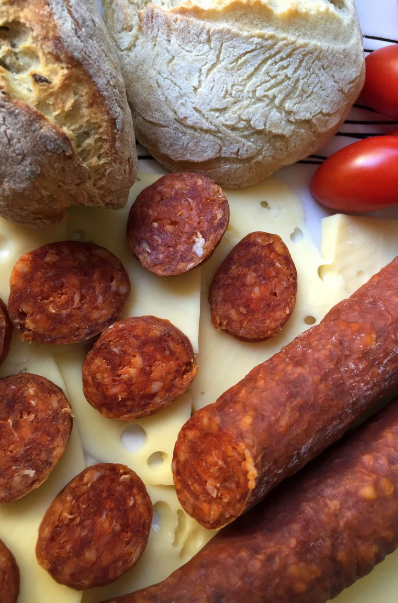
A Charcuterie Board: The classic way to enjoy Kolbász. Slice it thinly and serve with crusty bread, fresh peppers, tomatoes, cheese (like Liptauer), and pickles.
With Eggs: Sliced Kolbász is a delicious addition to scrambled eggs or a hearty omelet.
In Soups and Stews: Add sliced Kolbász to dishes like Jókai Bableves (Jókai bean soup) or Lecsó for an instant depth of smoky, paprika-rich flavor.
On a Sandwich: A simple sandwich of sliced Kolbász, good bread, and a smear of mustard is a Hungarian classic.
With Palinka: A shot of fruit brandy (pálinka) is a traditional accompaniment to a charcuterie plate in Hungary.
How to Store and Reheat Leftovers
Storage: Once fully dried, the sausage can be stored in a cool, dark, and dry place for several months. For longer storage, keep it in the refrigerator or freeze it.
Refrigeration: Wrap the sausage well or place it in an airtight container. It will last for several weeks in the refrigerator.
Freezing: For extended storage, vacuum-seal the sausage and freeze it for up to 6 months. Thaw in the refrigerator before use.
Reheating:Kolbász is typically eaten cold. If you are adding it to a cooked dish, simply slice it and add it towards the end of cooking to allow the flavors to infuse.
Make-Ahead and Meal-Preparation Tips
The Entire Process is Make-Ahead: This is a project that is inherently made ahead. The sausage must go through the full curing, smoking, and drying process before it is ready to eat.
Plan Your Timeline: A good rule of thumb is to start the process in the late fall or winter when temperatures are naturally cooler. The entire process from start to finish will take about 4–6 weeks.
Freeze for Later: You can make a large batch and freeze the finished sausages, ensuring you have a supply of homemade charcuterie for months to come.
Troubleshooting Guide
Q: My sausage is too soft and won’t firm up. A: This is usually due to inadequate drying conditions. The humidity may be too high, or the temperature too low, preventing moisture from evaporating. Ensure your curing space has good air circulation and is within the 12–15°C and 75–85% humidity range.
Q: There is green or black fuzzy mold on my sausage. A: This is a sign of undesirable mold, often caused by poor air circulation or high humidity. Wipe the mold off with a cloth dampened with vinegar, and improve the ventilation in your curing space. If the mold has penetrated the casing, discard the sausage.
Q: My sausage is too salty. A: You cannot fix an overly salty sausage, but you can prevent it by weighing your ingredients carefully. The 2.5% salt ratio is a guideline; you can adjust it slightly (e.g., to 2.25%) but do not go lower for safety reasons.
Q: The fat in my sausage looks yellow and rancid. A: This is caused by oxidation, often due to using old fat or exposing the sausage to light and heat. Always use the freshest fat and store the finished sausage in a cool, dark place.
Q: Can I make this without a cold smoker? A: Cold smoking is a defining characteristic of traditional Kolbász. Without it, you will have a dry-cured sausage, which can still be delicious but will lack the signature smoky flavor. There is no safe shortcut for cold smoking.
Nutritional Information
Please note: The following values are estimates per 2-ounce (56 g) serving and will vary based on the exact fat ratio and curing process.
Calories: ~280 kcal
Protein: ~14 g
Carbohydrates: ~1 g
Fat: ~24 g
Saturated Fat: ~9 g
Fiber: 0 g
Sugar: 0 g
Sodium: ~650 mg
Frequently Asked Questions
1. What is the difference between Csabai and Gyulai Kolbász? Csabai is known for its heavy use of paprika (both sweet and hot), giving it a spicy, bold flavor, and it is typically a thicker, single sausage. Gyulai is thinner, often sold in pairs, and is seasoned with black pepper and caraway in addition to paprika, resulting in a more complex, piquant flavor.
2. Is Hungarian Kolbász safe to eat raw? Yes, when made correctly with Curing Salt #1 and proper fermentation and drying, it is a safe, shelf-stable product. The combination of salt, nitrites, low pH, smoke, and low water activity creates an environment where harmful bacteria cannot survive.
3. Can I use regular salt instead of Curing Salt #1? No. Curing Salt #1 is essential for preventing the growth of Clostridium botulinum during the low-temperature curing process. Do not substitute it.
4. How long does it take to make Kolbász? The entire process from start to finish takes about 4–6 weeks, including fermentation, smoking, and drying.
5. What is the white mold on my sausage? A white, powdery mold is a beneficial mold (Penicillium nalgiovense) that protects the sausage from undesirable molds and contributes to its flavor. It is a sign of a healthy curing environment.
6. Can I make Kolbász in the summer? It is not recommended unless you have a temperature-controlled curing chamber. The process requires cool temperatures (below 20°C for smoking and 12–15°C for drying), which are difficult to achieve in summer without specialized equipment.
7. What is the best wood for smoking Kolbász? Mild fruitwoods like apple or cherry, or beechwood, are traditional and provide a sweet, delicate smoke flavor that complements the paprika.
8. How do I know when the sausage is fully dried? The sausage is ready when it has lost about 30–35% of its original weight and feels firm to the touch but still has a slight give. It should slice cleanly without being hard or crumbly.
9. Can I freeze Kolbász? Yes, vacuum-sealed Kolbász freezes very well for up to 6 months. Thaw it in the refrigerator before serving.
10. What is the best way to slice Kolbász? For the best texture and flavor, slice it thinly on a bias (at an angle) using a sharp knife. Remove it from the refrigerator 15–20 minutes before serving to allow the flavors to open up.
Final Recipe Summary
Making traditional Hungarian Kolbász at home is a rewarding journey into the world of charcuterie. It requires patience, precision, and a respect for the scientific principles of fermentation and drying. The result is a sausage of exceptional quality—deeply flavorful, beautifully textured, and steeped in the culinary traditions of Central Europe. While the process spans several weeks, the payoff is a supply of homemade charcuterie that is far superior to anything you can buy. Embrace the craft, follow the safety guidelines meticulously, and enjoy the profound satisfaction of creating a true Hungarian masterpiece.
Printable Recipe Card
Traditional Hungarian Smoked Sausage (Magyar Kolbász)
Description: A traditional fermented, cold-smoked, and air-dried pork sausage seasoned with sweet and hot Hungarian paprika and garlic.
Prep Time: 1.5 hours
Cure Time: 21+ days (including fermentation, smoking, and drying)
Total Time: ~1 month
Servings: 4–5 lbs of sausage
Ingredients:
Meat: 4 lbs (1.8 kg) pork shoulder, cubed; 1 lb (450 g) pork back fat, cubed.
Seasoning (per 5 lbs total): 65 g kosher salt; 7 g Curing Salt #1; 50 g sweet Hungarian paprika; 15–25 g hot Hungarian paprika; 30 g fresh garlic paste; 15 g ground caraway (optional); 10 g black pepper; 1/2 cup ice-cold water or white wine.
Casings: Natural hog casings (32–35 mm).
Instructions:
Chill meat, fat, and grinder parts in the freezer for 1 hour.
Grind meat and fat through a coarse plate.
Mix with salt, cure, spices, garlic, and liquid until sticky.
Stuff into soaked hog casings and tie into links. Prick air pockets.
Ferment at 15–18°C (59–64°F) for 24–48 hours.
Cold smoke at <20–25°C (68–77°F) for several hours over 2–3 days.
Dry at 12–15°C (54–59°F) and 75–85% humidity for 2–4 weeks, until 30–35% weight loss is achieved.
Storage: Store in a cool, dark place, refrigerator, or freeze for long-term storage.
Internal Linking Suggestions
Anchor Text: “traditional Hungarian charcuterie” -> Link to a category page featuring other cured meats like Pick Winter Salami or Hurka.
Anchor Text: “Hungarian paprika guide” -> Link to an article explaining the different types of Hungarian paprika and their uses.
Anchor Text: “winter pig slaughter traditions” -> Link to an article about the disznóvágás and its cultural significance.
Anchor Text: “Jókai Bableves recipe” -> Link to a recipe for the famous Hungarian bean soup that uses Kolbász.
Anchor Text: “home charcuterie safety” -> Link to a foundational guide on safe curing practices.
External Source Suggestions
For Food Safety: Refer to the USDA FSIS guidelines for fermented and dry-cured sausage production, particularly regarding pH and water activity requirements.
For Historical Context: Cite reputable culinary history sources or the Hungarian Museum of Trade and Tourism for the history of Csabai and Gyulai sausages.
For Traditional Recipes: Refer to authentic Hungarian sources like TasteAtlas or classic Hungarian cookbooks for traditional ratios and methods.