Why Daily Showers After 65 May Do More Harm Than Good: The Science of Senior Hygiene
The Ideal Frequency: Finding the Right Rhythm
So, what is the ideal frequency? For most seniors over sixty-five, showering two to three times a week is sufficient to maintain health and hygiene. This frequency allows the skin’s natural oils to replenish and the microbiome to stabilize. On non-shower days, daily spot cleaning is recommended. This involves using a warm, damp washcloth to clean the face, underarms, groin, and feet. This “bird bath” approach removes sweat and bacteria from the areas that need it most without drying out the arms, legs, and torso, which are more prone to xerosis.
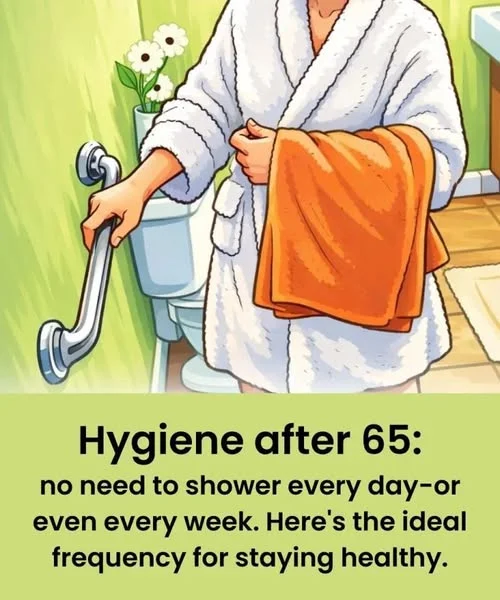
The timing of the shower also matters. Morning showers can help with stiffness, but evening showers might be better for removing the day’s allergens and promoting sleep. However, for seniors with mobility issues, the time of day when they have the most energy and the bathroom is warmest is the best time. Safety is paramount; the bathroom should be warm to prevent chills, and the floor should be dry to prevent slips. The image of the grab bar is a crucial reminder: hygiene must be safe. A fall in the shower can be catastrophic for a senior, leading to fractures and a loss of independence.
When showering, the duration should be kept short—five to ten minutes. Long, soaking showers, while relaxing, are devastating to the skin barrier. The water temperature should be lukewarm, not hot. Lukewarm water is sufficient to clean the skin without stripping oils or causing vasodilation. If a senior feels cold easily, they can warm the bathroom beforehand with a space heater (safely positioned) rather than turning up the water temperature. This small adjustment can make a significant difference in skin health.
Practical Strategies: Products and Techniques
The choice of products is as important as the frequency of washing. Seniors should avoid traditional bar soaps, which are often highly alkaline (pH 9-10) and very drying. Instead, they should opt for syndet bars (synthetic detergents) or liquid cleansers that are pH-balanced (around 5.5) and labeled “fragrance-free” and “hypoallergenic.” Ingredients like ceramides, glycerin, and hyaluronic acid in cleansers can actually help hydrate the skin while washing.
The technique of washing is also critical. Seniors should use their hands or a very soft washcloth rather than a loofah or scrubbing brush, which can cause micro-tears. The motion should be gentle patting or light rubbing, not vigorous scrubbing. Special attention should be paid to skin folds (under breasts, groin) where moisture can accumulate and cause fungal infections, but the limbs and torso can be rinsed with water alone on most days if not visibly dirty.
Post-shower care is the final, crucial step. Within three minutes of stepping out of the shower, while the skin is still damp, a thick moisturizer (ointment or cream, not lotion) should be applied. This traps the water in the skin. Ingredients like petroleum jelly, shea butter, or ceramides are excellent. This “soak and seal” method is the gold standard for managing senior skin. By combining reduced frequency, gentle products, and immediate moisturization, seniors can achieve a level of hygiene that supports health rather than undermining it.
Part 5 of 5
Safety and Independence: The Bathroom as a Risk Zone
The image of the senior holding the grab bar highlights a critical aspect of senior hygiene: safety. The bathroom is the most dangerous room in the house for older adults. Wet surfaces, hard fixtures, and the physical act of standing and balancing create a high risk for falls. According to the CDC, millions of older adults are treated in emergency departments for fall injuries each year, and a significant portion of these occur in the bathroom. Reducing the frequency of showers directly reduces the exposure to this risk. Every shower avoided is a potential fall prevented.
For seniors with mobility issues, the energy expenditure of a shower can be significant. It requires standing, reaching, and balancing, which can be exhausting for those with heart failure, COPD, or arthritis. By showering less often, they conserve energy for other activities of daily living, such as cooking, socializing, or physical therapy. This conservation of energy is vital for maintaining independence. If a senior is too exhausted from a daily shower to prepare a meal or take a walk, the net health benefit of the shower is negative.
Adapting the bathroom environment is also part of the hygiene strategy. Installing grab bars, using a shower chair, and ensuring non-slip mats are in place can make the necessary showers safer. A handheld showerhead allows for seated washing, reducing the risk of falls. These modifications, combined with a reduced shower frequency, create a sustainable hygiene routine that prioritizes safety and autonomy. The goal is to keep the senior living independently in their own home for as long as possible, and safe hygiene practices are a cornerstone of that goal.
Broader Implications: Redefining Health in Later Life
The shift away from daily showering reflects a broader redefinition of health in later life. It moves away from rigid, youthful standards of perfection toward a more pragmatic, comfort-focused approach. It acknowledges that the body changes and that our care routines must evolve with it. This flexibility is a hallmark of successful aging. It also challenges the consumerist drive to buy more products—more soaps, more scrubs, more lotions to fix the damage caused by the first products. Simplifying the routine is better for the skin and the wallet.
Furthermore, this approach reduces the environmental impact. Less water usage, less energy for heating water, and fewer plastic bottles of shampoo and body wash contribute to a smaller carbon footprint. While this may seem like a minor point, for a generation that is increasingly conscious of legacy and sustainability, it is a positive side effect. The “less is more” philosophy in hygiene aligns with a minimalist, mindful approach to living that many seniors find appealing.
Ultimately, the message is one of empowerment. Seniors are often told what they can’t do or what they must do to stay healthy. This advice—that they don’t have to shower every day—is a permission slip to listen to their bodies. It validates their experience of dry skin and fatigue. It tells them that their comfort is a priority. By embracing this science-backed approach, seniors can enjoy cleaner, healthier skin, reduced risk of infection and falls, and a renewed sense of control over their daily lives.
Conclusion
The notion that daily showers are essential for health is a myth that does not serve the aging population. For adults over sixty-five, the biological reality of thinning skin, reduced oil production, and a fragile microbiome means that daily washing often does more harm than good. It strips away natural defenses, leading to dryness, itching, and increased infection risk, while also exposing seniors to the dangers of falls in the bathroom. The ideal frequency—typically two to three times a week, supplemented by daily spot cleaning—offers a balanced approach that maintains hygiene while preserving skin integrity and safety.
By understanding the science of aging skin and adopting gentler, less frequent washing routines, seniors can protect their health and comfort. This shift requires unlearning decades of habit and societal pressure, but the benefits are clear: stronger skin, fewer infections, and a safer daily life. The grab bar in the image is not just a tool for stability; it is a symbol of the careful, considered approach needed in senior care. Hygiene after sixty-five is not about scrubbing away the years; it is about nurturing the body that has carried you through them.
Frequently Asked Questions
1. Is it true that I don’t need to shower every day after 65? Yes, for most seniors, showering every day is unnecessary and can be harmful to the skin. Dermatologists generally recommend showering two to three times a week. Daily washing strips the skin of natural oils, leading to dryness, itching, and a higher risk of infection. On non-shower days, “spot cleaning” key areas is sufficient.
2. What is “spot cleaning” and how do I do it? Spot cleaning involves washing specific areas of the body that produce the most odor and sweat, without taking a full shower. Use a warm, damp washcloth with a gentle cleanser to clean your face, underarms, groin, buttocks, and feet. This maintains hygiene while protecting the drier skin on your arms, legs, and torso.
3. Why does my skin itch so much after a shower? Itching after a shower, known as pruritus, is often caused by the removal of natural oils (sebum) and the disruption of the skin barrier. Hot water and harsh soaps exacerbate this. As we age, our skin produces less oil, making it more vulnerable. Switching to lukewarm water, gentle cleansers, and applying moisturizer immediately after drying can help.
4. Can I still get clean if I only shower twice a week? Yes. The body does not produce enough dirt and sweat in 48 hours to require a full scrub-down, especially for seniors who typically sweat less. The “squeaky clean” feeling is actually a sign of skin damage. True cleanliness is about managing odor and preventing infection, which can be achieved with less frequent, targeted washing.
5. What kind of soap should I use? Avoid traditional bar soaps, which are often alkaline and drying. Look for “syndet” bars or liquid body washes that are pH-balanced (around 5.5), fragrance-free, and labeled for sensitive or dry skin. Ingredients like ceramides, glycerin, or colloidal oatmeal can help soothe and protect the skin.
6. Does the “old person smell” mean I need to shower more? Not necessarily. The distinct scent often associated with aging (caused by a compound called 2-nonenal) is a result of oxidative stress on fatty acids, not poor hygiene. It is water-insoluble, so scrubbing harder won’t help. Managing it involves a healthy diet, hydration, and using specific wipes or cleansers designed for seniors, rather than increasing shower frequency.
7. Is it safe for me to shower if I have balance issues? Safety is the top priority. If you have balance issues, you should use safety modifications like grab bars, a shower chair, and non-slip mats. A handheld showerhead allows you to wash while seated. If you are at high risk for falls, consult a doctor or occupational therapist about sponge bathing as a safer alternative.
8. When should I see a doctor about my skin? If you experience persistent itching that disrupts sleep, redness, swelling, warmth, or cracks in the skin that ooze or bleed, you should see a doctor. These can be signs of infection (like cellulitis) or severe dermatitis that requires medical treatment, not just a change in soap.