Why Daily Showers After 65 May Do More Harm Than Good: The Science of Senior Hygiene
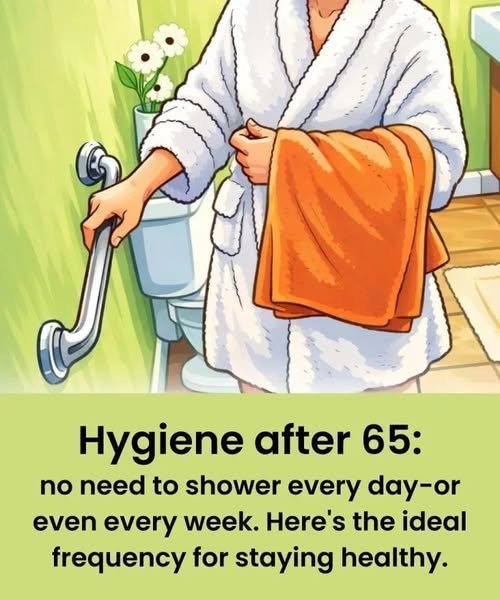
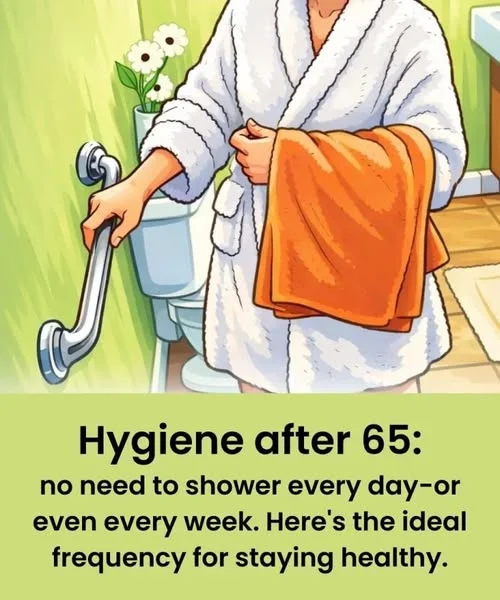
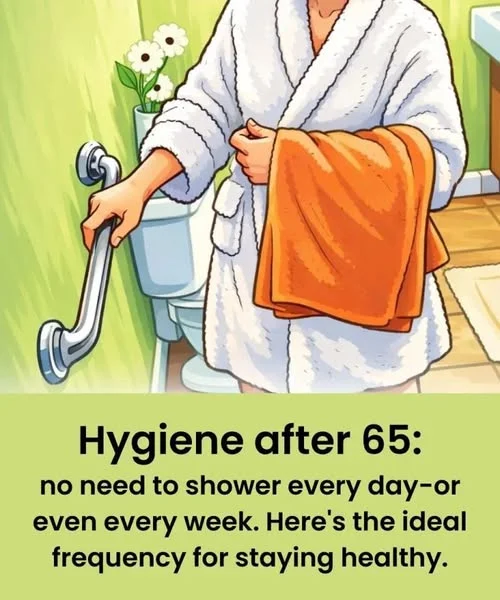
The illustration of a senior in a plush white bathrobe, clutching an orange towel while steadying themselves on a bathroom grab bar, captures a pivotal moment in daily life that often goes unexamined. For decades, societal norms have dictated that a daily shower is the gold standard of personal hygiene, a ritual synonymous with cleanliness and health. However, as we cross the threshold of age sixty-five, the biological reality of our bodies shifts dramatically, rendering this daily habit not just unnecessary, but potentially detrimental. The text accompanying the image—”no need to shower every day—or even every week”—challenges a deeply ingrained cultural belief, suggesting that the ideal frequency for staying healthy is far lower than we have been led to believe.
This counterintuitive advice is rooted in the physiological changes that define aging skin. As we grow older, our skin becomes thinner, drier, and less capable of retaining moisture. The sebaceous glands, responsible for producing the natural oils that protect and lubricate the skin, slow down significantly. Consequently, the aggressive stripping of these oils through daily hot showers and harsh soaps can compromise the skin’s barrier function. This leads to a cascade of issues, from severe dryness and itching (pruritus) to microscopic cracks that invite bacterial infection. For seniors, the bathroom—often a site of slip hazards—becomes a place of risk rather than just renewal. Understanding the delicate balance between cleanliness and skin integrity is crucial for maintaining health, comfort, and independence in later years. This article explores the science behind senior hygiene, debunking the myth of the daily shower and offering a safer, more effective approach to personal care for those over sixty-five.