Why Do Women Cross Their Legs When Sitting? The Psychology, Physiology, and Social Norms Explained
Introduction: The Universal Pose
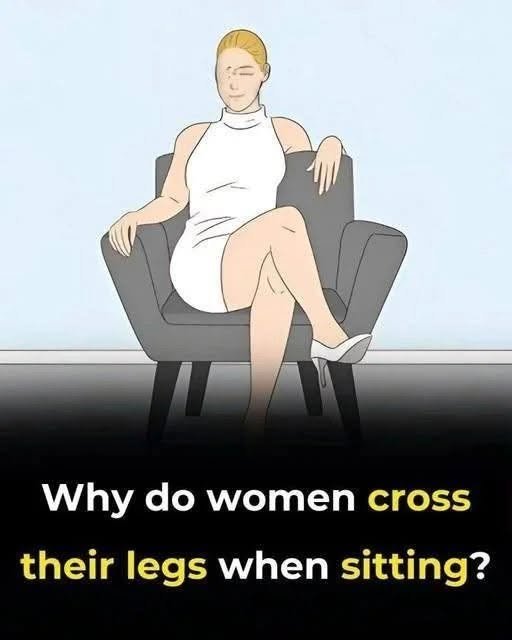
The image presents a striking, minimalist illustration of a woman sitting in a modern grey armchair. She is dressed in a white, sleeveless dress, wearing high heels, and her posture is poised and relaxed. The central focus of the image, however, is her legs: they are elegantly crossed at the knee. The bold text below asks a question that nearly everyone has observed but rarely stopped to analyze: “Why do women cross their legs when sitting?”
It is a ubiquitous posture. Look around any coffee shop, office waiting room, or dinner party, and you will likely see women sitting with their legs crossed. It is a pose that is deeply ingrained in our culture, often associated with elegance, professionalism, and femininity. But is it purely a learned behavior, a product of social conditioning and etiquette? Or are there underlying anatomical, physiological, and psychological reasons that make this position the default for millions of women?
The answer is complex and multifaceted. The way we sit is a silent language, communicating our comfort levels, our social awareness, our upbringing, and even our emotional state. For women, the crossed-leg posture is a fascinating intersection of biology, fashion, and societal expectations.
This comprehensive two-part guide will explore the intricate reasons behind this common habit. We will delve into the psychological signals it sends, the anatomical differences that make it comfortable, the cultural etiquette that enforces it, and, crucially, what this posture means for long-term physical health.