Which Egg Is From The Healthiest Chicken? Debunking the Yolk Color Myth
The Great Deception: When Yolk Color Is Just a Feed Additive
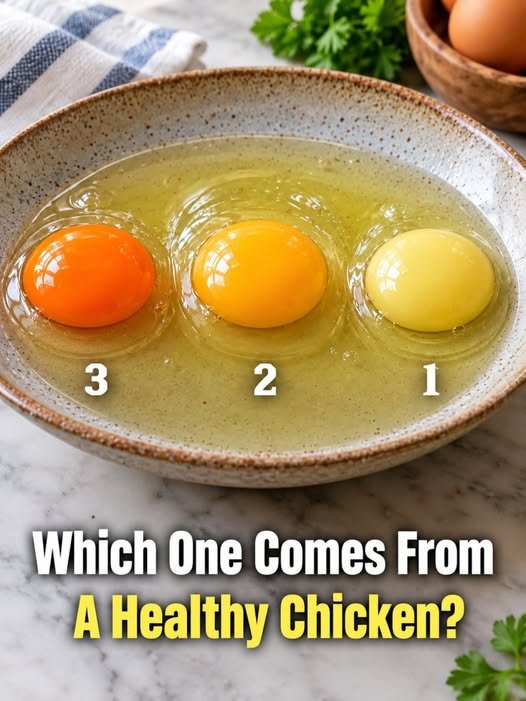
Here is where the logic becomes complicated, and the “choose 3” instinct can be misleading. The poultry industry knows that consumers associate darker yolks with healthier, more natural eggs. As a result, the color of an egg yolk is no longer a reliable guarantee of a chicken’s outdoor lifestyle.
The Marigold Effect
In large-scale commercial farming, where hens are confined indoors and fed a controlled diet, producers can artificially manipulate the color of the yolk. By adding synthetic pigments or natural extracts—most commonly marigold extract or canthaxanthin (a synthetic carotenoid)—to the feed, they can force a hen to produce a deep orange yolk, regardless of whether she has ever seen the light of day.
This means that a deeply colored yolk (Number 3) could come from a perfectly healthy pasture-raised hen, or it could come from a confined, stressed hen whose feed was laced with pigment to appeal to consumer expectations. Conversely, a pale yolk (Number 1) might come from a hen on a simple wheat diet, but she might still be a healthy, active bird in a small backyard flock.
Debunking the “Nutritional Value” Myth
A persistent myth is that a darker yolk has significantly more nutritional value than a lighter one. While it is true that a darker yolk contains more lutein and zeaxanthin (which are beneficial for eye health), the overall protein, fat, and calorie content of the egg remains virtually identical. The color difference is largely cosmetic. A pale yolk is not inherently “unhealthy” or nutritionally deficient; it simply reflects a different dietary composition.
Part 4 of 5
Beyond the Yolk: How to Truly Identify a Healthy Chicken and a High-Quality Egg
If you cannot rely solely on the color of the yolk, how can you choose the healthiest egg? The answer lies in looking at the bigger picture: the labeling, the farming practices, and the other physical characteristics of the egg.
Reading the Labels: What Actually Matters
The most reliable way to know if a chicken is healthy is to look at the certification on the carton.
Certified Organic: This ensures the hens are fed organic feed (no synthetic pesticides or GMOs) and have outdoor access.
Pasture-Raised: This is the gold standard for animal welfare. It means the hens spent most of their lives outdoors on pasture, foraging for a significant portion of their diet.
Free-Range: This usually means the hens have some access to the outdoors, but the quality and duration of that access can vary widely.
Cage-Free: This means the hens are not in cages, but they are often confined to a large barn with no outdoor access at all.
If you want an egg from a healthy, well-cared-for chicken, prioritize Pasture-Raised or Certified Organic. Even if the yolk isn’t the deepest orange you’ve ever seen, the farming practices guarantee a better life for the bird.
The Other Visual Clues
While yolk color is variable, the albumen (the egg white) is a better indicator of freshness. A healthy, fresh egg has a thick, firm white that stays close to the yolk, whereas an older egg has a thin, watery white that spreads out. A firm, prominent chalaza (the white ropey structure that anchors the yolk) is also a sign of freshness. The shell itself should be thick and uniform, a sign of a hen with good calcium intake.