Green, Yellow, or Brown: Which Banana Is Actually the Healthiest?
Introduction: The Three Stages of the World’s Favorite Fruit
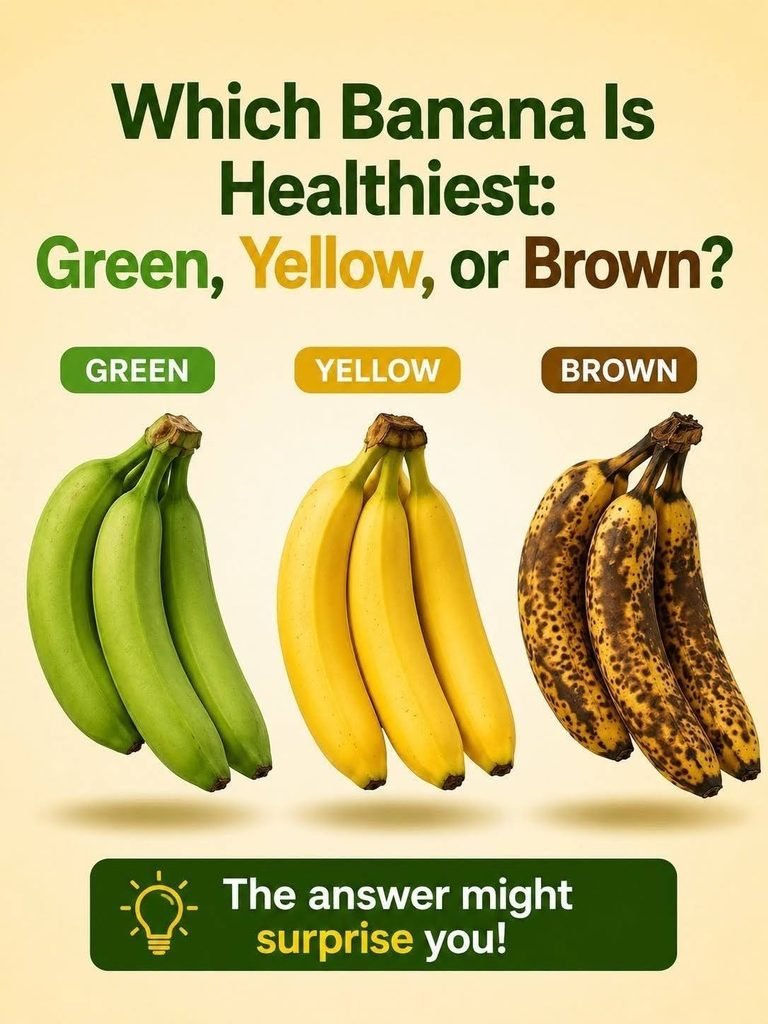
The image presents a familiar but thought-provoking lineup: three bunches of bananas, each at a distinctly different stage of ripeness. On the left, a vibrant bunch of firm, green bananas. In the middle, a picture-perfect bunch of bright, uniform yellow bananas. On the right, a heavily speckled bunch of brown, soft bananas. The text boldly asks a question that stumps many health-conscious individuals: “Which Banana Is Healthiest: Green, Yellow, or Brown? The answer might surprise you!”
For decades, the banana has been a staple of the global diet. It is the ultimate convenient snack, a pre-workout fuel source, and a staple breakfast ingredient. However, the nutritional profile of a banana is not static. It undergoes a dramatic chemical transformation as it ripens. The starch converts into sugar, the texture changes from firm to mushy, and the levels of certain vitamins and antioxidants fluctuate.
Many people believe that green bananas are the healthiest because they contain less sugar, while others swear by the immune-boosting power of brown, spotted bananas. Some simply prefer the balanced taste of a perfectly yellow banana. The truth is that there is no single “healthiest” banana. Each stage of ripeness offers a unique set of nutritional benefits, and the best choice depends entirely on your personal health goals, your digestive system, and your lifestyle.
This comprehensive two-part guide will break down the science of banana ripening. We will explore the nutritional changes that occur from green to brown, revealing the specific health benefits of each stage, so you can choose the perfect banana for your body.