Did You Know That Eating Bananas Increases Heart Health, Digestion, and Energy? The Complete Multi-System Guide
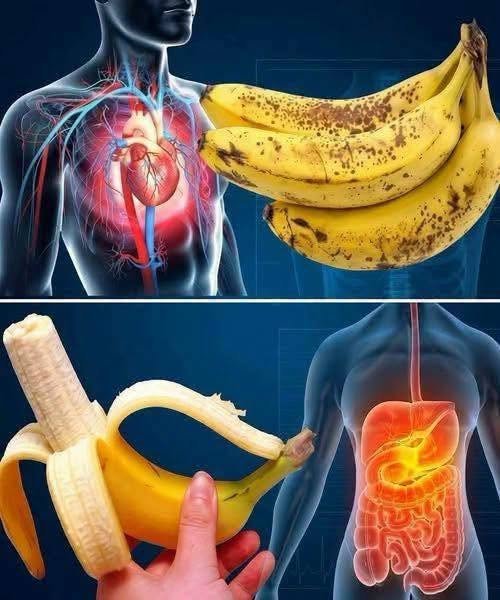
Few foods are as globally recognized, universally accessible, and nutritionally dense as the humble banana. It is the quintessential grab-and-go breakfast, the staple snack in every lunchbox, and the reliable energy source for athletes around the world. But a viral social media image has recently sparked a fascinating conversation about the deeper biological impact of this everyday fruit. The image features a simple bunch of ripe bananas alongside striking anatomical illustrations of the human cardiovascular system (the heart and blood vessels) and the digestive tract.
The prompt poses an intriguing, incomplete question: “Did you know that eating bananas increases… See more.” For the curious mind, this image is a visual teaser, a hint that the banana is far more than just a convenient source of natural sugar. It is a powerful functional food that actively influences multiple physiological systems in the human body. When you eat a banana, you are not just satisfying a sweet tooth; you are feeding your heart, nourishing your gut microbiome, and fueling your muscles.
From regulating dangerous fluctuations in blood pressure to supporting the delicate ecosystem of bacteria in your intestines, the banana is a nutritional powerhouse. Its benefits are largely driven by a unique combination of potassium, dietary fiber, Vitamin B6, and specific plant compounds like pectin and resistant starch. However, like all foods, the impact of a banana depends heavily on its ripeness, your overall diet, and your individual health profile.
In this comprehensive two-part guide, we will dissect the science behind the viral claims. In Part 1, we will delve into the remarkable cardiovascular and digestive benefits of bananas. We will explore exactly how the nutrients in this fruit interact with your heart and gut, and why this everyday snack deserves a permanent place in your diet.
The Nutritional Profile: What’s Inside a Banana?
To understand why bananas have such a profound effect on the heart and gut, we must first look at their nutritional composition. A medium-sized, ripe banana (about 118 grams) is a deceptively simple package that contains a complex matrix of micronutrients.
Here is the breakdown of what you get in a single medium banana:
Calories: Approximately 105
Carbohydrates: 27 grams (including natural sugars like fructose and glucose)
Fiber: 3.1 grams (both soluble and insoluble)
Protein: 1.3 grams
Potassium: 422 milligrams (a crucial electrolyte)
Vitamin B6: 0.4 milligrams (about 25% of the daily value)
Vitamin C: 10.3 milligrams (about 11% of the daily value)
Magnesium: 32 milligrams
Antioxidants: Including dopamine, catechin, and epicatechin.
Additionally, the structure of the banana changes as it ripens. A green banana is packed with resistant starch and contains very little sugar. As the banana turns yellow and develops brown spots, the starches convert into simple sugars, making it sweeter and easier to digest, while the antioxidant levels actually increase.
How Eating Bananas Increases Cardiovascular Health
The first anatomical image in the viral post is the heart and the vascular system. This is no coincidence; bananas are widely recognized as a “heart-healthy” food. But how exactly does a banana protect the heart?
1. The Potassium-Sodium Balance and Blood Pressure
The most direct way bananas support the heart is through their high potassium content. Potassium is an essential mineral that plays a critical role in regulating blood pressure.
In the modern Western diet, sodium (salt) intake is generally far too high, while potassium intake is far too low. This imbalance causes the body to retain water, increasing blood volume and driving up blood pressure, which puts immense strain on the heart and blood vessels.
Potassium acts as a natural diuretic. It helps the kidneys excrete excess sodium in the urine. Furthermore, it helps to relax the walls of the blood vessels (a process known as vasodilation). By helping to eliminate sodium and relaxing the blood vessels, potassium can significantly lower blood pressure. A meta-analysis of numerous studies has confirmed that increasing potassium intake can reduce the risk of stroke and heart disease by lowering hypertension.
2. Reducing the Risk of Strokes
Hypertension is the leading risk factor for strokes. Because bananas help regulate blood pressure, they inherently reduce stroke risk. Research published in the American Heart Association Journal found that postmenopausal women who consumed high levels of potassium had a 27% lower risk of ischemic stroke and a lower risk of death from all causes compared to those with low potassium intake.
3. Lowering LDL Cholesterol with Fiber
The heart also benefits from the fiber content in bananas. Soluble fiber, in particular, acts like a sponge in the digestive tract. It binds to cholesterol and bile acids in the intestine, preventing them from being absorbed into the bloodstream.
Because the liver uses circulating cholesterol to produce new bile acids, this binding action forces the liver to pull more LDL (bad) cholesterol out of the blood to replace what was lost in the stool. Over time, this mechanism leads to lower circulating LDL cholesterol levels, reducing the risk of plaque buildup in the arteries (atherosclerosis).
4. Fighting Oxidative Stress
The heart is highly susceptible to oxidative stress caused by free radicals. Bananas contain a variety of antioxidants, including flavonoids and amines like dopamine (which acts as an antioxidant in the bloodstream, not a neurotransmitter). These compounds help neutralize free radicals, preventing the oxidation of LDL cholesterol and protecting the delicate endothelial lining of the arteries from damage.
How Eating Bananas Increases Digestive Health
The second anatomical image in the viral post highlights the human digestive tract. The gut is often referred to as the “second brain,” and bananas are one of the most soothing, beneficial foods for this complex system.
1. The Fiber Powerhouse: Pectin and Regularity
Bananas are an excellent source of dietary fiber, providing both soluble and insoluble forms.
Insoluble Fiber (Lignin): The structural fiber found in the banana acts as a “scrub brush” in the digestive tract. It adds bulk to the stool and speeds up transit time through the intestines, helping to prevent constipation and keeping the bowel movements regular.
Soluble Fiber (Pectin): The pectin in bananas is a hydrocolloid, meaning it absorbs water. If you are dealing with diarrhea, pectin helps absorb excess fluid in the intestines, bulking up the stool and slowing it down. If you are dealing with constipation, pectin helps draw water into the colon, softening the stool. This makes bananas a unique food that can help normalize bowel function regardless of the issue.
2. The Prebiotic Effect: Feeding Your Gut Microbiome
Your large intestine is home to trillions of bacteria that are essential for digestion, immunity, and overall health. Bananas are a rich source of prebiotics—specific types of fiber that humans cannot digest, but which serve as food for beneficial gut bacteria.
Specifically, bananas contain fructooligosaccharides (FOS). When you eat a banana, the FOS travels intact to the colon, where it feeds strains of beneficial bacteria like Bifidobacteria and Lactobacillus. These bacteria ferment the fiber and produce short-chain fatty acids (SCFAs), such as butyrate. Butyrate is the primary energy source for the cells lining the colon, and it helps maintain a healthy, resilient gut barrier while reducing inflammation.
3. Resistant Starch and Green Bananas
If you eat a slightly green banana, you are consuming a large amount of resistant starch. Because it resists digestion in the small intestine, it reaches the colon intact, where it acts as a powerful prebiotic.
Research indicates that resistant starch can improve insulin sensitivity, lower blood sugar levels after meals, and reduce appetite. Additionally, the fermentation of resistant starch in the gut creates a favorable environment for beneficial bacteria, reducing the prevalence of harmful pathogens. As the banana ripens and turns yellow, the resistant starch converts to simple sugars, which are easier to digest but offer less prebiotic benefit.
4. Soothing the Stomach: Protecting Against Ulcers
Historically, bananas have been used as a natural remedy for stomach upset. Modern science supports this. Bananas contain certain protease inhibitors that help eliminate the bacteria Helicobacter pylori, which is a major cause of stomach ulcers. Furthermore, the pectin in bananas helps protect the stomach lining from the acidic environment and promote the healing of ulcerated tissues.
(End of Part 1. Continue to Part 2 to explore how bananas boost energy, support weight management, aid brain function, and the crucial differences between green and yellow bananas.)