What to Do If You Find a Cluster of Eggs Near Your Bed
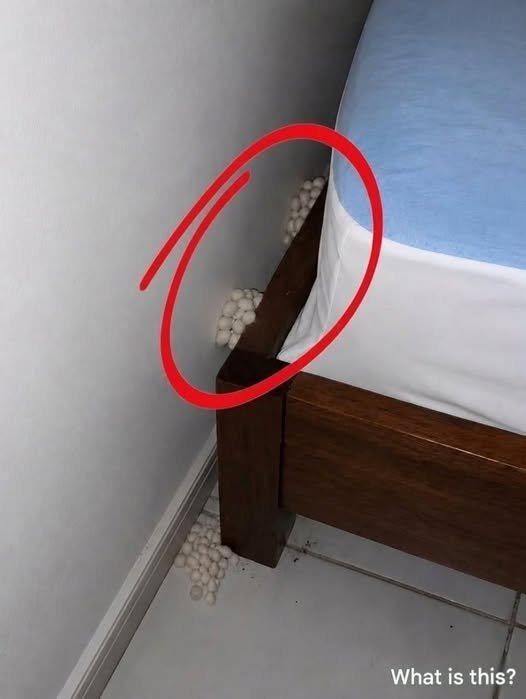
Finding a strange cluster of small, pale, round objects near your bed can be an unsettling experience. After a long day at work, the last thing anyone wants is to discover something mysterious hiding in the corner of their bedroom. The image shows a cluster of tiny white spheres tucked between the bed frame and the wall. While it may look alarming at first glance, understanding what these objects are and how to handle them can help you rest easy again.
What These Tiny Spheres Likely Are
The small, round objects in the photo are most likely insect or mite eggs. Many common household pests lay their eggs in dark, undisturbed areas, and the space between a bed frame and the wall is an ideal spot. Moths, beetles, spiders, and even some types of mites can produce egg clusters that look like tiny white or cream-colored beads. In some cases, the cluster may also be the pupae of a small insect, which is a stage of development between larva and adult.
It is also possible that the cluster is not eggs at all but rather a type of mold or fungus that grows in damp, dark conditions. However, the uniform, round shape and the way the objects are clustered together strongly suggest they are of insect origin. Regardless of the exact source, the presence of such a cluster indicates that there is some kind of pest activity in your home that should be addressed.
Why Pests Lay Eggs Near Beds
Pests are attracted to bedrooms for several reasons. The area under a bed is often dark, quiet, and rarely disturbed, making it a safe place for eggs to develop. Dust and dead skin cells that accumulate in these hidden spots can also provide a food source for certain insects. If there is any moisture present, such as from a humidifier or a leak, it can further encourage pests to settle in. The close proximity to a sleeping person may also attract insects that feed on blood, such as bed bugs, though the cluster in the photo does not resemble typical bed bug eggs, which are usually smaller and more translucent.
Steps to Take Immediately
The first step is to remove the cluster safely. Put on a pair of gloves and use a paper towel to wipe up the eggs. Place the paper towel in a sealed plastic bag and throw it in an outdoor trash can. If you prefer, you can vacuum the area instead, but be sure to empty the vacuum bag or canister immediately afterward and dispose of the contents outside. After removing the cluster, clean the entire area with hot, soapy water or a disinfectant spray. Pay close attention to the crevices between the bed frame and the wall, as well as any other nearby hiding spots.
Checking for a Larger Infestation
Once the immediate cluster is removed, it is important to check for signs of a wider infestation. Look for adult insects, shed skins, or additional egg clusters in other parts of the bedroom. Check under the mattress, along the baseboards, inside closets, and behind furniture. If you find more evidence of pests, you may need to take more aggressive action. This could include washing all bedding in hot water, vacuuming carpets and upholstery thoroughly, and using insect traps or sprays designed for the specific type of pest you are dealing with.
Preventing Future Problems
Prevention is the best way to avoid finding another cluster of eggs near your bed. Keep your bedroom clean and clutter-free, as pests thrive in messy environments. Vacuum regularly, especially in corners and under furniture. Fix any leaks or moisture issues promptly, as dampness attracts many types of insects. Store clothing and bedding in sealed containers or bags if you live in an area with high humidity. If you have pets, keep them clean and treated for fleas and ticks, as these pests can also lay eggs indoors.
When to Call a Professional
If you have found multiple clusters, see live insects regularly, or have been experiencing bites or allergic reactions, it may be time to call a professional pest control service. A trained technician can identify the specific pest, locate the source of the infestation, and apply safe and effective treatments. They can also provide advice on how to prevent future problems. While a single cluster may not seem like a major issue, ignoring the signs of a pest problem can lead to a much larger infestation down the road.
Final Thoughts
Discovering something unusual near your bed is never a pleasant experience, but it is important to stay calm and take practical steps to resolve the issue. In most cases, a small cluster of eggs can be removed and the area cleaned without any long-term consequences. By staying vigilant and keeping your home clean and dry, you can protect your bedroom from unwanted guests and enjoy a peaceful night’s sleep.