The Mysterious White Sticker on the Red Car: Decoding the Viral Optical Illusion
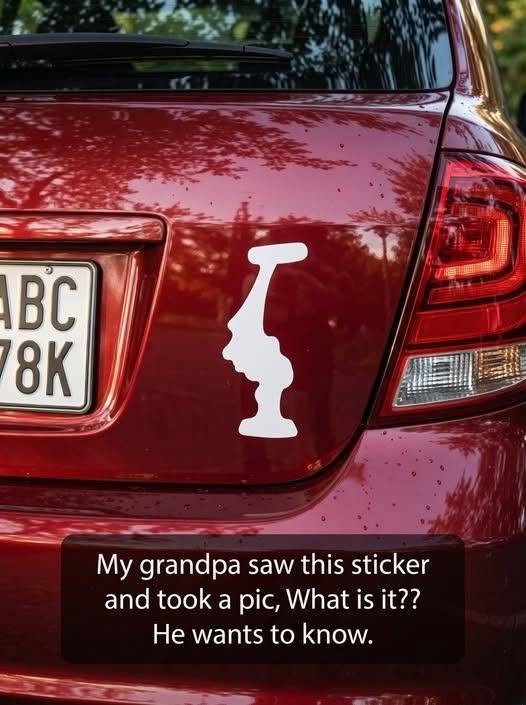
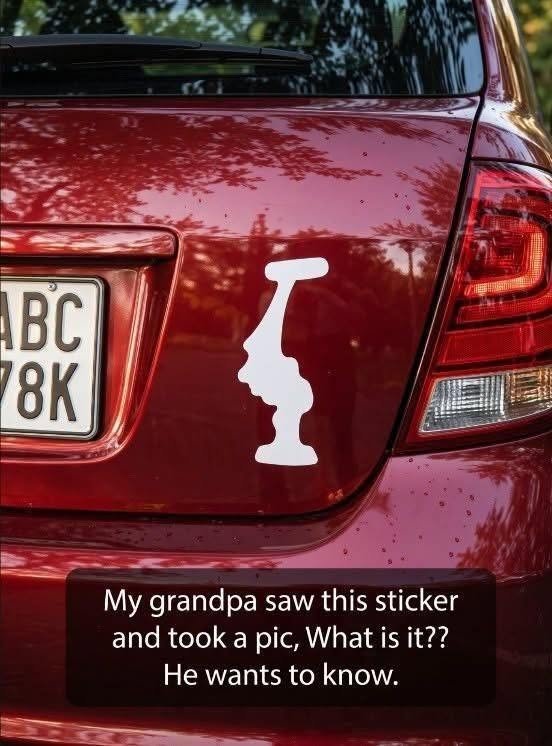
A simple photograph taken by a grandfather has sparked curiosity and debate across social media. The image shows the rear of a red car with a white, seemingly abstract sticker applied to the bodywork. The accompanying text reads: “My grandpa saw this sticker on a car and took a pic. What is it?? He wants to know.”
This single question has been shared in countless Facebook groups, from car enthusiast pages to general interest communities, with thousands of commenters offering their own interpretations. Some see a stylized profile of a woman, others see a candlestick, a goblet, or even two faces staring at each other. The truth is, the sticker is not a logo for a specific brand, nor is it a secret code. It is a clever, minimalist optical illusion designed to play with human perception.
This comprehensive guide will decode the mystery behind this viral sticker. We will explore the science of the visual illusion it employs, examine the different ways people perceive the shape, discuss the cultural phenomenon of car personalization, and explain why such a simple design has captured the internet’s imagination.
Decoding the Shape: An Optical Illusion in White Vinyl
At first glance, the sticker appears to be a single, solid white silhouette. However, the design is a deliberate variation of a classic visual puzzle.
The Rubin Vase Connection
The design is a direct descendant of the Rubin vase illusion, a famous ambiguous figure developed by Danish psychologist Edgar Rubin in 1915. The Rubin vase is typically a black and white image that can be interpreted in two ways:
The Figure: A central white vase or goblet.
The Ground: Two black faces in profile, facing each other.
The brain cannot see both interpretations simultaneously. It must flip between them. The sticker on the car operates on the exact same principle. The white vinyl acts as the “figure,” but because the shape is ambiguous, your brain can read it in multiple ways.
Interpretation 1: Two Human Profiles
If you focus on the white shape as the outline of two faces, you can clearly see two human profiles facing each other. The top horizontal bar forms the forehead and hair. The narrow vertical section becomes the nose and lips. The wider base is the neck and shoulders. In this reading, the white shape represents the negative space between two individuals. This interpretation is often described as “two faces” or “two women looking at each other.”
Interpretation 2: A Central Object
If you shift your focus to the dark red car paint around the white shape, a different image emerges. The white shape becomes the outline of a candlestick or a goblet. The top bar is the rim, the narrow neck is the stem, and the base is the foot. In this reading, the white sticker is a solid object, and the red car is the background.
Interpretation 3: A Stylized Woman
Many viewers immediately see a single, stylized profile of a woman with a ponytail or a hat. The top bar could be the brim of a hat, and the curved section below it is the face. This interpretation is particularly common because the human brain is evolutionarily hardwired to recognize faces and human forms.
The “Cowboy Hat Woman” and the Penelope Benidorm Connection
While the sticker in the photo is an ambiguous illusion, there is another famous car sticker that features a woman with a hat. For decades in Portugal and Spain, a mysterious sticker of a young woman wearing a cowboy hat has been a common sight on car windows. This sticker is not an optical illusion; it is the logo of the famous Penelope Benidorm nightclub in Spain.
The identity of the model behind the Penelope logo has remained a mystery since the image was created in 1968. The sticker symbolizes that the car owner has visited the club, and it has become a cult classic on the Iberian Peninsula. It is possible that the grandfather’s photo is of a different, abstract sticker inspired by the same cultural fascination with mysterious female silhouettes on cars.
The Psychology of the Illusion: Why Our Brains Flip
The reason this sticker is so effective is due to a psychological phenomenon known as figure-ground organization.
How Figure-Ground Organization Works
When you look at an image, your brain automatically separates it into two components:
The Figure: The object you are focusing on (the sticker).
The Ground: The background (the car).
In a normal image, this distinction is clear. In an ambiguous image like this sticker, the cues are deliberately mixed. The white shape can be the figure (a goblet) or the ground (the space between two faces). Your brain, in its attempt to make sense of the visual data, will periodically flip between these two interpretations.
The Role of Inattentional Blindness
The sticker also plays on inattentional blindness. When you first glance at the car, you see a white blob. Your brain, not recognizing it as an immediate threat or a familiar object, may filter it out. It is only when you are told to look closer, or when you read the caption asking “What is it??”, that you engage your visual processing centers and begin to see the hidden shapes.
The Cultural Phenomenon of the Viral Car Sticker
The grandfather’s photo is not just about a clever design; it is a snapshot of a broader cultural trend.
The Mystery of the “What Is It?” Sticker
The sticker has become a viral sensation precisely because it is ambiguous. It is not a brand logo like a Nike swoosh or a sports team emblem. It does not have a single, universally agreed-upon meaning. Because it is abstract, it invites viewers to project their own interpretations onto it. This ambiguity is what makes it so shareable. People share the photo to ask their friends and family what they see, creating a shared social experience.
The Psychology of Personalization
Why would someone put such a sticker on their car? Car personalization is a form of self-expression. It allows individuals to signal their identity, their interests, or their sense of humor to the world.
A Conversation Starter: The sticker is a deliberate conversation starter. It is meant to be noticed and discussed.
A Test of Perception: Some owners may enjoy the idea that their sticker confuses people or makes them look twice.
Aesthetic Appeal: For some, it is simply a minimalist, visually striking design that looks good on the car’s bodywork.
Other Interpretations and Internet Speculation
The internet, as always, has offered a wide range of theories about what the sticker represents. While the optical illusion explanation is the most scientifically sound, other interpretations have gained traction.
The “Woman with a Ponytail” Theory
Many commenters on the viral Facebook posts see a woman with a high ponytail, facing left. The top bar is her hair, the curve is her nose, and the base is her neck. This interpretation is a testament to the human brain’s ability to find faces in random patterns, a phenomenon known as pareidolia.
The “Candlestick” Theory
Others see a classic candlestick or a vintage oil lamp. This interpretation focuses on the object as a whole, with the white shape representing the physical object and the red car representing the empty space around it.
The “Two Profiles” Theory
The most common “hidden” interpretation is that of two faces in profile, looking at each other. This is the classic Rubin vase illusion, and it is the interpretation that the sticker’s designer most likely intended.
Understanding the Sticker’s Significance
The sticker is a fascinating example of how a simple design can have a profound impact. It shows that art does not need to be complex to be engaging. A simple white shape on a red background can capture the imagination of thousands of people because it engages the brain in a playful way.
The Importance of Context
It is also important to note that the meaning of the sticker is entirely dependent on context. If you saw this shape on a piece of paper, you might just see a random blob. But placed on the back of a car, it becomes a statement. The context of the car, the red paint, and the public setting all contribute to the sticker’s intrigue.
Frequently Asked Questions
Q: Is the sticker a logo for a specific company or brand? Based on extensive research, the sticker does not appear to be a corporate logo. It is most likely a piece of generic vinyl art designed to look like an optical illusion.
Q: What is the most likely intended meaning of the sticker? The design is a variation of the classic “two faces or a vase” illusion. The designer likely intended for the viewer to see both interpretations: the two faces in profile and the central object (like a goblet or candlestick).
Q: Why did the grandfather’s photo go viral? The photo went viral because the sticker is ambiguous and confusing. People love a mystery, and the “What is it?” caption invites engagement and debate. It became a fun social media puzzle.
Q: Is this the same as the “cowboy hat woman” sticker? No. The “cowboy hat woman” sticker is a different, famous decal associated with the Penelope Benidorm nightclub in Spain. The sticker in the grandfather’s photo is an abstract optical illusion.
Q: What is the psychological principle behind the sticker? The sticker relies on figure-ground organization, a concept from Gestalt psychology where the brain separates an image into a figure (the object of focus) and a ground (the background).
Q: Can everyone see the hidden faces? Not necessarily. The ability to see the hidden image depends on your visual processing and attention. Some people see the faces immediately, while others may need to look at the sticker for a while or be told where to look.
Q: Is the sticker harmful or offensive? No. It is a harmless piece of car art. It is not offensive or dangerous.
Q: What should I do if I see this sticker on a car? There is nothing you need to do. It is simply a form of personal expression. You can enjoy the optical illusion or discuss it with the car owner if the opportunity arises.
Q: Are there other similar car stickers? Yes. There is a wide range of optical illusion and puzzle stickers available for cars, including variations of the Rubin vase, impossible shapes, and hidden image designs.
Q: Why do people put stickers on their cars? People put stickers on their cars for many reasons: self-expression, humor, showing affiliation with a group, or simply to add a personal touch to their vehicle.
Conclusion
The mysterious white sticker on the red car is not a secret code or a corporate logo. It is a clever piece of minimalist vinyl art designed to play with human perception. By utilizing the principles of figure-ground organization, the sticker invites viewers to see either two faces in profile or a central object like a candlestick.
The viral nature of the grandfather’s photo is a testament to the enduring appeal of optical illusions. It shows that a simple, ambiguous design can spark curiosity, encourage social interaction, and capture the imagination of the internet. The next time you see a confusing sticker on a car, take a moment to look closer. You might just discover a hidden image that changes the way you see the world.