Have You Noticed Small White Spots on Your Arms or Legs? Here Is Exactly What They Are
Noticing new spots or changes on your skin can be an unsettling experience. You might be going about your daily routine—getting dressed, applying lotion, or simply glancing in the mirror—when a cluster of small, pale dots on your arms or legs suddenly catches your eye. They do not itch, they do not hurt, and they were not there before. Naturally, your first instinct is to wonder what they are and whether they signal a serious health problem.
The good news is that the vast majority of small white spots on the limbs are completely harmless. In many cases, they are a normal part of the aging process or a sign of cumulative sun exposure over a lifetime. However, the appearance of white spots can also point to fungal infections, autoimmune conditions, or inflammatory skin disorders that require targeted treatment. Because the visual differences between these conditions can be subtle, understanding the distinct characteristics of each is the first step toward finding the right solution.
This comprehensive guide explores the most common causes of small white spots on the arms and legs, from the benign “white sun spots” that affect most people as they age to conditions like vitiligo and tinea versicolor. We will examine why these spots develop, how they are diagnosed, the available treatment options, and the warning signs that indicate you should consult a dermatologist.
Understanding Skin Pigmentation: Why White Spots Appear
To understand why white spots form, it helps to understand how skin gets its color. Human skin contains specialized cells called melanocytes. These cells produce melanin, the pigment responsible for the color of your skin, hair, and eyes. Melanin also plays a crucial protective role, absorbing ultraviolet (UV) radiation from the sun to shield deeper skin layers from DNA damage.
When something disrupts the production of melanin or destroys the melanocytes themselves, the affected area loses its color. This condition is known broadly as hypopigmentation. White spots on the arms and legs are essentially localized areas of hypopigmentation. The underlying cause dictates whether the loss of pigment is temporary, permanent, progressive, or easily treatable. The most common culprits fall into several distinct categories: sun-related damage, fungal overgrowth, autoimmune reactions, and post-inflammatory changes.
Idiopathic Guttate Hypomelanosis: The “White Sun Spots”
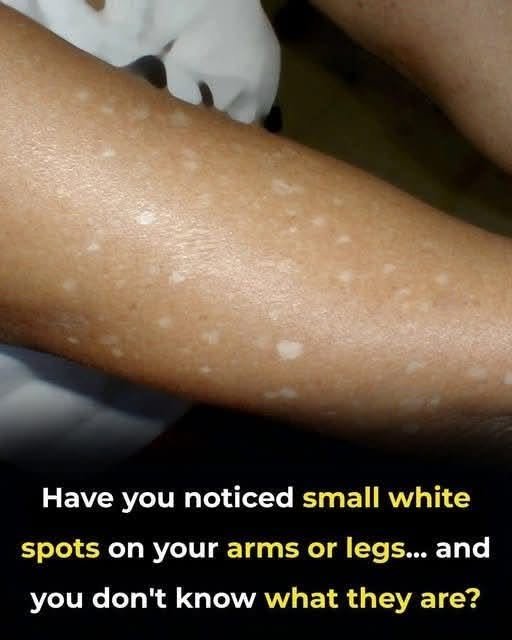
If you are over the age of 40 and have spent time in the sun, the most likely explanation for small white spots on your arms and legs is idiopathic guttate hypomelanosis (IGH). Often referred to simply as “white sun spots” or “white freckles,” IGH is an incredibly common, benign skin condition.
What Does IGH Look Like?
IGH presents as multiple small, flat, porcelain-white to ivory-colored spots. They are typically round or oval, with sharply defined borders. The spots usually measure between 1 and 5 millimeters in diameter, though some may be slightly larger. They are most commonly found on sun-exposed areas, particularly the shins, forearms, and lower legs, which explains why they are so frequently noticed on the limbs. The white areas are usually smooth, though the normal skin markings may be reduced or absent. They do not itch, bleed, or cause any physical discomfort.
Who Gets IGH and Why?
IGH predominantly affects fair-skinned individuals, but it can occur in people with darker skin tones as well. The condition becomes increasingly common with age; research indicates that it affects 50% to 80% of people over the age of 40. Women are affected more frequently than men, and there appears to be a genetic component, as the spots often run in families.
The exact cause of IGH is not fully understood, but the scientific consensus points strongly to cumulative sun exposure as a primary driver. Ultraviolet light is believed to damage melanocytes over time, leading to a gradual reduction in their numbers and function. Some researchers also hypothesize that repeated microtrauma to the skin may play a role. In essence, IGH is a marker of sun damage and the natural aging of the skin, similar to the process that causes hair to turn gray.
Is IGH Dangerous?
No. IGH is entirely benign. The white spots do not predispose a person to skin cancer, nor do they indicate an underlying systemic disease. The primary concern associated with IGH is cosmetic. Because the spots lack melanin, they do not tan, which can make them stand out more prominently against tanned surrounding skin.
Vitiligo: An Autoimmune Pigment Disorder
While IGH is a cosmetic issue related to sun damage, vitiligo is a chronic autoimmune condition with more significant implications for skin health. Vitiligo occurs when the body’s immune system mistakenly targets and destroys melanocytes, leading to progressive depigmentation.
Recognizing Vitiligo
The white patches of vitiligo are distinctly different from the small, scattered dots of IGH. Vitiligo typically presents as larger, well-defined patches of completely white or chalky skin. These patches often have a symmetrical distribution and can appear on both sides of the body. While vitiligo can affect the arms and legs, it frequently begins around the mouth, eyes, nose, hands, feet, elbows, knees, and genitals.
Unlike IGH, vitiligo patches can enlarge and spread over time if left untreated. The depigmented skin is highly vulnerable to severe sunburn because it lacks the protective melanin barrier. In some cases, the condition can become widespread, affecting large portions of the body.
How Vitiligo Is Diagnosed and Treated
A dermatologist can usually diagnose vitiligo through a clinical examination. A Wood’s lamp—a special handheld device that emits ultraviolet light—is often used to enhance the appearance of depigmented patches and reveal any subtle involvement that may not be visible under normal lighting. Skin scrapings may be performed to rule out fungal infections like tinea versicolor.
Treatment for vitiligo aims to restore pigment, stabilize the condition, and protect the skin. First-line therapies include topical corticosteroids, which help suppress the autoimmune response, and calcineurin inhibitors such as tacrolimus and pimecrolimus. For more extensive or stubborn cases, narrowband ultraviolet B (UVB) phototherapy is often the treatment of choice. In 2022, the FDA approved ruxolitinib cream (Opzelura), the first topical treatment specifically indicated for repigmentation in vitiligo. If repigmentation is not achievable, some individuals may choose to depigment the remaining skin for a uniform tone.
Tinea Versicolor: A Fungal Cause of White Spots
Not all white spots are related to pigment cells. Tinea versicolor (also known as pityriasis versicolor) is a common fungal infection caused by an overgrowth of Malassezia yeast, which naturally lives on human skin.
The Fungal Mechanism
The Malassezia yeast produces a substance that interferes with melanin production, resulting in areas of skin that are lighter than the surrounding tissue. These patches may also prevent tanning, making them more noticeable after sun exposure. Tinea versicolor most commonly affects areas rich in sebaceous (oil) glands, such as the chest, back, and upper arms. However, it can also occur on the legs. Unlike IGH, the patches of tinea versicolor often have a fine, scaly surface and may be mildly itchy, especially in warm, humid conditions.
Diagnosis and Antifungal Treatment
Diagnosis is typically straightforward. A dermatologist may use a Wood’s lamp, under which tinea versicolor may fluoresce a characteristic golden-yellow color. A skin scraping examined under a microscope (KOH preparation) can confirm the presence of fungal elements.
Treatment involves the use of antifungal medications. For localized cases, topical antifungal shampoos, lotions, or creams are usually sufficient. Common options include selenium sulfide shampoo (applied to the affected skin for 10 minutes daily for a week), ketoconazole cream or shampoo, or pyrithione zinc soap. For extensive or recurrent cases, oral antifungals such as fluconazole may be prescribed. It is important to note that even after the fungus is eliminated, the white patches may take months to regain their normal pigmentation.
Post-Inflammatory Hypopigmentation: White Spots After Skin Injury
Sometimes, white spots appear in the exact location where the skin was previously inflamed or injured. This is known as post-inflammatory hypopigmentation. It occurs when inflammation disrupts the normal function of melanocytes, leading to a temporary decrease in pigment production.
Common Triggers
Post-inflammatory hypopigmentation can follow various skin conditions, including eczema, psoriasis, burns, insect bites, or even minor trauma such as scratches. It is particularly common in people with darker skin tones. The spots are usually flat and correspond to the shape and location of the original inflammation. They are not typically scaly or itchy unless the underlying inflammatory condition is still active.
Management and Prognosis
The most important step in managing post-inflammatory hypopigmentation is to treat the underlying inflammatory condition. Once the inflammation is controlled, the skin often repigments on its own over time, although this can take months. To aid the process and make the spots less noticeable, strict sun protection is essential. Sunscreen prevents the surrounding skin from tanning, which would otherwise accentuate the contrast between the normal and hypopigmented areas. In some cases, topical medications such as tacrolimus ointment may be recommended to help restore pigmentation.
Pityriasis Alba and Other Considerations
While the conditions above are the most common causes, several other skin issues can present as white spots on the limbs.
Pityriasis Alba
Pityriasis alba is a common condition that primarily affects children and young adults. It causes round or oval patches of lighter skin, often with a slightly raised, scaly border. The lightening is thought to result from low-grade inflammation associated with eczema. These patches are most often seen on the face, upper arms, and trunk. They usually improve on their own over time, but moisturizing the skin and using gentle topical steroids can help speed up recovery.
Milia
Milia are tiny, raised, white bumps that develop when keratin (a protein in skin cells) becomes trapped just beneath the surface of the skin. They are most common on the face, particularly around the eyes and cheeks, but can occur elsewhere. Unlike the flat spots of IGH or vitiligo, milia are small cysts that feel like tiny pearls under the skin. They are harmless and painless. While they often resolve on their own, a dermatologist can safely extract them if they are bothersome.
Nutritional Deficiencies
In rare cases, a deficiency in certain vitamins and minerals—such as vitamin B12, vitamin C, vitamin D, or folate—can contribute to the development of white spots on the skin. These spots are usually accompanied by other systemic symptoms. A balanced diet is the best way to prevent such deficiencies, and treatment involves addressing the underlying nutritional gap under medical supervision.
How to Tell the Difference: A Comparison of Key Features
The visual similarities between these conditions can make self-diagnosis difficult. The following table summarizes the defining characteristics of the most common causes of white spots on the arms and legs.
Condition
Typical Appearance
Location
Sensation
Cause
Idiopathic Guttate Hypomelanosis (IGH)
Small (1-5mm), flat, porcelain-white dots with sharp borders
Sun-exposed areas: shins, forearms, legs
Asymptomatic (no itch or pain)
Sun damage and aging
Vitiligo
Larger, well-defined patches of chalky-white skin
Often symmetrical: around mouth, eyes, hands, elbows, knees
Asymptomatic; skin is sun-sensitive
Autoimmune destruction of melanocytes
Tinea Versicolor
Scaly patches, lighter or darker than surrounding skin
Chest, back, upper arms; can spread to legs
May be mildly itchy
Overgrowth of Malassezia yeast
Post-Inflammatory Hypopigmentation
Flat, pale areas matching the shape of previous injury
Anywhere the skin was previously inflamed
Asymptomatic
Inflammation disrupting melanin production
Pityriasis Alba
Round or oval, slightly scaly, lighter patches
Face, upper arms, trunk
Mildly itchy or asymptomatic
Associated with eczema
Milia
Tiny, raised, pearly-white bumps
Eyelids, cheeks, forehead
Asymptomatic
Trapped keratin
When to See a Dermatologist
While most white spots are harmless, certain signs warrant a professional evaluation. You should schedule an appointment with a dermatologist if you notice any of the following:
Rapid Spread: The spots are new, increasing in number, or spreading quickly.
Sharp, Complete Depigmentation: The patches are completely white (chalky) and sharply outlined, which may suggest vitiligo.
Associated Symptoms: The spots are accompanied by itching, redness, scaling, pain, or changes in hair color.
Involvement of Sensitive Areas: White patches appear on the face, hands, genitals, or around the eyes.
No Improvement: The spots do not improve or resolve after a reasonable period.
Uncertainty: You are unsure of the cause and want an accurate diagnosis.
A dermatologist can typically diagnose the condition through a simple visual examination. If necessary, they may use a Wood’s lamp or perform a skin scraping to confirm the diagnosis and rule out other possibilities.
Treatment Options and Sun Protection
For many of the conditions described, treatment is not medically necessary, but it can improve appearance and address any underlying issues.
For IGH: No treatment is required. If the appearance is bothersome, options such as topical retinoids (like tretinoin), topical corticosteroids, or procedures like cryotherapy and dermabrasion may be offered, though results are variable. The most important step is daily use of broad-spectrum sunscreen to prevent new spots and protect against further sun damage.
For Vitiligo: Treatment is focused on halting the autoimmune attack and stimulating repigmentation. This may involve topical corticosteroids, calcineurin inhibitors, phototherapy, or newer agents like ruxolitinib cream.
For Tinea Versicolor: Antifungal treatments, available as topical shampoos, creams, or oral medications, will clear the infection.
For Post-Inflammatory Hypopigmentation: The primary strategy is to treat the underlying inflammatory condition and practice strict sun protection to allow the skin to repigment naturally.
A Note on Sun Protection: Regardless of the specific cause, daily application of a broad-spectrum sunscreen with an SPF of 30 or higher is a universal recommendation for anyone concerned about white spots. Sun exposure can worsen the appearance of IGH, trigger flares of vitiligo, and make post-inflammatory hypopigmentation more noticeable by darkening the surrounding skin.
Conclusion: Understanding Your Skin
Small white spots on the arms and legs are a remarkably common finding, and in the overwhelming majority of cases, they are nothing to worry about. For most people, the spots are simply idiopathic guttate hypomelanosis—benign “white sun spots” that reflect a lifetime of sun exposure and the natural aging of the skin. Other common causes include the fungal infection tinea versicolor, the autoimmune condition vitiligo, and temporary post-inflammatory changes following a skin injury.
The key takeaway is that an accurate diagnosis matters. While self-comparison with online images can provide useful clues, a dermatologist is best positioned to distinguish between conditions that look similar but require very different management strategies. If your white spots are stable, asymptomatic, and limited to sun-exposed areas, they are likely harmless. If they are spreading, changing, or accompanied by other symptoms, a professional evaluation will provide clarity and peace of mind. With the right information and appropriate sun protection, you can better understand and care for the skin you are in.
Frequently Asked Questions
Are small white spots on the arms and legs usually serious?
In the vast majority of cases, no. The most common cause is idiopathic guttate hypomelanosis (IGH), a completely benign condition related to sun exposure and aging. However, other conditions like vitiligo or tinea versicolor can also cause white spots, so a professional diagnosis is helpful if you are concerned.
What is the most common cause of white spots on the legs?
Idiopathic guttate hypomelanosis (IGH) is the most common cause of small white spots on the legs, particularly on the shins. It affects a large percentage of people over the age of 40 and is considered a marker of sun damage.
Can white spots on the skin be a sign of a vitamin deficiency?
Yes, in some cases. Deficiencies in vitamins such as B12, C, D, or folate have been associated with the development of white spots. However, this is less common than other causes. A balanced diet generally prevents such deficiencies.
Do white sun spots (IGH) ever go away?
The spots themselves do not typically resolve on their own. However, they are harmless. Using daily sunscreen can prevent new spots from forming and help protect the skin from further damage. Cosmetic treatments are available for those who wish to reduce their appearance.
How can I tell if my white spots are vitiligo or something else?
Vitiligo typically presents as larger, well-defined patches of completely white skin, often appearing symmetrically on both sides of the body. In contrast, IGH spots are small, scattered dots. A dermatologist can use a Wood’s lamp to distinguish between the two.
Is tinea versicolor contagious?
No, tinea versicolor is not contagious. It is caused by an overgrowth of yeast that naturally lives on everyone’s skin. It is triggered by factors like warm, humid weather and excessive sweating, not by person-to-person contact.
When should I see a doctor about white spots on my skin?
You should see a dermatologist if the spots are spreading rapidly, are completely white and sharply defined, are accompanied by itching or scaling, or appear on sensitive areas like the face or genitals. If you are unsure about the cause, a professional evaluation is always a good idea.