The Ultimate Guide to Hungarian Sweet Cheese Pastries (Túrós Batyu) 🥐✨
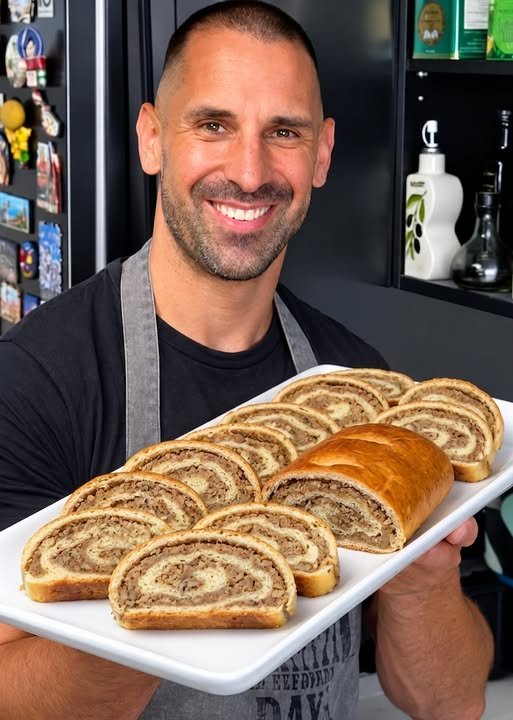
Look at that plate of pure, golden perfection! The glossy, burnished crust, the creamy white cheese peeking out from the center, and that generous dusting of powdered sugar like a fresh snowfall. In the hands of that very happy man sits a batch of Hungarian Sweet Cheese Pastries, known in Hungary as Túrós Batyu.
The viral caption promises “5 minutes, melts in your mouth at the first bite, Simple to make…”—and while the “5 minutes” might refer to how quickly a batch disappears once it hits the table, the “melts in your mouth” part is an absolute guarantee. 🤤
If you’ve ever walked into a traditional Hungarian bakery (pékség) and been hit by the intoxicating smell of freshly baked, yeasty, sweet dough, you know exactly what we are talking about. Today, we are going to demystify the art of making these incredible pastries at home. We’ll dive into the history, the secrets of the perfect yeast dough, the magic of túró cheese, and a comprehensive, step-by-step recipe that will turn your kitchen into a Hungarian bakery. Let’s bake! 👨🍳🍞
🕰️ A Staple of the Hungarian Bakery
In Hungary, baked goods are a serious business. The daily trip to the bakery is a cherished ritual, and the selection is always vast—from savory pogácsa to sweet rétes (strudel). Among these treasures, the Batyu (which translates to “bundle” or “pouch”) holds a special place.
Túrós Batyu is the ultimate breakfast or afternoon snack (uzsonna). The name refers to the way the dough is folded—the four corners are brought to the center and pinched together, creating a little bundle that holds the sweet filling inside.
Historically, this pastry is rooted in the resourcefulness of Hungarian households. It uses a simple, enriched yeast dough (often called kelt tészta) and a filling made from túró—a traditional fresh curd cheese. While similar to ricotta or cottage cheese, túró has a distinctively tangy, slightly drier texture that holds up beautifully in baking.
These pastries are a staple of Hungarian childhoods, often eaten warm, straight from the oven, with a glass of cold milk or a strong cup of coffee. 🇭🇺❤️
🧩 The Anatomy of the Perfect Batyu
To recreate the magic in the photo, we need to break down this pastry into its three essential components:
1. The Dough: Soft, Fluffy, and Enriched 🍞
This is not a heavy bread dough, nor is it a flaky pastry. It is an enriched yeast dough (kelt tészta). The secret to that melt-in-your-mouth texture is the addition of milk, butter, and egg yolks. This creates a soft, slightly sweet, and incredibly fluffy crumb that practically pulls apart in your hands.
2. The Filling: The Tangy Sweetness of Túró 🧀
The filling is the star of the show. It consists of túró cheese mixed with egg yolks, sugar, vanilla, and a hint of lemon zest. To prevent the filling from making the dough soggy, we add a little bit of semolina or flour to absorb the moisture. The result is a creamy, slightly dense, sweet-tart center that perfectly balances the sweet dough.
3. The Shape: The “Bundle” 🎁
The signature look of the Batyu is the square shape with the corners folded into the center. It’s a rustic, beautiful design that not only looks impressive but also seals the filling inside. Some bakers add a little cross-hatch pattern of dough on top or a dollop of sour cream before baking, but the classic pinch is what you see in the photo.
🛒 The Master Recipe: Authentic Hungarian Túrós Batyu
This recipe requires a bit of patience while the dough rises, but the actual hands-on time is relatively short. It yields about 12-16 beautiful pastries, perfect for a weekend breakfast or a sweet treat.
500g (4 cups) all-purpose flour (plus extra for dusting)
7g (2 ¼ tsp) active dry yeast or instant yeast
250ml (1 cup) warm whole milk (lukewarm, not hot!)
80g (⅓ cup) granulated sugar
2 large egg yolks 🥚
80g (⅓ cup) unsalted butter, melted and slightly cooled 🧈
1 teaspoon vanilla extract
½ teaspoon salt
1 egg, beaten (for egg wash)
For the Cheese Filling (Túró):
500g (2 cups) Túró cheese (or substitute with a dry ricotta or farmer’s cheese) 🧀
70g (⅓ cup) granulated sugar
2 large egg yolks
1 tablespoon semolina flour or all-purpose flour (to absorb moisture)
1 teaspoon vanilla extract
Zest of 1 lemon 🍋
Pinch of salt
For Dusting:
Powdered sugar ❄️
Step-by-Step Instructions:
Step 1: Activate the Yeast 🫧
In a small bowl, warm the milk until it is lukewarm (about 110°F/43°C). You should be able to touch it comfortably without it feeling hot.
Add 1 tablespoon of the sugar and the yeast. Stir gently and let it sit for 5-10 minutes until it becomes frothy and bubbly. (If it doesn’t foam, your yeast is dead—start over with fresh yeast).
Step 2: Make the Dough 🥣
In a large mixing bowl, combine the flour, remaining sugar, and salt.
Make a well in the center and add the yeast mixture, egg yolks, melted butter, and vanilla extract.
Mix together with a wooden spoon until a shaggy dough forms.
Turn the dough out onto a lightly floured surface and knead for 8-10 minutes. The dough should become smooth, elastic, and slightly tacky. If it’s too sticky, add a little flour; if it’s too stiff, add a splash of milk.
Step 3: Let it Rise ⏳
Place the dough in a lightly oiled bowl, cover it with a clean kitchen towel or plastic wrap, and let it rise in a warm, draft-free place for about 1 to 1.5 hours, or until it has doubled in size.
Step 4: Prepare the Filling 🧀
While the dough rises, prepare the filling. In a medium bowl, combine the túró (or ricotta), sugar, egg yolks, semolina/flour, vanilla extract, lemon zest, and a pinch of salt. Mix until well combined. Cover and refrigerate until ready to use.
Step 5: Shape the Pastries 🎁
Once the dough has doubled in size, punch it down to release the air.
Turn the dough out onto a lightly floured surface and roll it into a large rectangle (about 40×30 cm or 16×12 inches).
Using a sharp knife or a pizza cutter, cut the dough into equal-sized squares (about 10×10 cm or 4×4 inches).
Place a generous tablespoon of the cheese filling in the center of each square.
Bring the four corners of the dough to the center and pinch them together tightly to seal the filling inside. (Make sure there are no gaps, or the filling will leak out during baking).
Place the shaped pastries onto a baking sheet lined with parchment paper, leaving a little space between them.
Step 6: The Second Rise ⏳
Cover the pastries with a clean kitchen towel and let them rise for another 30-45 minutes, until they look puffy and slightly larger.
Step 7: Bake to Golden Perfection 🔥
Preheat your oven to 180°C (350°F).
Gently brush the tops of the risen pastries with the beaten egg wash. This will give them that beautiful, shiny, golden-brown crust.
Bake for 20-25 minutes, or until they are deeply golden brown and sound hollow when tapped on the bottom.
Remove from the oven and transfer to a wire rack to cool slightly.
Step 8: The Final Touch ✨
While they are still slightly warm (but not piping hot), dust the pastries generously with powdered sugar.
Serve warm and enjoy the magic!
💡 Troubleshooting & Pro-Tips for the Perfect Pastry
The dough is not rising! 🌡️ This is usually a temperature issue. The milk must be warm but not hot (hot milk kills yeast). Also, ensure your kitchen is warm enough. If it’s chilly, place the bowl in an oven that has been turned on for a minute and then turned off (leaving the light on).
The filling leaked out during baking! 🥺 You probably didn’t pinch the corners tightly enough, or the filling was too wet. Always pinch the dough firmly, and make sure you added the semolina/flour to the cheese to absorb excess moisture.
Where can I find Túró? 🧀 If you don’t have a European deli nearby, you can use whole-milk ricotta (drain it in a cheesecloth overnight to remove excess liquid) or a dry farmer’s cheese. Do not use wet cottage cheese, or the pastries will be soggy.
Can I make them ahead of time? ⏱️ Absolutely! You can do the first rise, shape the pastries, and place them in the fridge overnight. Take them out in the morning, let them come to room temperature and do the second rise, then bake.
How to store leftovers: 🥡 Keep them in an airtight container at room temperature for 2-3 days. To revive that fresh-out-of-the-oven feel, pop them in the microwave for 10-15 seconds, or wrap them in foil and warm them in the oven.
☕ The Perfect Pairing
These pastries are incredibly rich and satisfying, so they don’t need much to accompany them.
The Classic Hungarian Breakfast: Serve them with a strong cup of black coffee or a milky latte.
The Afternoon Treat: Enjoy one with a cup of hot tea (like Earl Grey or a fruity black tea) or a glass of cold milk for the kids.
Fruit Pairing: A side of fresh berries—strawberries, raspberries, or blueberries—adds a wonderful fresh, tart contrast to the sweet, creamy pastry.
Final Thoughts
Making Túrós Batyu is an act of love. The process of kneading the dough, watching it rise, and carefully pinching those little bundles is deeply satisfying. And the reward? A batch of pastries that taste exactly like a warm hug from a Hungarian grandmother.
They truly do melt in your mouth at the first bite, and once you make them from scratch, you will never look at a store-bought pastry the same way again.