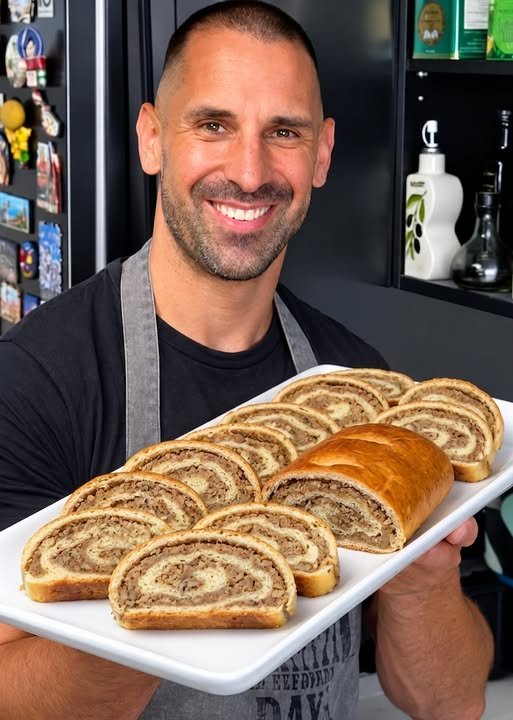
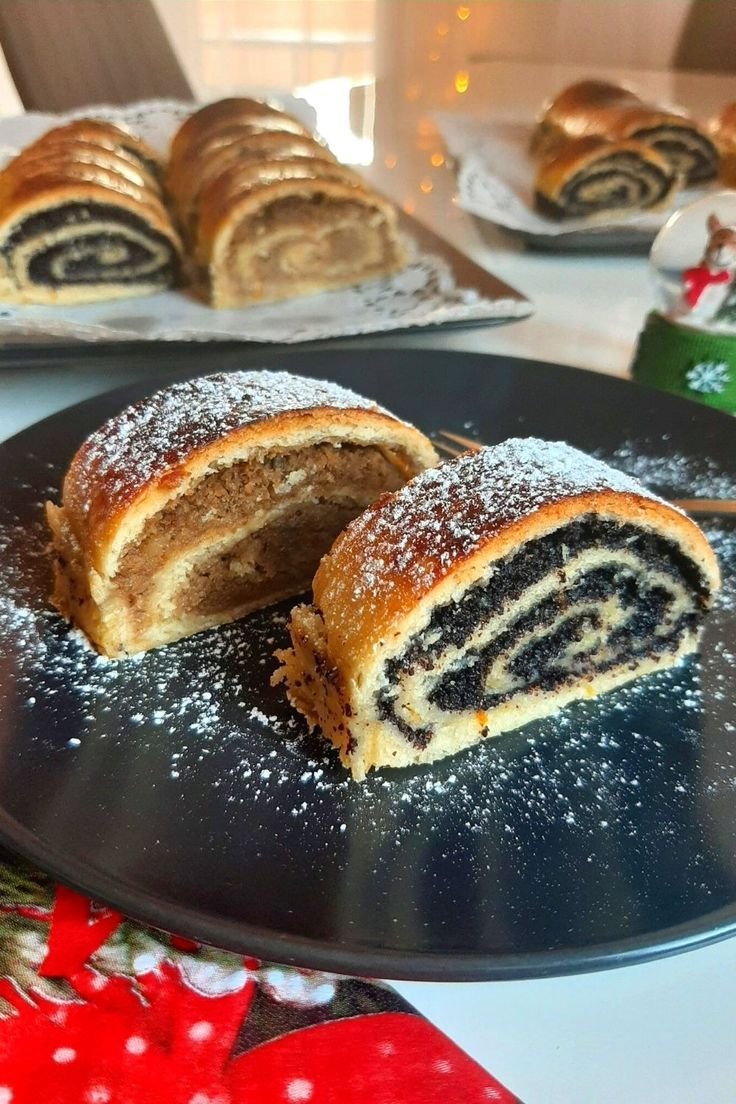
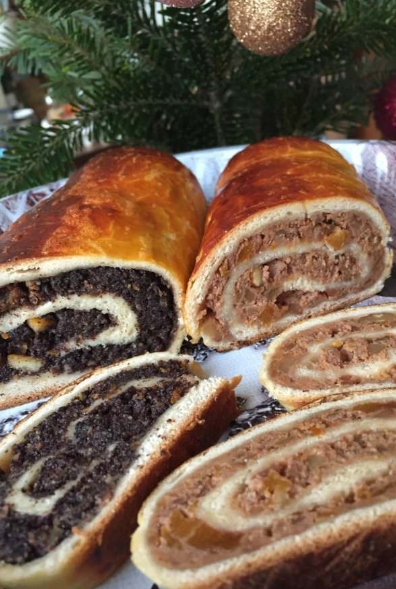
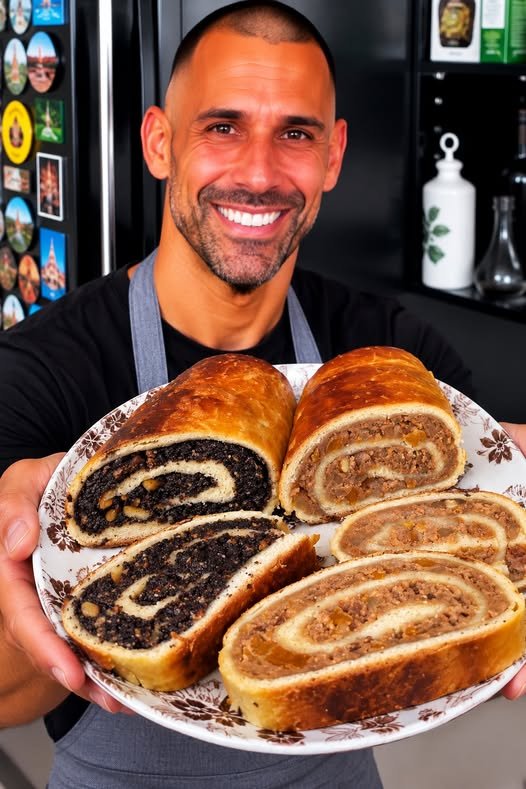
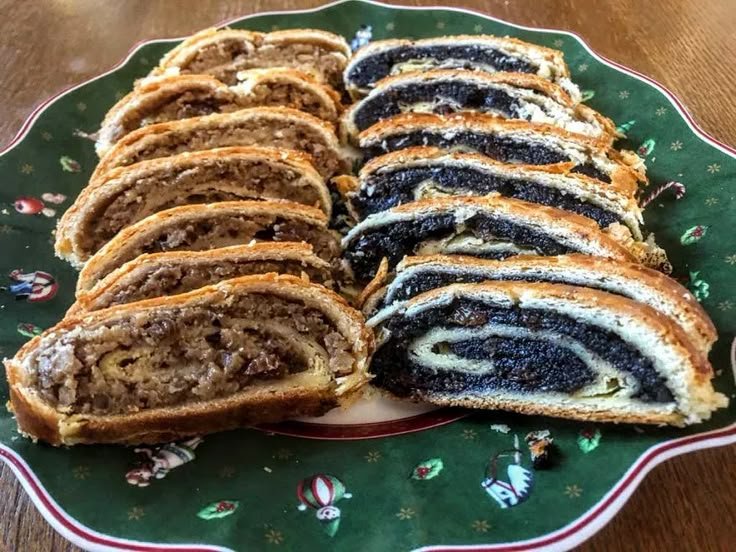
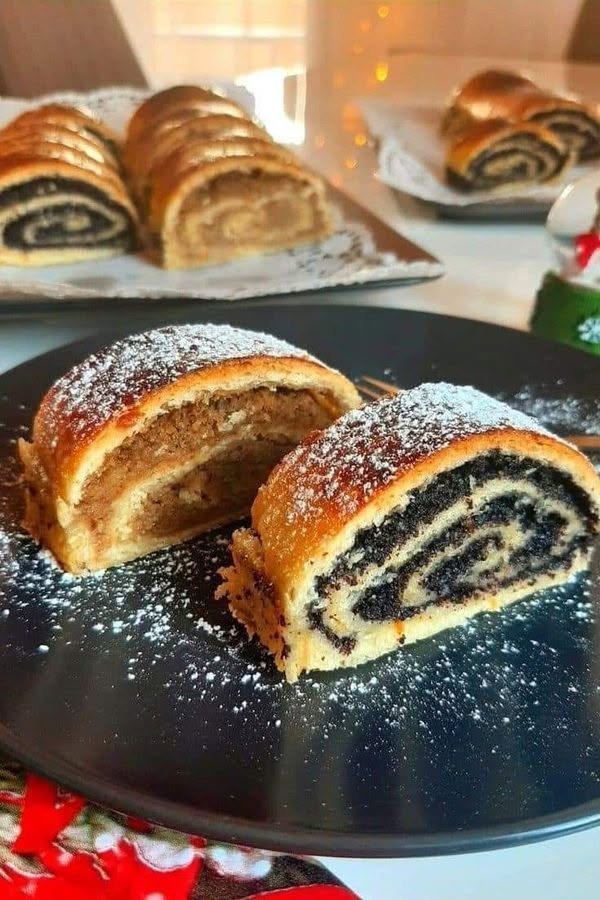
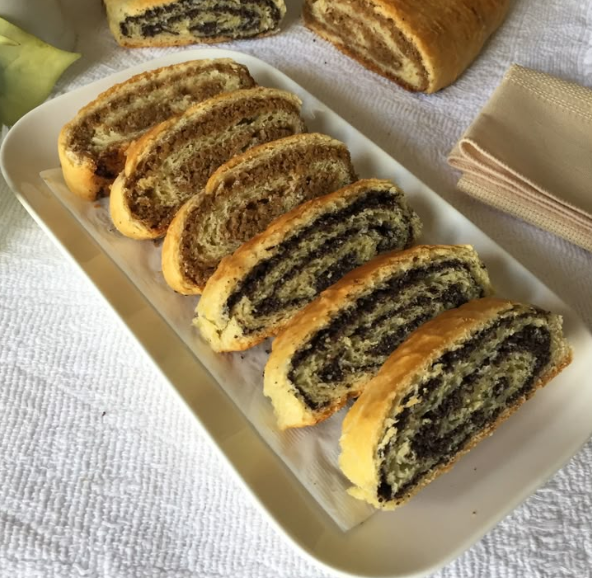
When the holiday season approaches in Hungary, the scent of yeast dough and sweet, toasted walnuts begins to drift from home kitchens across the country. There is perhaps no baked good more synonymous with Hungarian Christmas and Easter than Beigli (pronounced bay-glee), a traditional rolled pastry filled with either sweet walnut paste (diós) or poppy seed paste (mákos). The photograph provided captures the quintessential beauty of the Walnut Beigli: a golden, shiny crust yielding to a dense, perfectly spiraled filling of rich, dark brown walnuts.
While the social media caption that inspired this article playfully promises a recipe that takes “5 minutes,” the truth is that authentic Beigli is a labor of love. It is a sweet yeast bread—similar to a brioche or a babka—that requires time to rise, careful handling of the delicate dough, and a generous amount of patience. However, the actual techniques are straightforward, and the reward is a stunning, bakery-quality loaf that “melts in your mouth” with every bite.
The filling is what makes this pastry truly special. It is not a dry crumble, but a rich, slightly sticky, cooked walnut paste that is flavored with vanilla, lemon zest, and a touch of sweetness. It is encased in a soft, buttery dough that is rolled tightly to create the beautiful cross-section swirl seen in the image. This comprehensive guide will walk you through every step of making this iconic Central European pastry at home, from mixing and kneading the dough to mastering the art of the tight roll and achieving that beautiful, glossy egg-washed crust.
Recipe Overview
Preparation Time: 45 minutes
Rising Time: 1 hour 30 minutes (plus cooling time for filling)
Cooking Time: 30–35 minutes
Cooling Time: 2–3 hours (essential before slicing)
Total Time: Approximately 4 to 5 hours
Servings: Makes 2 large rolls (about 20-24 slices)
Difficulty Level: Intermediate to Advanced
Cooking Method: Baking
Cuisine: Hungarian
Course: Dessert, Bread, Holiday Baking
Estimated Calories per Serving: Approximately 200–250 kcal per slice
What Is This Hungarian Dish?
Beigli is a traditional Hungarian sweet bread roll, typically made with a rich, sweet yeast dough. It is a staple of the Hungarian holiday table, almost universally served at both Christmas and Easter. The most traditional flavors are ground walnuts and ground poppy seeds.
The origins of Beigli are somewhat debated, but it is widely believed to have Austrian or German roots (similar to the Beugel or Strudel), but over the centuries, it has been thoroughly adopted and perfected by Hungarian bakers. The dough is distinct from a typical bread dough; it is enriched with butter, egg yolks, and sour cream, resulting in a soft, tender crumb that holds up beautifully against the dense filling.
What sets Hungarian Beigli apart is the preparation of the filling. The walnuts are ground finely and cooked with milk and sugar until they form a thick, spreadable paste. When the dough is rolled out, this sticky, sweet filling is spread over the entire surface, leaving a small border around the edges. The dough is then carefully rolled up into a tight cylinder, creating the signature spiral pattern that is revealed when the loaf is sliced.
The finished Beigli is not overly sweet. The sweetness comes primarily from the filling, while the dough provides a slightly savory, buttery contrast. The beautiful, shiny, mahogany-brown crust is achieved through multiple layers of egg wash, making the bread as visually impressive as it is delicious.
Ingredients You Will Need
To make authentic Hungarian Walnut Beigli, you need high-quality ingredients for both the enriched dough and the walnut filling.
For the Dough
500 g (4 cups) all-purpose flour, plus extra for dusting
250 g (1 cup + 2 tablespoons) unsalted butter, cold and cubed
100 g (½ cup) granulated sugar
2 large egg yolks
200 g (¾ cup + 1 tablespoon) sour cream, full-fat
100 ml (⅓ cup + 1 tablespoon) whole milk, lukewarm
2 large egg yolks mixed with 1 tablespoon of milk, for brushing
Powdered sugar, for dusting (optional)
Choosing the Best Ingredients
The quality of your ingredients is crucial for achieving authentic flavor and texture.
The Walnuts: Freshness is paramount. Walnuts have a high oil content and can go rancid quickly. Taste a few before grinding them; they should be slightly sweet and nutty, not bitter. Grind them finely but stop before they turn into a paste, as the natural oils will make the filling greasy.
The Fat: Traditional recipes often use lard (zsír) for the dough, which yields an incredibly flaky and tender crust. However, high-quality unsalted butter is the modern standard and provides a wonderful, rich flavor. Ensure the butter is very cold before cutting it into the flour.
The Yeast: Fresh yeast (élesztő) is the traditional choice in Hungary, but active dry or instant yeast works perfectly well. If using active dry yeast, you must proof it in the lukewarm milk with a pinch of sugar first.
The Sour Cream: Use full-fat sour cream (at least 20% fat). This provides the necessary moisture and a slight tang that balances the sweetness of the filling.
Kitchen Equipment
A large mixing bowl
A stand mixer with a dough hook (optional but helpful)
A small saucepan (for the filling)
A rolling pin
Baking sheets
Parchment paper
A pastry brush
A toothpick or a very thin skewer (essential for pricking the dough)
A wire cooling rack
A sharp serrated knife (for slicing)
Step-by-Step Cooking Instructions
Step 1: Activate the Yeast
In a small bowl, combine the lukewarm milk with a pinch of sugar and the yeast. Stir gently and let it sit for 5–10 minutes until it becomes frothy on top. This confirms that your yeast is active.
Step 2: Make the Dough
In a large mixing bowl, combine the flour, sugar, and salt. Add the cold, cubed butter. Using your fingertips or a pastry cutter, work the butter into the flour until the mixture resembles coarse sand. Add the egg yolks, sour cream, vanilla, lemon zest, and the frothy yeast mixture. Mix until a cohesive dough forms.
Step 3: Knead and Rise
Turn the dough out onto a lightly floured surface and knead for 5–8 minutes until it is smooth and elastic. Shape it into a ball, place it in a lightly oiled bowl, and cover with a clean towel. Let it rise in a warm place for 1 hour, or until it has doubled in size.
Step 4: Make the Walnut Filling
While the dough rises, prepare the filling. In a small saucepan, combine the milk, sugar, and a pinch of salt. Heat over medium-low heat until the sugar dissolves. Stir in the ground walnuts, vanilla, lemon zest, and raisins (if using). Cook, stirring constantly, for about 5–7 minutes until the mixture thickens into a thick, spreadable paste. Remove from the heat and let it cool completely. The filling must be cold before assembling.
Step 5: Divide and Roll the Dough
Preheat your oven to 350°F (175°C) and line two baking sheets with parchment paper. Once the dough has risen, punch it down and divide it into two equal portions. On a lightly floured surface, roll each portion into a rectangle about 10×14 inches (25×35 cm) and about ¼ inch thick.
Step 6: Fill and Roll
Spread half of the cooled walnut filling evenly over one of the dough rectangles, leaving a 1-inch (2.5 cm) border around the edges. Starting from the long edge closest to you, roll the dough up tightly into a cylinder. Pinch the seam and the ends to seal the filling inside. Carefully transfer the roll to the prepared baking sheet, seam side down. Repeat with the second portion of dough and filling.
Step 7: Prick and Egg Wash
Using a toothpick or a very thin skewer, prick the top of the rolls all over. This is a crucial step to allow steam to escape during baking, preventing the dough from cracking open. Brush the rolls generously with the egg wash mixture. Let them rest for 15–20 minutes.
Step 8: Bake
Bake the Beigli in the preheated oven for 30–35 minutes, or until they are a deep golden brown. Rotate the baking sheets halfway through the baking time. If the tops are browning too quickly, cover them loosely with aluminum foil.
Step 9: Cool Completely
Remove the Beigli from the oven and transfer them to a wire cooling rack. This is the hardest part: you must let them cool completely (at least 2-3 hours) before slicing. If you slice them while they are warm, the filling will smear and the dough will tear.
Step 10: Slice and Serve
Once completely cool, use a sharp serrated knife to slice the Beigli into ½-inch thick slices. Dust with powdered sugar if desired, and serve.
Important Cooking Tips
The Pricking: Do not skip pricking the dough with a toothpick. As the Beigli bakes, the filling heats up and creates steam. If there are no holes for the steam to escape, the dough will burst open, ruining the appearance.
Cold Filling: The walnut filling must be completely cold before you spread it on the dough. A warm filling will melt the butter in the dough, making it sticky and difficult to roll.
Tight Rolling: Roll the dough as tightly as you can without tearing it. This ensures the classic spiral pattern and prevents large air pockets from forming inside the loaf.
The Triple Egg Wash: For the most beautiful, glossy, mahogany crust, brush the rolls with egg wash three times: once before resting, once right before putting them in the oven, and once halfway through baking.
Common Mistakes to Avoid
Slicing While Warm: This is the most common mistake. The filling needs to set, and the dough needs to firm up. Let it cool completely.
Dough Cracking in the Oven: This is usually due to not pricking the dough or rolling it too loosely. Make sure to pierce the dough thoroughly.
Dry or Crumbly Dough: The dough requires enough fat (butter) and moisture (sour cream) to stay tender. Do not overwork the flour, and use full-fat sour cream.
Runny Filling: If the walnut filling is not cooked long enough, it will be too wet and will seep out during baking. Cook it until it is thick enough to hold its shape on a spoon.
Burning the Bottom: Because the dough has sugar in it, the bottom can burn quickly. Using parchment paper and ensuring your oven temperature is accurate is crucial.
Variations and Substitutions
Poppy Seed Beigli (Mákos Beigli): The other classic flavor! Replace the ground walnuts with ground poppy seeds. Poppy seeds need to be cooked similarly with milk and sugar to create a paste.
Chestnut Beigli (Gesztenyés Beigli): Use chestnut puree mixed with a little sugar and rum for a rich, festive variation.
Apricot Jam Beigli: For a fruity version, spread a layer of thick apricot jam over the dough instead of the walnut paste.
Gluten-Free: You can use a 1:1 gluten-free baking blend, but the texture will be more crumbly. You may need to add a little extra liquid to the dough.
What to Serve With This Dish
Beigli is a standalone treat, but it pairs beautifully with:
Coffee: A strong black coffee or espresso is the traditional pairing.
Tea: A cup of black tea with milk or lemon.
Tokaji Aszú: A glass of sweet Hungarian dessert wine is perfect for special occasions.
A Glass of Milk: A simple, comforting pairing, especially for children.
How to Store and Reheat Leftovers
Storing: Wrap the cooled, unsliced Beigli tightly in plastic wrap and then in aluminum foil. Store at room temperature for up to 5 days, or in the refrigerator for up to 2 weeks.
Freezing: Beigli freezes beautifully. Wrap the whole rolls (unsliced) in plastic wrap and foil, and freeze for up to 3 months. Thaw at room temperature overnight.
Reheating: There is no need to reheat Beigli; it is best served at room temperature. If it has dried out slightly, a quick toast in a toaster oven can revive it.
Make-Ahead and Meal-Preparation Tips
Make it Ahead: Beigli actually tastes better the next day, as the flavors have time to meld and the dough becomes slightly more tender.
Prep the Filling: The walnut filling can be made up to 3 days in advance and stored in the refrigerator.
Bake and Freeze: Bake the Beigli weeks before the holidays and freeze it. Simply thaw and slice when needed.
Troubleshooting Guide
Q: My dough is too sticky to roll out. A: Add a little more flour, one tablespoon at a time, until it is manageable. Also, ensure the dough is well-chilled before rolling.
Q: The walnut filling is too dry. A: Add a splash more milk to the filling while it is cooking. It should be a thick paste, but not crumbly.
Q: Why did my Beigli crack on top? A: You likely didn’t prick the dough enough with a toothpick. The steam needs an escape route.
Q: Can I use a bread machine to make the dough? A: Yes, you can use the dough cycle on your bread machine to mix, knead, and rise the dough. Then proceed with the rolling and baking steps.
Nutritional Information
Please note: Nutritional values are estimates and will vary based on the specific ingredients used and the size of the slices.
Calories: 200–250 kcal per slice
Protein: 4 g
Carbohydrates: 20 g
Fat: 14 g
Saturated Fat: 5 g
Fiber: 1 g
Sugar: 10 g
Sodium: 60 mg
Frequently Asked Questions (FAQ)
1. What is Beigli? Beigli is a traditional Hungarian sweet bread roll filled with walnut or poppy seed paste, typically served during Christmas and Easter.
2. Can I make this recipe with poppy seeds instead of walnuts? Yes! Poppy seed (mákos) is the other classic flavor. You would use ground poppy seeds in place of the walnuts in the filling.
3. Why does my Beigli burst open in the oven? This happens when steam builds up inside the roll. Always prick the dough thoroughly with a toothpick before baking to allow the steam to escape.
4. Can I use store-bought puff pastry instead of making the dough? While you can, it is not authentic. The sweet yeast dough is an essential part of the Beigli experience.
5. How thin should I roll the dough? Roll it to about ¼ inch (½ cm) thick. If it is too thick, there will be too much dough relative to the filling.
6. Do I have to let it cool completely before slicing? Yes, absolutely. Slicing a hot Beigli will cause it to crumble and the filling to ooze out.
7. Can I make Beigli gluten-free? Yes, you can use a 1:1 gluten-free flour blend, but the texture will be slightly different.
8. How long does Beigli keep? Wrapped tightly, it keeps at room temperature for about 5 days, or in the fridge for up to 2 weeks.
Final Recipe Summary
Hungarian Walnut Beigli is a true masterpiece of holiday baking. With its tender, buttery yeast dough and a rich, aromatic walnut filling, it is a pastry that brings warmth and tradition to any table. While it takes a little time and patience to prepare, the process is deeply rewarding, and the beautiful, glossy loaf is guaranteed to impress your family and friends. Serve it sliced with a cup of coffee, and enjoy a true taste of Hungarian hospitality.
Printable Recipe Card
Authentic Hungarian Walnut Beigli (Diós Bejgli)
A traditional Hungarian sweet bread roll filled with a rich, cooked walnut paste, perfect for holidays and celebrations.
Prep Time: 45 minutes
Rise Time: 1 hour 30 minutes
Cook Time: 35 minutes
Cool Time: 2 hours
Total Time: 4 hours 50 minutes
Servings: 2 large rolls (about 20 slices)
Ingredients:
For the Dough:
500 g (4 cups) all-purpose flour
250 g (1 cup) cold unsalted butter, cubed
100 g (½ cup) granulated sugar
2 large egg yolks
200 g (¾ cup) full-fat sour cream
100 ml (⅓ cup) lukewarm milk
20 g fresh yeast (or 7g instant yeast)
1 tsp salt
1 tsp vanilla extract
For the Walnut Filling:
400 g (4 cups) finely ground walnuts
150 g (¾ cup) granulated sugar
240 ml (1 cup) whole milk
1 tsp vanilla extract
1 tsp lemon zest
50 g raisins (optional)
For the Egg Wash:
2 egg yolks mixed with 1 tbsp milk
Instructions:
Make Dough: Proof yeast in lukewarm milk with a pinch of sugar. Combine flour, sugar, and salt. Cut in cold butter. Add egg yolks, sour cream, vanilla, and yeast mixture. Knead into a smooth dough. Cover and let rise for 1 hour.
Make Filling: In a saucepan, heat milk and sugar until dissolved. Stir in ground walnuts, vanilla, lemon zest, and raisins. Cook for 5-7 mins until thick. Cool completely.
Roll: Divide dough in half. Roll each half into a 10×14 inch rectangle.
Fill and Roll: Spread half the cooled filling over each rectangle, leaving a 1-inch border. Roll up tightly from the long edge. Pinch seams to seal.
Prick and Wash: Place rolls on a parchment-lined baking sheet, seam side down. Prick all over with a toothpick. Brush with egg wash. Let rest for 15 mins.
Bake: Bake at 350°F (175°C) for 30-35 minutes until deep golden brown.
Cool: Let cool completely on a wire rack before slicing.
Storage: Wrap tightly in plastic and foil. Store at room temperature for up to 5 days, or freeze for up to 3 months.
Topic: Hungarian Apple Pite Recipe (Anchor text: “traditional apple pite”)
Topic: Guide to Hungarian Desserts (Anchor text: “classic Hungarian desserts”)
Topic: How to Make Hungarian Hókifli (Anchor text: “Hungarian Hókifli cookies”)
External Source Suggestions
Food Safety: For guidance on safe handling of eggs and yeast dough, refer to the USDA Food Safety and Inspection Service (FSIS).
Cultural Context: For historical information about Central European baking traditions and the role of Beigli in Hungarian holidays, refer to culinary history resources or reputable encyclopedias like TasteAtlas.
Ingredient Information: For details on the varieties of walnuts and their culinary uses, consult resources from agricultural extensions.