The Truth Behind the Viral Sink Hack: Why You Cover Your Drain Before Vacation (Part 1 of 5)
Having debunked the viral hack, explored the biology of household pests, and analyzed the plumbing science of the P-trap, we can now assemble the ultimate guide to preparing your home for a stress-free vacation.
While the paper and glass trick has its historical charm, modern homeowners should rely on safer, more reliable methods to protect their homes. A little preparation before you leave can save you from returning to a house filled with pests, foul odors, or water damage.
The Ultimate Pre-Vacation Home Checklist
1. The Kitchen & Sinks
Clean Thoroughly: Empty the fridge of perishable items. Take out the trash. Wipe down all counters and sweep the floors to remove any crumbs that could attract pests.
Seal the Drains: Use a heavy-duty rubber stopper for the kitchen sink and any bathroom sinks. Ensure they are pushed in securely.
Check the Garbage Disposal: Run the disposal with a cup of ice and some citrus peels to clean the blades, then flush it with water. Ensure the stopper is in place over the disposal opening.
Run the Dishwasher: Run an empty cycle with a cleaning pod to ensure no food residue is left behind to mold or attract insects.
2. The Bathroom
Clean the Toilet: Flush and clean the toilet bowl.
Check the P-Traps: Pour a cup of water down any shower or tub drains that may not be used frequently to keep the seal intact.
Seal the Drain: Place a stopper in the bathroom sink and close the shower drain if possible.
3. General Home Maintenance
Check for Leaks: Inspect under all sinks for any signs of slow leaks or moisture.
Seal Cracks: Look for cracks around baseboards, windows, and doors. Use caulk or expanding foam to seal any gaps that pests could use to enter.
Unplug Appliances: Unplug electronics like TVs, computers, and small kitchen appliances to prevent power surges or fire hazards.
4. The Environment
Adjust the Thermostat: Set your thermostat to a moderate temperature. Do not turn off the AC completely in hot weather, as the heat can cause damage to your home and accelerate the evaporation of water in your pipes.
Open Blinds: If it’s safe, leave a few blinds slightly open so the house doesn’t look empty, but ensure it doesn’t get too hot inside.
When to Call a Professional
If you have a persistent pest problem, a recurring sewer smell, or notice signs of a major leak, do not rely on DIY hacks. Contact a licensed plumber or pest control professional before you leave. They can identify the root cause of the issue and provide a permanent solution.
Frequently Asked Questions (FAQs)
Does the paper and glass hack work for rats?
No. While it might deter a small insect, a rat is strong enough to push the paper and glass aside. If you suspect a rodent problem in your plumbing, you need to address the entry points outside the home and use traps.
Can I use bleach to clean my drain instead of covering it?
Bleach can kill bacteria and temporarily remove odors, but it will not stop cockroaches from climbing up, nor will it stop evaporation. Furthermore, pouring bleach down the drain can damage the beneficial bacteria in your septic system if you have one.
What if my sink has a garbage disposal?
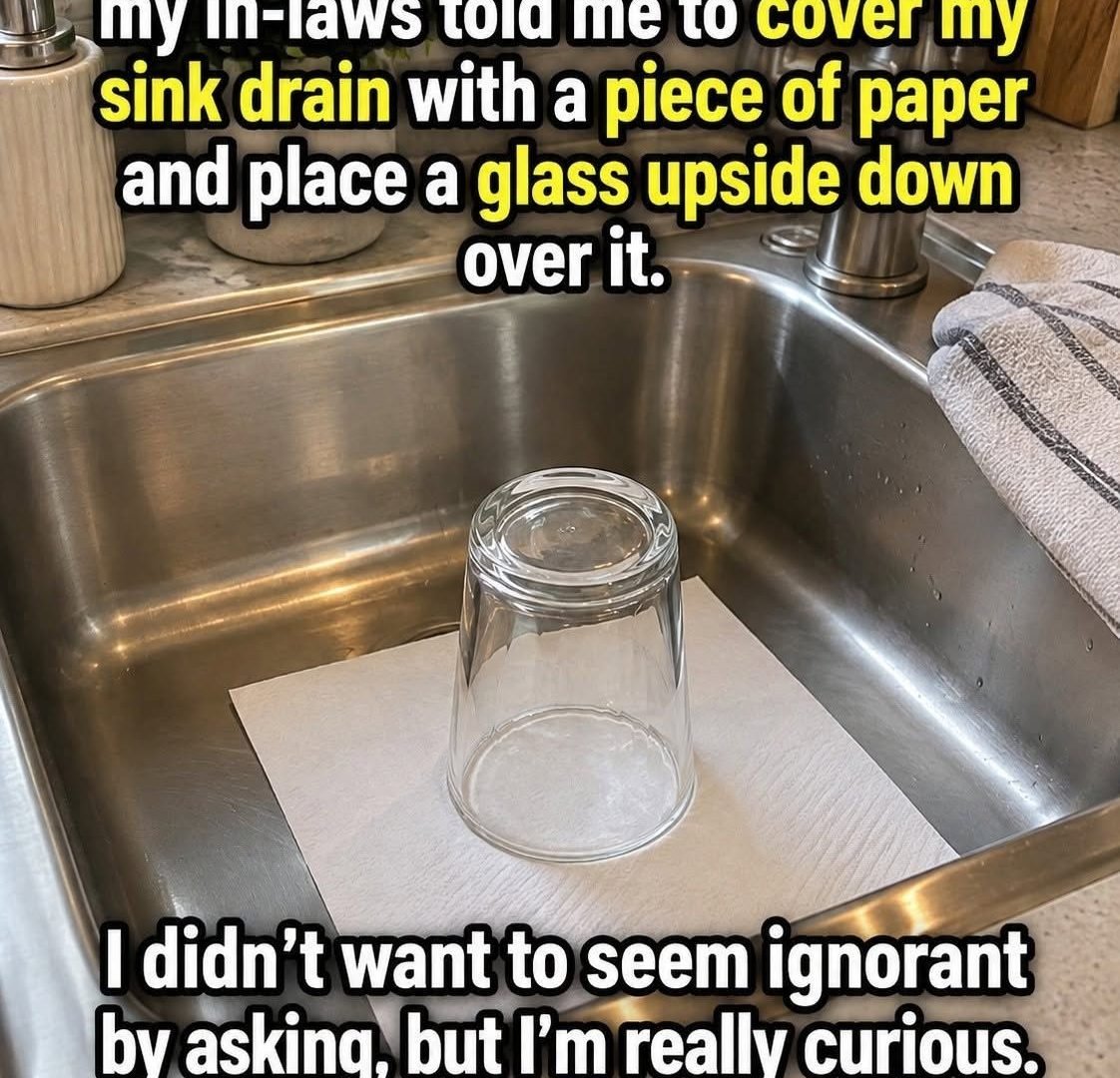
If you have a garbage disposal, you can use a rubber stopper designed specifically for the disposal flange, or a flat silicone cover that sits over the entire unit. Do not use the paper and glass trick over a disposal, as the glass could easily fall into the disposal and shatter.
Why do I smell sewer gas even when I’m not on vacation?
If you smell sewer gas regularly, it means your P-trap is dry, or there is a leak in the plumbing. Check to see if the sink is used frequently. If it is, you may have a blocked vent pipe or a broken seal that requires a plumber’s attention.
Is it bad to leave the sink stopper in all the time?
Keeping the stopper in the sink when it is not in use is a great habit. It prevents small items from falling down the drain, stops pests from entering, and keeps the P-trap seal intact.
Conclusion: Safe Travels and a Healthy Home
The viral image of the paper and glass is a perfect illustration of human ingenuity. It is a simple, zero-cost solution to a common household problem. By understanding the reasoning behind the hack, we can appreciate the wisdom of previous generations while also recognizing its flaws.
As we have explored, the use of glass introduces a significant safety hazard. Instead of relying on this old-fashioned trick, modern homeowners should use rubber stoppers and silicone covers to seal their drains. These alternatives are safer, more effective, and provide a perfect barrier against pests and sewer gas.
By taking the time to implement the checklist provided in this guide, you can leave for your vacation with peace of mind, knowing that your home is protected. Whether you are gone for a weekend or a month, a little preparation ensures that your return will be a happy one—free of broken glass, unwanted pests, and foul odors.