The Truth Behind the Viral Sink Hack: Why You Cover Your Drain Before Vacation (Part 1 of 5)
In Part 1, we established that covering your sink drain with paper and a glass is primarily a defensive maneuver against cockroaches. But to fully grasp why this hack is so widely used, it helps to understand the ecosystem that exists just beneath your sink. The plumbing in your home is not just a one-way street for waste; it is a complex network that connects your living space to the municipal sewer system. And for a variety of pests, it is the ultimate highway.
The Anatomy of the Sewer Line
Every time you run the tap or flush a toilet, water and waste travel through a series of pipes that eventually connect to a larger main sewer line. These pipes are not perfectly smooth on the inside. Over time, grease, soap scum, hair, and food particles build up on the walls, creating a slippery, nutrient-rich biofilm.
For a cockroach, a sewer pipe is not a dark, scary tunnel; it is a comfortable environment with a steady supply of moisture and food. The pipes are generally warm, especially in the winter, and provide a safe passage away from predators.
The Ground Floor Vulnerability
The reason the kitchen sink is so vulnerable is a matter of simple physics. Sewer systems are designed to flow downward, using gravity to carry waste away. But cockroaches are excellent climbers. They can easily scale the vertical pipes that connect your sink to the main line.
Homes with kitchens on the ground floor, or homes with basements, are at the highest risk. The sink drain is often the lowest point of entry, making it the easiest target for a roach looking to explore a new environment.
The American Cockroach: The “Water Bug”
The most common culprit for drain invasions is the American cockroach (Periplaneta americana). Despite its name, it is found worldwide. They are large, reddish-brown insects, often measuring over an inch and a half in length.
Why They Are Called “Water Bugs”
American cockroaches are frequently found in damp, dark places. They thrive in sewers and basements. When they enter a home, they are usually looking for moisture. This is why they are so often spotted in bathrooms and kitchens. A leaky pipe or a damp sink is a beacon for them.
The Threat They Pose
While American cockroaches are less likely to cause a massive indoor infestation compared to German cockroaches, they are still a significant health hazard. They carry bacteria on their legs and bodies, including E. coli and Salmonella. When they crawl across your kitchen counters or sink, they contaminate food preparation areas.
Furthermore, their presence is psychologically distressing. Seeing a large, fast-moving roach emerge from your sink drain is a terrifying experience that can ruin the comfort of your home.
Drain Flies: The Tiny Nuisance
While cockroaches are the primary reason for the paper and glass trick, there is another pest that uses the drain as a breeding ground: the drain fly (Psychodidae).
What Are Drain Flies?
Drain flies, also known as moth flies or sewer gnats, are small, fuzzy, dark-colored insects that resemble tiny moths. They have a distinct, erratic flying pattern and are often found hovering around sinks, showers, and floor drains.
The Breeding Cycle
Drain flies do not travel up from the sewer; they breed directly inside your pipes. The female fly lays her eggs in the slimy organic matter that coats the inside of the drain. When the eggs hatch, the larvae feed on the sludge.
If you notice drain flies in your kitchen, it means there is a significant buildup of organic matter in the pipes. Covering the drain while you are away prevents the adult flies from emerging into your home and laying more eggs.
Other Pests That Use the Plumbing
Beyond cockroaches and drain flies, other pests can occasionally use the plumbing system.
Rats and Mice
Rats are excellent swimmers and can travel through sewer lines. While it is less common for them to emerge through a sink drain (they prefer larger openings like broken toilet seals or floor drains), it is not impossible. A heavy glass and paper barrier would not stop a rat, but it might deter it if it finds the surface unstable.
Silverfish
Silverfish thrive in dark, damp environments. They are often found in bathrooms and kitchens. While they don’t typically come up through the drain, they love the moisture around the sink area.
The “Superhighway” Effect
The reason pests use the plumbing system is simple: it is a protected, climate-controlled network. When you leave your home for a vacation, the house becomes quiet. The lack of activity, the darkness, and the residual moisture in the pipes create an inviting environment for pests to explore.
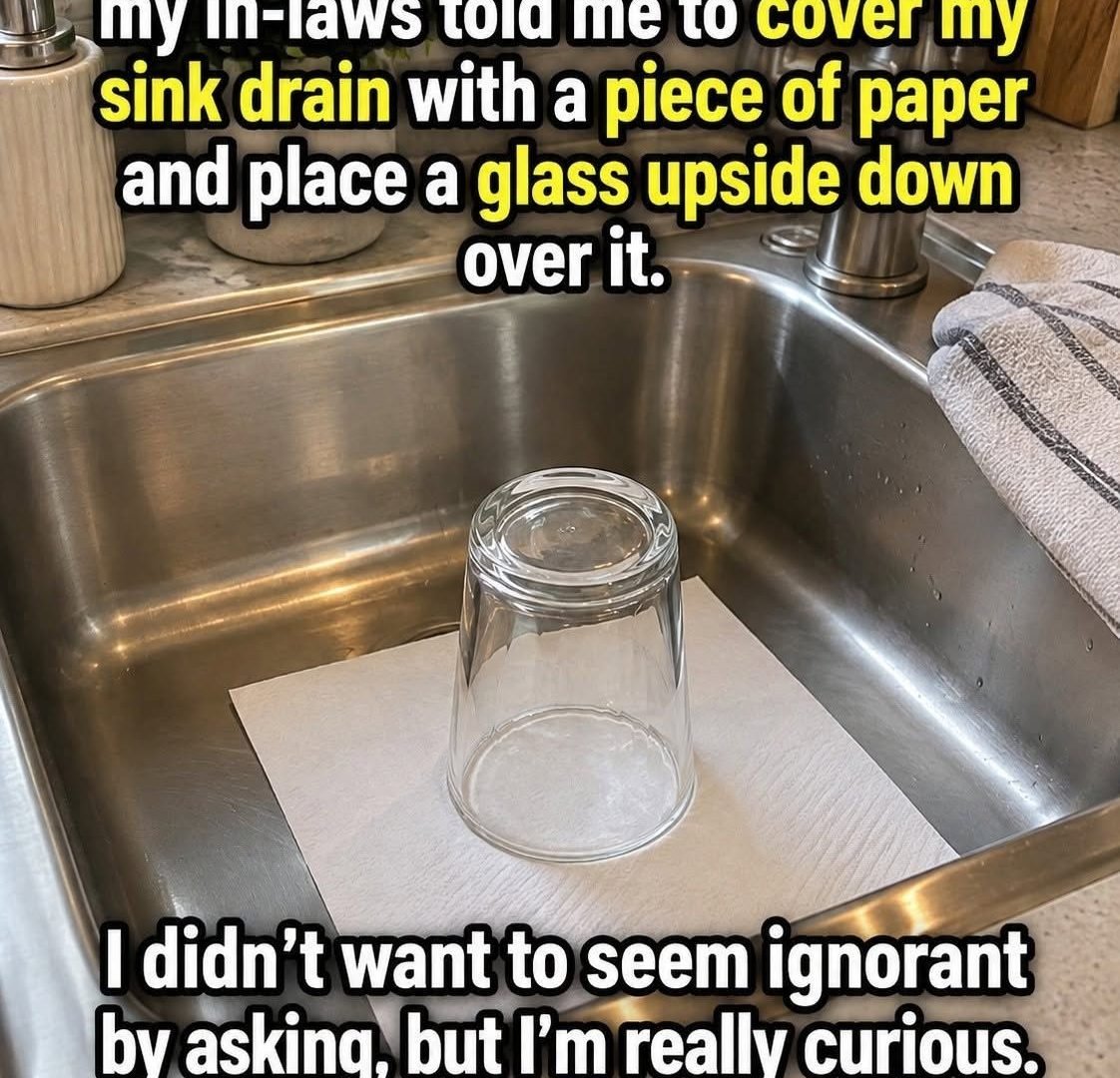
By implementing the paper and glass hack, you are essentially placing a roadblock on that superhighway. You are telling the pests, “This route is closed.”
(End of Part 2. Continue to Part 3 to understand the plumbing science of the P-trap, the danger of sewer gas, and the role of evaporation.)