The Truth Behind the Viral Sink Hack: Why You Cover Your Drain Before Vacation (Part 1 of 5)
While keeping cockroaches out is the most common reason people use the paper and glass trick, there is a secondary, equally important plumbing reason to cover your sink drain before leaving for an extended period. It has to do with the invisible, and potentially dangerous, gases that lurk in your pipes.
To understand this, we need to look at the anatomy of your home’s plumbing system and the crucial role of a simple, U-shaped pipe.
Plumbing 101: The P-Trap
If you look under your kitchen or bathroom sink, you will see a curved pipe that dips down and then comes back up before connecting to the main drain line. This is called a P-trap (or sometimes an S-trap, depending on the configuration).
The Purpose of the P-Trap
The primary function of the P-trap is to hold a small amount of water at the bottom of the curve. This water creates a physical seal, known as the water seal, which prevents sewer gases from traveling up the pipe and into your home.
Sewer systems produce a variety of gases as organic waste decomposes. These gases include methane, hydrogen sulfide (which smells like rotten eggs), and ammonia. In high concentrations, these gases are not only foul-smelling but can be toxic and even flammable. The P-trap is your first line of defense against these odors and hazards.
The Evaporation Problem
The water seal in a P-trap is designed to stay in place as long as the sink is used regularly. However, when you go on vacation, the sink sits unused.
How Fast Does Water Evaporate?
The rate of evaporation depends on several factors: temperature, humidity, and the surface area of the water exposed to the air. In a warm house during the summer, the water in a P-trap can evaporate in as little as a few weeks.
The Consequences of a Dry P-Trap
When the water in the P-trap evaporates completely, the seal is broken. The pipe is now an open channel directly connecting your kitchen to the municipal sewer. This leads to several issues:
Foul Odors: The unmistakable smell of sewer gas will fill your kitchen, making the room unpleasant and potentially unhealthy to breathe.
Pest Entry: As discussed in Part 2, a dry P-trap provides an unobstructed pathway for cockroaches and other pests to climb directly into your sink.
Health Risks: Prolonged exposure to sewer gas can cause headaches, nausea, and dizziness.
How the Paper and Glass Hack Helps
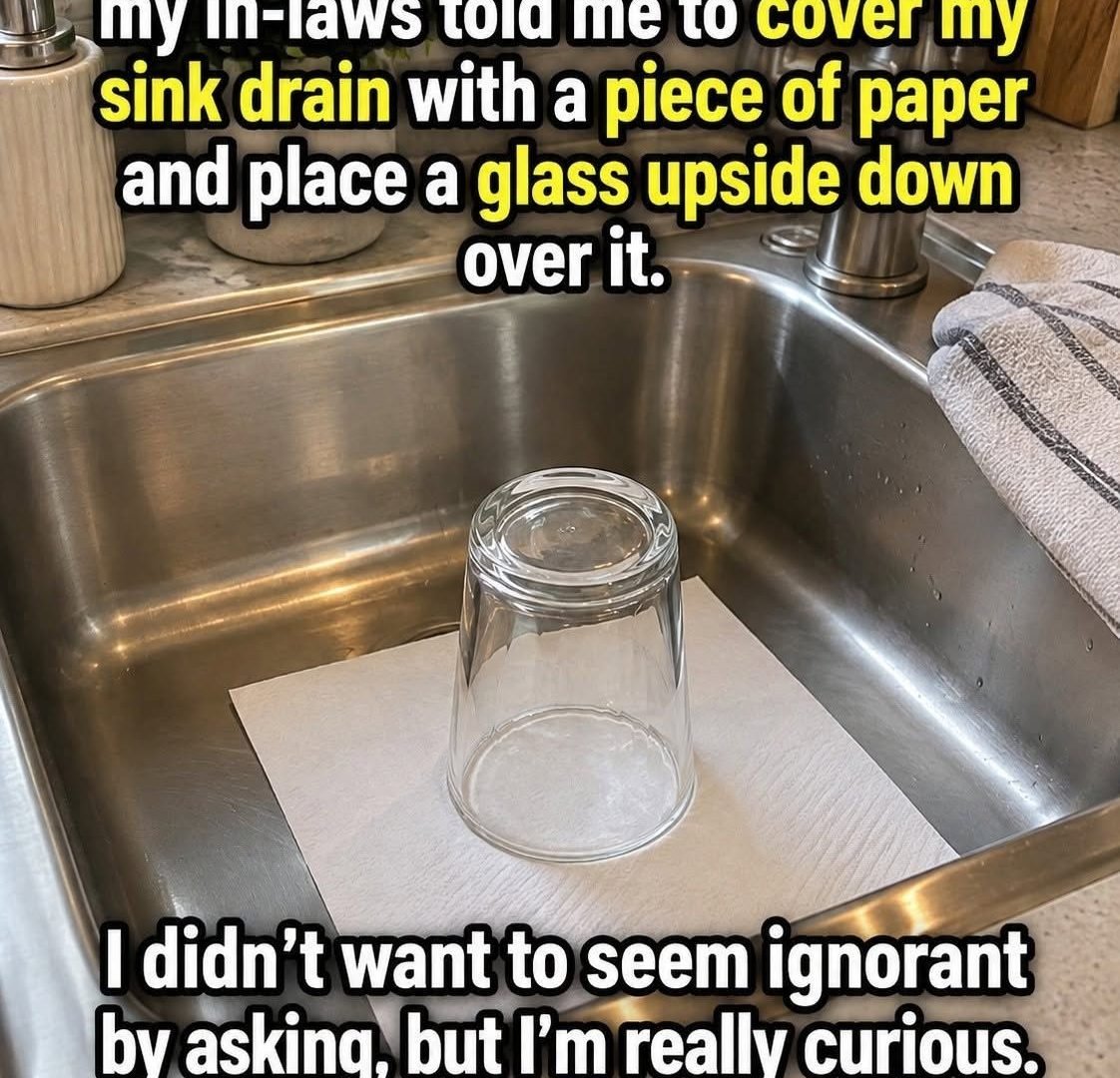
The viral hack of placing a piece of paper and an upside-down glass over the drain serves as a temporary seal to prevent evaporation.
The Paper: The paper creates a lid over the drain opening.
The Glass: The glass acts as a weight and a secondary barrier.
By trapping a small amount of moisture under the paper, the evaporation rate is significantly slowed down. While this is not a permanent solution, it is often enough to keep the P-trap seal intact during a two- or three-week vacation.
Other Drains in Your Home
The kitchen sink is not the only place this issue occurs. It is important to remember that every drain in your home is connected to a P-trap.
Bathroom Sinks
Bathroom sinks are also susceptible to evaporation. If you are leaving for a long time, you should cover these drains as well.
Floor Drains
If you have a basement, laundry room, or utility room, you likely have a floor drain. These are especially prone to evaporation because they are usually in areas that are warmer and have more air circulation. A dry floor drain can cause a persistent, musty smell throughout the house.
The Ping Pong Ball Trick
For floor drains, a common plumbing trick is to place a ping pong ball in the drain. The ball floats on the water, significantly reducing the surface area exposed to the air and slowing evaporation.
Why You Should Pour Water Down the Drain
If you are only going to be gone for a short time (a few days to a week), you don’t necessarily need to use the paper and glass trick. A simple, effective method is to simply pour a cup of water down the drain before you leave to ensure the P-trap is completely full.
The Limitations of the Hack for Evaporation
It is important to note that the paper and glass hack is not a perfect seal. It is not airtight. If you are going to be gone for months, the water in the P-trap will likely evaporate regardless of the hack. In those cases, it is better to have a trusted neighbor or house sitter come over to run the taps for a few minutes every week.
(End of Part 3. Continue to Part 4 to explore the serious safety hazards of using a glass, the risk of breaking it, and the superior alternatives you should use instead.)