The Pepper Shaker Dilemma: How a Tiny Change Sparks a Big Debate About Honest Packaging
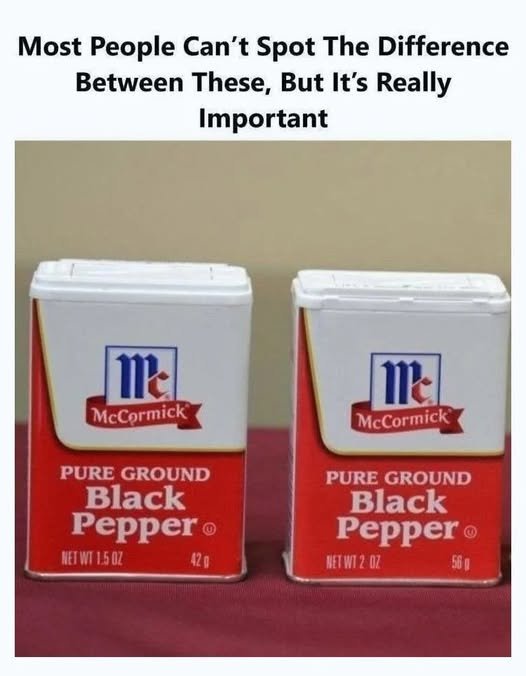
Most people take a quick glance at the image above and see two identical cans of McCormick Pure Ground Black Pepper sitting side by side. The iconic red and white packaging, the familiar cursive “M” logo, and the sturdy tin construction all look exactly the same. It is a product that has anchored American spice cabinets for generations. However, the text above the image issues a provocative challenge: “Most People Can’t Spot The Difference Between These, But It’s Really Important.”
The difference is there, but it is hidden in plain sight, tucked away in the fine print at the bottom of the label. If you look closely at the can on the left, you will see the net weight is listed as 1.5 OZ (42 g). On the can on the right, the net weight is 2 OZ (56 g).
To the naked eye, the cans appear to be the exact same size. The height, the width, the design proportions—everything looks uniform. Yet, the can on the left contains 25% less pepper than the can on the right. This is not a manufacturing error, nor is it a temporary shortage. It is a textbook example of a widespread, highly controversial economic phenomenon known as shrinkflation.
Shrinkflation is the practice of reducing the size, weight, or quantity of a product while maintaining its retail price, or while keeping the physical packaging deceptively similar to its previous iteration. It is a stealthy form of inflation that operates under the radar of the average consumer. The fact that the packaging looks identical is not an accident; it is a deliberate design strategy designed to mask the fact that the consumer is getting less for their money.
Understanding why this happens, how companies get away with it, and how it impacts your wallet is not just a lesson in economics; it is a critical skill for modern consumer survival. This comprehensive guide will dissect the psychology, the history, and the real-world impact of shrinkflation, using this simple can of pepper as a window into a much larger corporate strategy.
The Anatomy of the Trick: Deconstructing the Pepper Can
To fully grasp the reality of shrinkflation, we must look closely at the visual evidence provided in the image.
The Illusion of Consistency
The human brain is a highly efficient pattern-recognition machine, but it is also inherently lazy. When we shop for groceries, we do not meticulously read every single label, check every net weight, and calculate the unit price in our heads. Instead, we rely on visual cues. We recognize the McCormick pepper can by its size, its shape, and its color scheme.
Manufacturers know this. When they decide to reduce the amount of product in a package, they often do not change the packaging’s external dimensions. The can on the left may look identical to the can on the right, but the amount of pepper inside has been reduced. Sometimes, the can is subtly narrowed at the bottom or the height is reduced by a fraction of an inch—changes so small that they are imperceptible when the product is sitting on a grocery shelf next to its competitors.
The Label as Camouflage
Look at the proportion of the label to the can. The red lower half, the white upper half, the positioning of the text, and the size of the logo are meticulously calibrated to preserve the visual identity of the product. The font size of “PURE GROUND Black Pepper” remains large and prominent, drawing the eye. The net weight, however, is printed in tiny font at the very bottom edge. It is designed to be read only by those who are actively looking for it.
The 25% Deception
The math is stark. A 1.5 oz can contains 42 grams. A 2 oz can contains 56 grams. If you are paying the same price for the smaller can as you did for the larger can, you are effectively paying a 33% premium per gram of pepper.
Imagine buying a gallon of milk, but when you get it home, you realize it’s actually three quarts, while the price remains the same. The pepper can is the exact same scenario, just in a smaller, more insidious package. It is a silent price hike that bypasses the psychological barrier of a higher price tag.
The History and Economics of Shrinkflation
Shrinkflation is not a new concept. In fact, it has been documented for decades. However, in recent years, it has become a pervasive strategy across the global economy.
The Origins of the Term
The term “shrinkflation” was coined by British economist Pippa Malmgren in the early 2000s. She used it to describe the phenomenon where companies respond to rising input costs—such as higher prices for raw materials, labor, or transportation—by reducing the size of their products instead of raising the sticker price.
Why Companies Do It
The primary driver of shrinkflation is cost pressure. When the cost of producing a good goes up, a company has three choices:
Raise the price: This is the most transparent option, but it risks alienating customers who may switch to a cheaper competitor.
Absorb the cost: This reduces profit margins, which is unacceptable to shareholders.
Reduce the quantity: This is the stealthiest option. The consumer pays the same price, so they do not immediately notice the change.
Companies argue that shrinkflation allows them to maintain profitability without shocking the consumer with a sudden price increase. However, consumer advocacy groups argue that it is fundamentally deceptive. It violates the implicit contract of trust between a brand and its customer.
The Recent Surge
Following the global pandemic, supply chain disruptions and inflation reached record highs. Companies faced unprecedented spikes in the cost of raw materials, shipping, and labor. As a result, the practice of shrinkflation skyrocketed. Everything from cereal boxes to toilet paper rolls to bars of soap subtly decreased in size or weight while prices remained stagnant or even increased.
The Psychology of the Consumer: Why We Miss It
If shrinkflation is so widespread, why do we not notice it more often? The answer lies in consumer psychology and the way our brains process information during the stressful task of grocery shopping.
The “Just Noticeable Difference” (JND)
In psychophysics, the “Just Noticeable Difference” is the smallest detectable change in a stimulus. When a product shrinks by a very small margin—say, a 5% reduction in weight—it is often below the threshold of human perception. You might not notice that your usual bag of chips feels slightly lighter, or that your bar of chocolate is a few millimeters shorter.
Cognitive Load and Decision Fatigue
Grocery shopping is mentally exhausting. We have to navigate crowded aisles, compare brands, check for allergies, and stick to a budget. To manage this cognitive load, the brain creates mental shortcuts. We rely on brand loyalty and visual familiarity. We see the familiar red and white McCormick can and assume it is the exact same product we bought last month. The idea of checking the tiny net weight at the bottom of the label does not even cross our minds.
The Endowment Effect
The endowment effect is a psychological bias where we overvalue something simply because we possess it—or in this case, because it is familiar to us. We trust the McCormick brand. We have used it for years. Because of this trust, we are less likely to scrutinize the packaging or suspect a trick. Shrinkflation exploits this brand loyalty to the maximum.
Beyond Pepper: The Shrinkflation Hall of Shame
The pepper can is just one example. Shrinkflation has affected nearly every category of consumer goods. Here are some of the most common examples.
1. Toilet Paper
Toilet paper is a classic target for shrinkflation. Manufacturers often keep the cardboard roll the same size while reducing the number of sheets on the roll or subtly narrowing the width of each sheet. The packaging looks identical, but you are getting less paper per roll.
2. Cereal
Walk down the cereal aisle and you will see it. The boxes are still massive, designed to dominate the shelf. But if you open a new box, you might find that the bag inside is only half full. The “air” in the bag is a clever way to disguise the fact that the weight of the cereal has been reduced by several ounces.
3. Chocolate Bars
Chocolate manufacturers are notorious for this. A standard bar that used to be 100 grams is now often 90 grams, 85 grams, or even 80 grams. The packaging may be slightly shorter, but the visual impact is minimal. The price, however, remains the same.
4. Ice Cream
Ice cream containers have shrunk significantly over the years. What used to be a half-gallon (64 ounces) is now typically 48 ounces or even 1.5 quarts (48 ounces) instead of a half-gallon. Some manufacturers have even redesigned the bottom of the tub to be deeply indented, reducing the internal volume without changing the external dimensions.
5. Household Cleaners
Liquid laundry detergents, dish soaps, and surface cleaners have seen subtle reductions in volume. A bottle that used to hold 50 fluid ounces might now hold 46 fluid ounces, but the bottle shape remains virtually unchanged.
6. Coffee
The standard size of a bag of coffee has subtly decreased over the years. Many brands that used to sell 16-ounce (1 lb) bags now sell 12-ounce or 14-ounce bags at similar price points.
The Impact on the Consumer and the Economy
While a few grams of pepper might not seem like a big deal, the cumulative effect of shrinkflation is significant.
Silent Inflation
Shrinkflation is a form of hidden inflation. It reduces the purchasing power of the consumer without showing up in the official Consumer Price Index (CPI) in the same way a direct price hike does. This makes it harder for consumers to understand the true cost of living.
Disproportionate Impact
Shrinkflation disproportionately impacts lower-income households. These consumers are already highly price-sensitive. They may not be able to afford premium brands and rely on staple goods. When the quantity of a staple good is reduced while the price stays the same, it puts a greater strain on their grocery budget.
The Erosion of Trust
When consumers finally realize they have been paying the same price for less product, it breeds resentment and erodes trust in the brand. Once a consumer feels deceived, they are far more likely to switch to a competitor or a store brand. Brands that engage in aggressive shrinkflation risk long-term damage to their reputation.
The Math of the Shrink: How to Calculate the Real Cost
To protect your wallet, you need to look past the sticker price and understand the unit price.
What is Unit Pricing?
Unit pricing is the cost of a product per standard unit of measurement, such as price per ounce, price per pound, or price per 100 grams.
Let’s go back to our pepper cans:
Can 1 (Right): 2 oz for $3.00. The unit price is $1.50 per ounce.
Can 2 (Left): 1.5 oz for $3.00. The unit price is $2.00 per ounce.
When you look at the unit price, the deception is immediately obvious. The can on the left is 33% more expensive per ounce than the can on the right.
How to Spot Shrinkflation in the Store
Read the Net Weight: Always look at the actual weight or volume, not the package size.
Check the Unit Price: Most grocery store shelf tags will list the unit price in the bottom corner. Pay attention to this number above all else.
Compare Across Brands: Do not just compare the sticker price. Compare the price per ounce across different brands and sizes.
Use the “Old vs. New” Trick: If you notice a product package has been redesigned with a “New Look!” banner, be suspicious. Check the weight against the old packaging.
How to Fight Back Against Shrinkflation
While you cannot stop companies from changing their packaging, you can change your buying habits.
1. Buy Store Brands
Store brands (like generic or supermarket own-brand items) are often less likely to engage in aggressive shrinkflation because their main selling point is value. They are also significantly cheaper per unit than national brands.
2. Buy in Bulk
Purchasing larger quantities of staple goods—like spices, rice, or oats—from bulk bins or warehouse clubs can be much more cost-effective. The unit price drops significantly.
3. Choose Whole Foods
Processed foods are the primary targets for shrinkflation. By buying whole, unprocessed foods (like fresh produce, raw meat, and bulk grains), you bypass the marketing tricks of the packaged food industry entirely.
4. Vote with Your Wallet
If you notice a brand has significantly shrunk its product, stop buying it. Write to the company, post on social media, and let them know you have noticed. The only thing that scares a corporation more than rising costs is angry, vocal consumers.
Conclusion: Vigilance is Your Best Defense
The image of the two McCormick pepper cans is a perfect metaphor for the modern consumer experience. It shows us that we cannot afford to be passive shoppers. The visual tricks of packaging design are powerful, and the economic pressure on companies to cut costs is immense.
Shrinkflation is a reality of the free market, but it does not have to be a reality for your grocery budget. By understanding the psychology behind these tricks, knowing how to calculate the unit price, and maintaining a healthy dose of skepticism when brands release “new, improved” packaging, you can protect your wallet.
The next time you reach for a familiar product, take an extra five seconds to look at the fine print. The most important information is often the smallest text on the label.
Frequently Asked Questions
What is shrinkflation?
Shrinkflation is the practice of reducing the size, weight, or quantity of a product while maintaining its retail price. It is a stealthy way for companies to deal with rising production costs without raising the sticker price.
Is shrinkflation illegal?
Generally, no. As long as the packaging accurately lists the net weight and the consumer is not being overtly defrauded, it is legal. However, consumer advocacy groups argue that it is deceptive because the packaging is often designed to hide the reduction.
How can I tell if a product has shrunk?
The most reliable way is to check the net weight printed on the package. You can also look at the unit price (price per ounce or gram) on the shelf tag. If the unit price has gone up but the sticker price is the same, the product has likely shrunk.
Why do companies do shrinkflation instead of raising prices?
Companies use shrinkflation because consumers are highly sensitive to price increases. If a price jumps by 10%, you will notice. But if a product shrinks by 10% while the price stays the same, most shoppers will not notice, and the company can maintain its profit margins.
Does shrinkflation affect the quality of the product?
Not necessarily. Shrinkflation is about quantity, not quality. However, in some cases, companies may also subtly change ingredients to cheaper alternatives to save money, but this is a separate issue from shrinkflation itself.
What are some common examples of shrinkflation?
Common examples include reducing the number of sheets on a toilet paper roll, shrinking chocolate bars, reducing the volume of ice cream tubs, and selling coffee in 12-ounce bags instead of 16-ounce bags for the same price.
How does shrinkflation contribute to inflation?
Shrinkflation is a form of “hidden inflation.” Even if the official Consumer Price Index (CPI) does not show a price increase for a specific item, the consumer is getting less for their money. Over time, this reduces purchasing power without being as obvious as a direct price hike.
Are store brands less likely to engage in shrinkflation?
Store brands often offer better value and may be less likely to engage in aggressive shrinkflation because their primary marketing strategy is price competitiveness against national brands. However, they are not immune to rising costs either.
What is the best way to avoid falling victim to shrinkflation?
Always read the net weight and compare the unit price per ounce or gram. Do not rely on the visual size of the package or brand loyalty. Buying in bulk and choosing whole, unpackaged foods are also excellent strategies.
Will shrinkflation stop?
Shrinkflation will likely continue as long as input costs remain high and consumers fail to notice or object. However, if enough consumers switch to cheaper competitors or store brands in response, companies may be forced to reconsider their strategy.