The Kitchen Appliance You Must Unplug Before Bed: Understanding Electrical Fire Risks and How to Protect Your Home
The most reliable protection comes from making disconnection automatic. Incorporate a brief kitchen check into the existing bedtime routine—after the dishwasher is started or the lights are turned off. Over time the action becomes as habitual as locking the door. Smart plugs or simple switched strips can reduce friction for households that find individual unplugging inconvenient.
Cleaning schedules matter as much as disconnection. A toaster whose crumb tray is emptied weekly is substantially safer than one that is unplugged but never cleaned. The same principle applies to grease buildup in air fryers and toaster ovens.
Broader Implications for Home Safety Culture
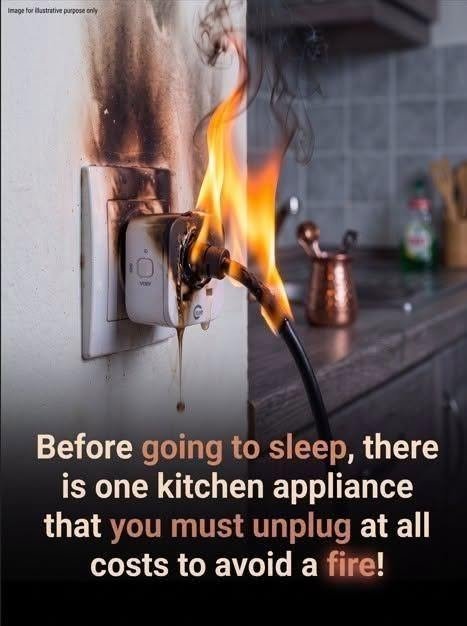
The image of the flaming plug is a reminder that many household hazards are low-probability, high-consequence events that respond well to simple, consistent countermeasures. Electrical safety sits alongside smoke-detector maintenance, escape-plan practice, and proper storage of flammable materials as a foundational element of home protection. Treating small appliances with the same deliberate care given to larger systems reduces one of the more preventable categories of residential fire.
Manufacturers continue to improve safety features, and regulatory standards evolve. Consumers can support these advances by choosing certified products, registering appliances for recall notifications, and retiring devices that show clear signs of wear. Collective attention to these details steadily lowers the overall incidence of appliance-related fires.
Conclusion
The dramatic photograph of a burning plug and scorched outlet captures a real and documented danger in exaggerated form. There is no single kitchen appliance that must be unplugged “at all costs” above every other consideration, yet there is a clear category of devices—small heat-generating countertop appliances, with the toaster as a leading example—that should not remain connected to power while the household sleeps. The combination of electrical energy, residual or potential heat, and combustible debris creates a risk pathway that is straightforward to interrupt.
Unplugging these appliances after use, keeping them clean, inspecting cords, and replacing aging units form a practical, low-cost strategy that aligns with the guidance of major fire-safety organizations. The habit takes seconds, costs nothing, and directly addresses one of the more common ways electrical fires begin in the home. Translate the alarm of the viral image into this steady, evidence-based practice, and the kitchen becomes a meaningfully safer place to leave unattended through the night.
Frequently Asked Questions
1. Is there truly one specific appliance that must be unplugged before bed? No single appliance is uniquely mandated by fire authorities. The consistent recommendation is to unplug small heat-generating countertop devices, with the toaster frequently cited as a high-priority example.
2. Why is the toaster mentioned so often? Toasters have exposed heating elements and commonly accumulate flammable crumbs. These features make them a clear illustration of the broader risk category.
3. Do I also need to unplug my air fryer and toaster oven? Yes. Both rely on high-wattage heating systems and share similar risk factors with toasters. Unplugging them when not in use is recommended.
4. Is turning the appliance off at the switch enough? No. Unplugging fully removes the device from the electrical circuit. A switch may leave components energized or can itself fail.
5. Should major appliances like the refrigerator be unplugged? No. Refrigerators, freezers, and other continuous-duty appliances are designed to remain connected and should follow manufacturer instructions.
6. How does cleaning reduce fire risk? Removing crumbs and grease eliminates potential fuel. Even if a heating element activates unexpectedly, the absence of combustible debris greatly reduces the chance of ignition.
7. Are newer appliances with automatic shut-off completely safe to leave plugged in? Automatic shut-off improves safety but does not eliminate all risk. Component failure, power surges, or residual heat can still create hazards. Unplugging remains the more complete precaution.
8. What other simple steps improve kitchen electrical safety? Inspect cords regularly, avoid overloading outlets, replace damaged devices promptly, and consider a switched power strip for the cluster of small heat-producing appliances.