The Kitchen Appliance You Must Unplug Before Bed: Understanding Electrical Fire Risks and How to Protect Your Home
Air fryers and toaster ovens share the same fundamental risk profile. Both employ powerful heating elements capable of reaching high temperatures quickly. Some models have been subject to recalls related to overheating, melting components, or electrical faults. Even when functioning normally, these appliances can retain significant residual heat after a cooking cycle. If a power surge or internal failure occurs while the unit is still plugged in, that residual heat combined with electrical energy can create hazardous conditions.
Coffee makers with warming plates and electric kettles present parallel concerns, especially older units that lack reliable automatic shut-off. A warming plate left energized for hours can overheat if the thermostat fails. A kettle that continues to draw power after the water has boiled can eventually boil dry and damage its heating element. In each case, unplugging removes the underlying energy supply.
Secondary Claims and the Limits of the “One Appliance” Framing
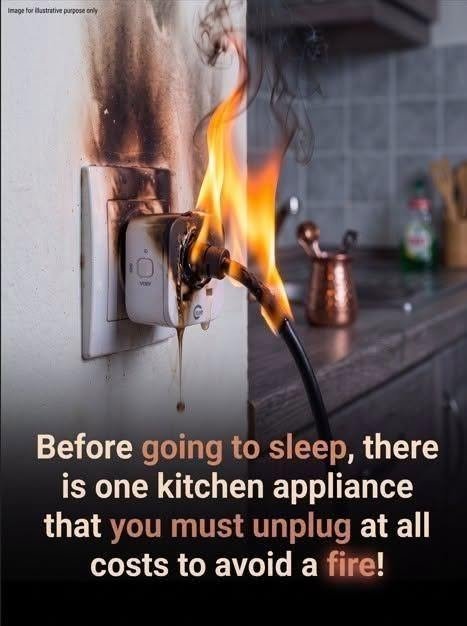
Viral posts often frame the issue as a single critical device that must be unplugged “at all costs.” This framing is rhetorically effective but scientifically imprecise. No authoritative body has identified one appliance as uniquely responsible for the majority of overnight kitchen fires. The more accurate statement is that an entire category of small heat-generating devices benefits from disconnection when not in use. Focusing exclusively on one item can create a false sense of security if other similar devices remain plugged in.
At the same time, the core practical advice remains sound. Prioritizing the toaster, air fryer, toaster oven, coffee maker, and kettle covers the highest-risk countertop devices in most kitchens. The sensational language of the image should be translated into a broader, more reliable habit rather than discarded entirely.
Deeper Mechanisms: Arcing, Insulation Failure, and Power Quality
Beyond simple overheating, electrical faults can involve arcing—small electrical discharges that generate intense localized heat. Damaged insulation, loose connections at the plug, or degraded internal wiring can all produce arcing. Power quality issues such as voltage spikes or brownouts further stress components. In homes with older electrical systems, the cumulative effect of these factors increases the probability that a plugged-in appliance will eventually fail in a hazardous way. Unplugging interrupts the pathway that allows these failures to draw energy from the household supply.