The Kitchen Appliance You Must Unplug Before Bed: Understanding Electrical Fire Risks and How to Protect Your Home
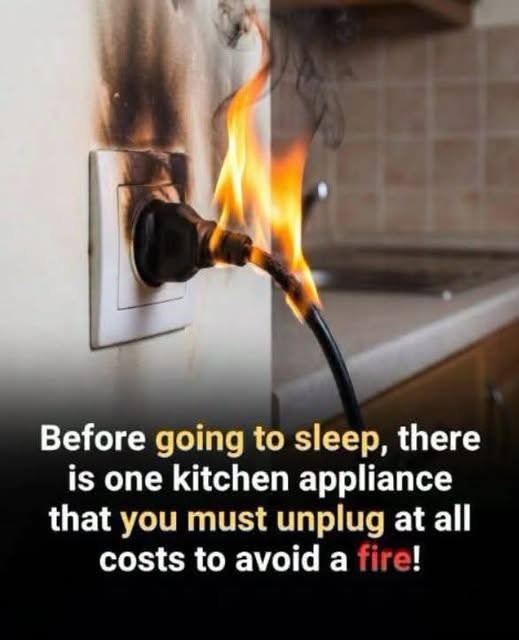
The photograph is hard to ignore. A white wall socket is blackened by soot. Flames erupt from the base of a black power plug, the cord itself charred and smoking as fire climbs along the insulation. In the background sits an ordinary kitchen counter and sink. Across the lower half of the image runs a stark warning: “Before going to sleep, there is one kitchen appliance that you must unplug at all costs to avoid a fire!” The visual is designed to create immediate alarm, and it succeeds because the danger it depicts is real. Electrical fires in homes claim lives and destroy property every year, and kitchens remain one of the most common points of origin.
Yet the claim that a single specific appliance must be unplugged “at all costs” requires careful examination. Fire-safety authorities do not crown one device as uniquely catastrophic. Instead, they consistently advise that small heat-generating countertop appliances—toasters, air fryers, toaster ovens, coffee makers, and electric kettles—should be disconnected from power when not in use. Among these, the ordinary toaster is most often cited by experts as a high-priority example because of its exposed heating elements and tendency to collect flammable crumbs. Leaving any of these devices plugged in overnight keeps them connected to the household electrical system, where a fault, surge, or accidental activation can turn residual heat or a short circuit into a fire while the household sleeps.
This article examines the mechanisms behind these risks, the evidence from fire-prevention organizations, the practical steps that meaningfully reduce danger, and the broader habits that keep kitchens safer. The goal is not to generate fear but to replace sensational claims with accurate, actionable understanding.