Protect Your Home and Wallet: Unplug These 5 Appliances When You’re Done Using Them
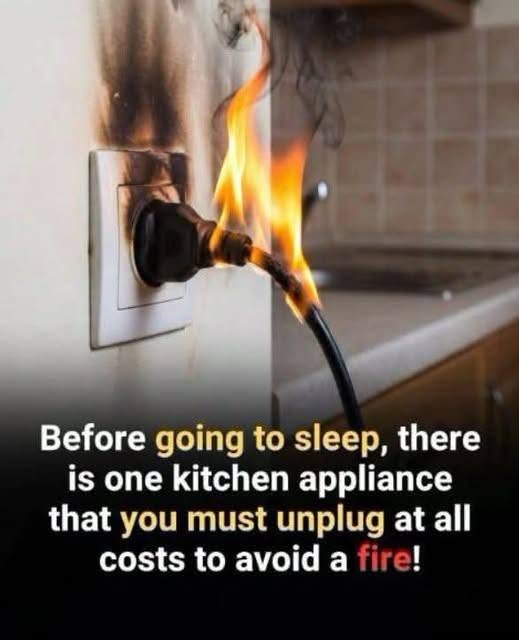
A charred, melted electrical outlet with flames licking up the wall is a terrifying sight. It is the stuff of nightmares for any homeowner. A viral social media image recently highlighted this exact danger, featuring a severe electrical fire consuming an outlet and the cords plugged into it. The bold text overlaid on the image reads: “Before going to sleep, there is one kitchen appliance that you must unplug at all costs to avoid a fire!”
While the post leaves the specific appliance up to the imagination to drive engagement, the underlying warning is profoundly serious. Electrical fires are among the most destructive and deadly types of house fires. They often start silently, hidden behind drywall or beneath appliances, and they can engulf a home in minutes. The image is a stark reminder that the simple act of leaving an appliance plugged in is a risk that millions of people take every single night.
But the danger isn’t limited to fire. Leaving appliances plugged in also drains your wallet through a phenomenon known as “phantom energy” or “vampire power.” Even when turned off, many modern appliances continue to draw electricity as long as they are connected to an outlet.
To protect both your home and your hard-earned money, you need to establish a habit of unplugging high-risk and high-drain appliances when they are not in use. This comprehensive guide will explore the five most critical appliances you should unplug daily, explain the science behind the risks they pose, and provide actionable strategies for making unplugging a seamless part of your routine.
The Two Hidden Threats: Why Unplugging Matters
Before identifying the specific appliances, it is essential to understand the dual threats that stem from leaving devices plugged in: electrical fires and phantom energy consumption.
The Risk of Electrical Fires
Electrical fires are a leading cause of home structure fires. According to the National Fire Protection Association (NFPA), electrical distribution and lighting equipment were involved in an estimated average of 34,000 home fires per year, resulting in hundreds of deaths and over a billion dollars in property damage.
When an appliance is plugged in, the cord and the internal components are constantly receiving an electrical current. This creates several hazards:
Overheating: Even if the appliance is off, a loose connection at the plug can cause arcing and heat buildup.
Frayed Cords: If a cord is pinched behind an appliance or chewed by a pet, the exposed wires can cause a short circuit and spark a fire.
Component Failure: Many appliances have internal heating elements or sensitive circuit boards that can malfunction or short out, even in standby mode.
Outlet Overload: Leaving multiple high-draw appliances plugged into a single circuit or power strip increases the risk of the outlet overheating and melting, as depicted in the viral image.
The Cost of Phantom Energy (Vampire Power)
Phantom energy, also known as standby power or vampire power, is the electricity consumed by electronic and electrical appliances while they are switched off or in a standby mode.
If an appliance has a digital clock, a remote control sensor, or a light that stays on when the device is “off,” it is using phantom energy. While a single appliance might only draw a few watts, the cumulative effect across an entire household is staggering. The U.S. Department of Energy estimates that standby power can account for 5% to 10% of residential electricity use. By unplugging items, you can actively reduce your monthly utility bill.
1. The Toaster and Toaster Oven: The High-Heat Fire Hazard
The toaster is a deceptively simple appliance that poses a significant fire risk if left plugged in. This is likely the appliance the viral post was hinting at, as it is a common source of kitchen fires.
The Danger of the Hidden Crumbs
Every time you make toast, tiny crumbs fall to the bottom of the toaster. Over weeks and months, these crumbs accumulate. If a crumb falls onto a heating element, it can smolder. While the toaster is off, this might seem harmless. However, if the toaster is plugged in and the internal wiring malfunctions, or if the toaster is accidentally turned on (or a timer fails), those dry crumbs become perfect tinder.
The Frayed Cord Risk
Because toasters are frequently moved on countertops, their cords are often subjected to twisting, pulling, and bending. Over time, the insulation can crack, exposing the live wires inside. If the toaster is left plugged in, there is constant voltage running through that damaged cord. If it touches a metal countertop, a metal sink, or water, it can cause a severe shock or spark a fire.
The Toaster Oven Conundrum
Toaster ovens are even more dangerous. They are often left plugged in because they have digital clocks. If the internal thermostat fails, the toaster oven can continue to heat up even when it is supposed to be off, potentially igniting anything stored on top of it (like paper towels, plastic bread bags, or kitchen mitts).
The Solution: Unplug your toaster or toaster oven after every use. Give it a shake over the trash can weekly to empty the crumbs. Keep the appliance clear of the wall and away from the backsplash.
2. The Coffee Maker: The Water and Electricity Mix
The coffee maker is a staple in millions of kitchens, but it is also a combination of water, heat, and electricity—a dangerous trio if left unattended and plugged in.
The Heating Element Risk
Most coffee makers have a warming plate that stays hot as long as the machine is on, and sometimes even when it is in a “standby” mode. If you forget to turn the machine off, the warming plate can evaporate the water in the carafe entirely and then continue to heat the empty glass. This can scorch the glass, melt the plastic components of the machine, and potentially ignite a fire if the machine is near a flammable surface.
Leaks and Short Circuits
The internal plumbing of a coffee maker can degrade over time. A slow drip from the water reservoir or the brewing mechanism can leak directly onto the electrical components at the base of the machine. If the machine is plugged in, this water leak can cause a short circuit, sparking a fire.
The Solution: Unplug the coffee maker as soon as the brewing is complete and you have poured your cup. Do not rely on the automatic shut-off. If you use a pod-based machine, unplug it when not in use to prevent standby power drain and avoid the risk of accidental activation.
3. The Air Fryer or Microwave: The High-Wattage Draw
Air fryers and microwaves are among the most power-hungry appliances in the kitchen. They draw immense amounts of electricity in short bursts to generate intense heat.
The Outlet Strain
When an air fryer or microwave is plugged in, the outlet and the circuit are under significant stress. If the circuit is shared with other high-draw appliances (like a refrigerator or an electric kettle), the continuous load can cause the wiring inside the wall to overheat. This is a leading cause of electrical fires that start inside the walls, making them difficult to detect until it is too late.
Electronic Component Failure
Modern microwaves and air fryers are controlled by delicate circuit boards. A power surge or a component failure in the board can cause the appliance to turn on by itself. If a microwave turns on while empty, it can cause severe damage to the internal components and potentially spark a fire. If an air fryer turns on with food residue inside, it can ignite.
The Solution: Unplug these appliances when they are not in use. While it is convenient to leave the microwave plugged in to keep the clock running, the risk of an electrical fault or surge damage outweighs the convenience of a flashing clock. Keep the area around them clear of clutter.