Protect Your Home and Wallet: Unplug These 5 Appliances When You’re Done Using Them
4. The Electric Kettle: The Boiling Point
Electric kettles are incredibly efficient at boiling water quickly, but they demand a high current.
The Auto-Shutoff Failure
Most modern electric kettles have an automatic shut-off feature that kicks in when the water reaches a rolling boil. However, this mechanism relies on a small bimetallic strip that can fail over time, especially if the kettle is subjected to hard water scale buildup. If the auto-shutoff fails and the kettle is left plugged in, it will boil dry. Once the water is gone, the heating element will continue to heat the metal base until it melts or ignites the plastic housing, creating a severe fire hazard.
The Steam and Moisture Factor
Electric kettles release a lot of steam. If the kettle is placed too close to an electrical outlet, the condensation can seep into the outlet, causing it to short circuit or trip the circuit breaker.
The Solution: Unplug the kettle immediately after it has finished boiling. Never leave it plugged in on the counter. Also, make sure the kettle is positioned away from the wall outlet to prevent steam damage.
5. Space Heaters and Small Electronics: The Sleep-Time Dangers
While the image specifically mentions a “kitchen appliance,” the most deadly appliance you can leave plugged in overnight is a space heater. Additionally, small electronics like phone chargers pose a unique risk.
The Space Heater Hazard
Space heaters are responsible for roughly one-third of all home heating fires and the vast majority of deaths from those fires. If a space heater is left plugged in and running while you sleep, and a blanket, curtain, or piece of furniture falls onto it, the result is a rapidly spreading fire. Even if the heater is turned off, leaving it plugged in means it is still receiving power.
The Solution: Never leave a space heater plugged in unattended or while you are sleeping. Unplug it before you go to bed or leave the room.
The Phone Charger and Electronics Risk
While phone chargers draw very little power, they are notorious for causing fires due to cheap manufacturing and poor heat dissipation. Leaving a charger plugged in with nothing attached still uses a tiny amount of phantom energy, but the bigger risk is if the charger is placed under a pillow or a blanket. If the charger continues to draw power, it can overheat and ignite the fabric.
The Solution: Unplug chargers when not in use. Avoid charging devices on soft surfaces like beds or sofas.
How to Make Unplugging a Habit
Knowing you should unplug is one thing; remembering to do it every day is another. Here are practical strategies to integrate this safety habit into your routine:
The Visual Reminder: Place a small, brightly colored sticky note on the appliance or right above the outlet reminding you to unplug it.
The “Last Out” Rule: Before you leave the kitchen for the last time at night or before you walk out the door in the morning, do a quick scan of the counters. Unplug the high-risk items.
Use a Power Strip: Instead of unplugging multiple cords, plug your coffee maker, toaster, and air fryer into a single, heavy-duty power strip. Keep the power strip on the counter (not on the floor). When you are done, simply flip the switch on the power strip to cut off power to all of them at once.
Smart Plugs: If you are tech-savvy, you can use smart plugs connected to a smartphone app or a voice assistant. You can schedule the plugs to turn off automatically at a certain time, or simply say, “Hey, turn off the coffee maker.”
When to Call an Electrician
Unplugging appliances is a great preventative measure, but it is not a substitute for a healthy electrical system. You should call a licensed electrician immediately if you notice any of the following warning signs:
Warm Outlets: If the outlet feels hot to the touch when an appliance is plugged in.
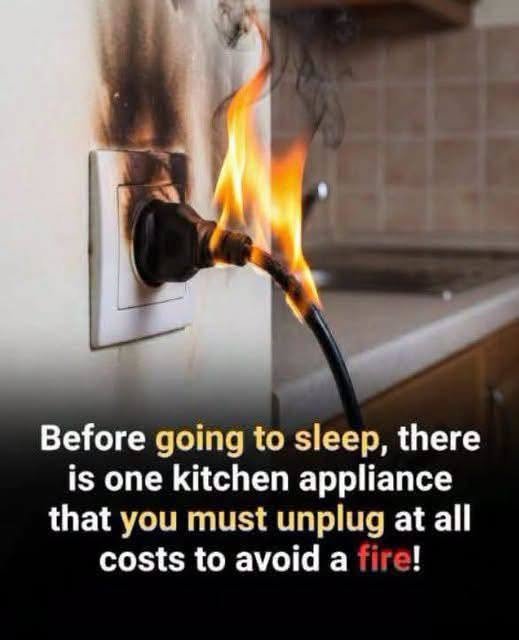
Scorch Marks: Any black or brown discoloration around the outlet or on the plug itself (as seen in the viral image).
Burning Smell: A persistent smell of burning plastic or fish near an outlet.
Flickering Lights: If plugging in an appliance causes the lights in the room to dim or flicker.
Buzzing Sounds: A sizzling or buzzing noise coming from the outlet.
Conclusion: Protect Your Sanctuary
The charred, flaming outlet in the viral image is a terrifying reminder of the destructive power of electricity. While it may be convenient to leave your appliances plugged in and ready to go, the risks of phantom energy drain, component failure, and catastrophic fire are simply too high.
By taking just a few seconds each day to unplug your toaster, coffee maker, air fryer, kettle, and space heaters, you are taking a proactive, life-saving step. You are protecting your loved ones from the danger of a house fire and actively reducing your monthly energy bills. Make the commitment today to unplug these five appliances when they are not in use, and enjoy the peace of mind that comes with a safe and efficient home.
Frequently Asked Questions (FAQs)
Which kitchen appliance is the most common cause of fires?
The most common kitchen appliance to cause fires is the electric stove or cooktop, often due to unattended cooking. Among small countertop appliances, toasters and toaster ovens are frequent culprits because of accumulated crumbs and faulty heating elements.
Does unplugging appliances really save money?
Yes. Unplugging appliances stops “phantom energy” or “vampire power” drain. Even when turned off, appliances with digital clocks, standby lights, or remote sensors continue to draw power. Unplugging them saves 5% to 10% on your monthly electricity bill.
Is it safe to leave a microwave plugged in?
While it is generally safe, unplugging it is safer. Leaving it plugged in risks damage from power surges and the chance of internal component failure causing it to turn on by itself.
Can a phone charger start a fire if left plugged in?
Yes. If a phone charger is of poor quality, damaged, or placed under a blanket or pillow, it can overheat and melt, igniting the surrounding fabric. Always unplug chargers when not in use.
Why is leaving a space heater plugged in overnight dangerous?
Space heaters draw a massive amount of current and generate intense heat. If they are knocked over or if something flammable (like a blanket or curtain) falls on them while you are asleep, a fire can start within seconds.
Do modern appliances have safety shut-offs?
Many modern appliances have automatic shut-off features. However, these mechanisms can fail. Relying solely on the auto-shut-off is dangerous; physically unplugging the appliance is the only guaranteed way to cut power.
Should I unplug my refrigerator?
No. Refrigerators are designed to run continuously to keep food safe. They should remain plugged into a dedicated, grounded outlet.
What are the signs of an overloaded electrical outlet?
Signs include the outlet feeling warm or hot to the touch, a burning smell, scorch marks around the plug, or lights flickering when an appliance is turned on. If you notice these, unplug the appliance immediately and call an electrician.