Small White Spots on Your Arms or Legs: What They Are, Why They Appear, and When to See a Doctor
Other Contributing Factors
Some research has suggested associations with other factors, but the evidence is not definitive. The main takeaway is that IGH is multifactorial. It is not caused by poor hygiene, a contagious infection, or a vitamin deficiency.
What Else Can Cause White Spots on the Arms and Legs?
Not every white spot is IGH. Several other conditions can cause hypopigmentation or white patches. Distinguishing them matters because some require treatment and some are associated with other health issues.
Vitiligo
Vitiligo is an autoimmune condition in which the immune system attacks melanocytes. It causes patches of skin to lose pigment. Vitiligo patches are often larger and more irregular than IGH spots. They may be stark white and can grow or spread over time. Vitiligo can appear anywhere, including the hands, face, and around body openings. It is not contagious. It is associated with other autoimmune conditions in some people. If you have large, spreading white patches, you should see a dermatologist.
Tinea Versicolor
Tinea versicolor is a common fungal infection of the skin. It causes patches that may be lighter or darker than the surrounding skin. The patches often have a fine scale and are most common on the chest, back, and shoulders. It can occur on the arms. It is not dangerous, but it can recur. Treatment usually involves antifungal shampoo or cream.
Pityriasis Alba
Pityriasis alba is a common, mild skin condition that mainly affects children and young adults. It causes pale, slightly scaly patches, usually on the face and upper arms. It is associated with dry skin and eczema. It often improves on its own.
Post-Inflammatory Hypopigmentation
After a skin injury, such as a burn, scrape, acne, or psoriasis flare, the skin may heal with a lighter patch. This is called post-inflammatory hypopigmentation. It is usually temporary and improves over months. It is not the same as IGH, which tends to persist.
Idiopathic Guttate Hypomelanosis
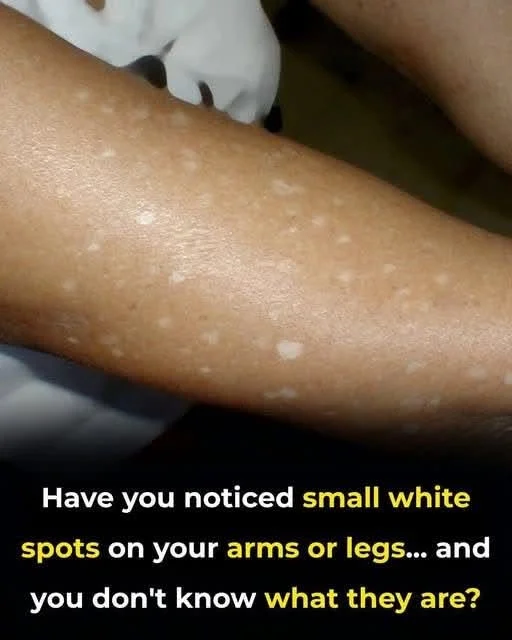
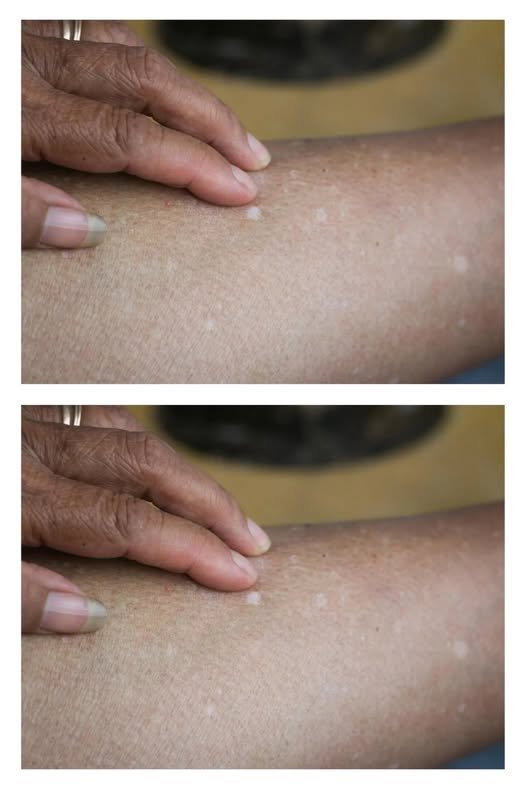
IGH is the most likely cause of the specific pattern shown in the image: many small, drop-like, flat, smooth white spots on sun-exposed arms or legs, without scaling or itching.
Other Less Common Causes
Less common causes include certain genetic conditions, nutritional deficiencies, medication side effects, and rare skin disorders. These usually come with other symptoms. A dermatologist can evaluate the pattern and decide whether testing is needed.
How Is IGH Diagnosed?
A dermatologist can usually diagnose IGH by looking at the skin. They may use a Wood’s lamp, a special ultraviolet light that helps highlight pigment changes. Under a Wood’s lamp, the depigmented areas may appear bright white, which helps distinguish IGH from other conditions. In most cases, a skin biopsy is not needed. A biopsy may be considered if the diagnosis is unclear or if another condition is suspected.
The doctor will also ask about sun exposure, family history, medications, and other skin symptoms. They will check whether the spots are flat, smooth, and scattered, and whether they are on sun-exposed areas. They will also look for signs of other conditions, such as scaling, inflammation, or larger patches.
Are These White Spots Dangerous?
IGH itself is not dangerous. It is a cosmetic condition. It does not increase the risk of skin cancer, and it does not affect internal organs. It is not contagious. It is not a sign of a vitamin deficiency. It is not an autoimmune disease.
However, the presence of IGH can be a sign of cumulative sun damage. Even though the spots are harmless, the sun damage that contributed to them is relevant to overall skin health. People with significant sun exposure should protect their skin and monitor for other changes, such as new or changing moles, sores that do not heal, or dark spots with irregular borders.
Can IGH Be Treated?
There is no guaranteed cure for IGH. Many people choose not to treat it because it is harmless. Others seek treatment because the spots are cosmetically bothersome. Treatment options include:
Cryotherapy
Cryotherapy involves applying liquid nitrogen to the spots. This freezes the tissue and can sometimes stimulate repigmentation as the skin heals. It is quick and relatively inexpensive, but it can be uncomfortable. There is also a risk that cryotherapy itself could cause a new white spot by damaging melanocytes.
Microneedling
Microneedling creates tiny injuries in the skin, which can stimulate collagen and melanocyte activity. Some studies suggest it may improve repigmentation, especially when combined with topical treatments. It requires multiple sessions and should be performed by a qualified professional.
Fractional Laser Therapy
Fractional lasers, such as fractional CO2 lasers, can resurface the skin and stimulate pigment cells. This is more expensive and requires multiple sessions. It carries risks of redness, scarring, and changes in pigmentation.
Topical Treatments
Topical retinoids, such as tretinoin, may help increase cell turnover and improve skin tone. They require a prescription and consistent use. Other topical treatments have been studied, but evidence is limited.
Cosmetic Camouflage
For people who want an immediate cosmetic solution, makeup, body foundation, or self-tanner can help blend the spots with the surrounding skin. Self-tanners stain the white spots and can reduce the contrast temporarily.
Sun Protection
Sun protection does not reverse existing spots, but it helps prevent new ones and prevents the surrounding skin from tanning, which makes the spots more noticeable. Daily sunscreen, protective clothing, and shade are important.
How to Protect Your Skin
Because sun exposure is a major contributing factor, protecting the skin is the most important step.
Use a broad-spectrum sunscreen with SPF 30 or higher on exposed areas every day.
Reapply every two hours when outdoors.
Wear long sleeves, long pants, and a wide-brimmed hat when possible.
Seek shade during peak sun hours.
Avoid tanning beds.
Check your skin regularly for new or changing spots.
See a dermatologist for an annual skin exam if you have significant sun exposure or a history of skin cancer.
When to See a Doctor
See a dermatologist if:
The white spots are large, irregular, or spreading quickly.
The spots are scaly, itchy, painful, or bleeding.
You notice a new dark spot, a changing mole, or a sore that does not heal.
The spots are accompanied by other symptoms, such as joint pain, fatigue, or vision changes.
You are unsure what the spots are.
You have a history of skin cancer or a strong family history.
The spots are causing significant cosmetic distress.
A dermatologist can confirm the diagnosis, rule out other conditions, and discuss treatment options if desired.
Living With White Spots
IGH is common and harmless. Many people learn to accept the spots as part of their skin’s history. They are not a sign of failure, poor hygiene, or poor health. They are simply a common pigment change associated with sun exposure and aging.
If the spots bother you, cosmetic camouflage and sun protection can help. If they do not bother you, no treatment is necessary. The most important thing is to protect your skin from further sun damage and to monitor for any changes that could be more serious.
Conclusion
Small white spots on the arms and legs are most often caused by idiopathic guttate hypomelanosis, a common, harmless condition related to sun exposure, aging, and genetics. The spots are not contagious, not dangerous, and not a sign of a serious internal disease. However, not every white spot is IGH. Vitiligo, tinea versicolor, pityriasis alba, and post-inflammatory hypopigmentation can look similar. A dermatologist can distinguish them.