Small White Spots on Your Arms or Legs: What They Are, Why They Appear, and When to See a Doctor
This guide explains what small white spots on the arms and legs usually are, why they form, how dermatologists distinguish them from other conditions, what treatments are available, how to protect the skin, and when to seek professional care. The goal is not to frighten you. The goal is to help you look at your skin with clear, medically grounded information.
What Are These Small White Spots?
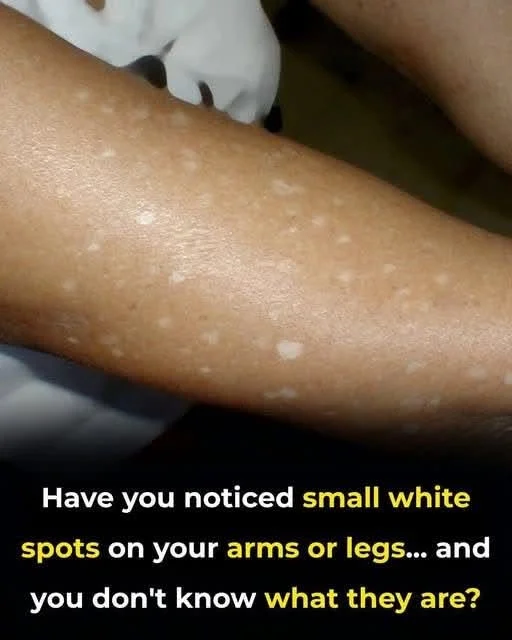
The most likely diagnosis for the pattern shown in the image is idiopathic guttate hypomelanosis. The name sounds complicated, but it is descriptive. “Idiopathic” means the exact cause is not fully understood. “Guttate” comes from the Latin word for “drop,” describing the small, scattered appearance. “Hypomelanosis” means a localized loss or reduction of melanin, the pigment that gives skin its color.
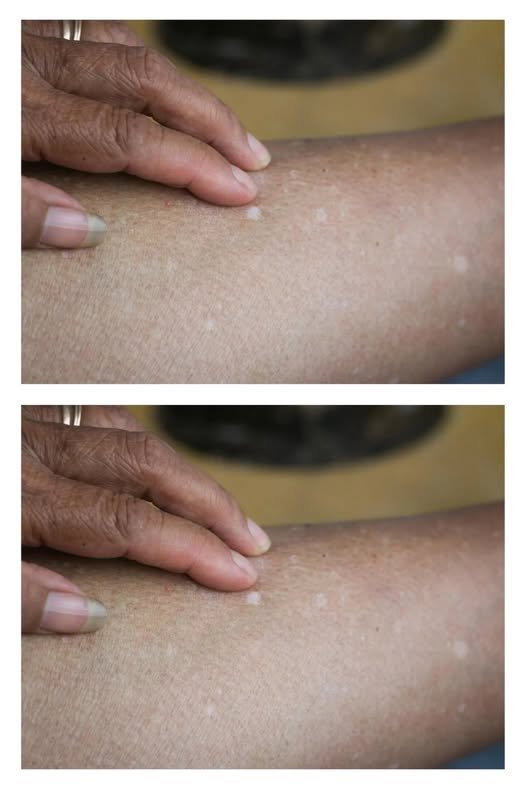
IGH is extremely common. It affects people of all skin tones, but it is often more noticeable in people with darker skin or in people who have a tan, because the white spots contrast sharply with the surrounding pigment. It is most common in adults over 40 or 50, but it can appear earlier. Some studies suggest that a large proportion of older adults have at least a few of these spots. They are usually found on sun-exposed areas: the forearms, shins, shoulders, upper back, and sometimes the face. The spots are typically small—often 1 to 5 millimeters—flat, smooth, and well-defined. They do not usually itch, hurt, bleed, or scale. They are a cosmetic change, not a sign of an infection or an internal disease.
The key point is that IGH is not dangerous. It does not turn into skin cancer. It does not spread through contact. It is not a sign that your immune system is attacking your body. It is a common, harmless change in the skin’s pigment cells.
Why Do White Spots Appear?
The exact cause of IGH is not fully known, but dermatologists have identified several factors that contribute to its development.
Sun Exposure
Cumulative sun exposure is the most important contributing factor. Ultraviolet radiation damages the skin over time. It can damage melanocytes, the specialized cells in the basal layer of the epidermis that produce melanin. When groups of melanocytes stop producing pigment, the skin in that small area loses its color. Because the spots appear on sun-exposed areas and often become more noticeable after sun exposure, doctors consider sun damage to be a major driver. This does not mean a single sunburn causes the spots. It is usually the result of many years of exposure.
Aging
IGH becomes more common with age. As the skin ages, the number and function of melanocytes decline. The skin also becomes thinner and more vulnerable to environmental damage. The combination of aging and cumulative sun exposure makes the spots more likely. This is why they are often seen in middle-aged and older adults.
Genetics
Genetics also play a role. If your parents or grandparents had these spots, you may be more likely to develop them. Some people develop many spots, while others develop only a few, even with similar sun exposure.
Skin Trauma and Friction
Sometimes, minor trauma or friction can trigger a small area of pigment loss. This is related to the Koebner phenomenon, in which skin changes appear at sites of injury. Scratching, rubbing, or minor irritation can contribute in some people.