Have You Noticed Small White Spots on Your Arms or Legs? Here is What They Are (And Why You Shouldn’t Panic)
You are getting dressed, or perhaps looking in the mirror after a shower, and you notice them. Small, porcelain-white spots scattered across your shins or forearms. They aren’t itchy. They aren’t painful. They are just… there.
Immediately, your mind races. Is this vitiligo? Is it a fungal infection? Is it something serious?
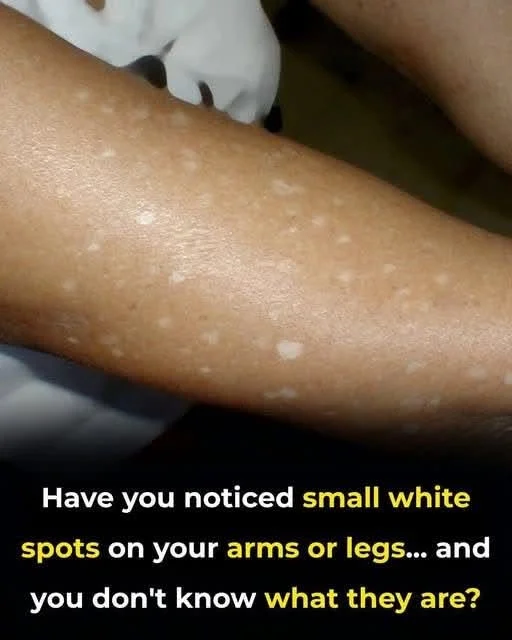
If the image above looks familiar, take a deep breath. You are not alone. Millions of people develop these spots, and while they can be cosmetically annoying, they are rarely a sign of a dangerous medical condition.
In the dermatology world, these spots have a very long, intimidating name: Idiopathic Guttate Hypomelanosis (IGH).
Let’s break down exactly what that means, why it happens, and what you can do about it.
Decoding the Name: What is IGH?
Medical terms can be scary, but if we break down “Idiopathic Guttate Hypomelanosis,” the condition explains itself perfectly.
Idiopathic: This is a medical way of saying “we don’t know the exact cause.” However, dermatologists strongly suspect it is linked to sun exposure and aging.
Guttate: This comes from the Latin word gutta, meaning “drop.” It describes the shape of the spots—they look like little raindrops or teardrops.
Hypomelanosis: “Hypo” means under or less, and “melanosis” refers to melanin (pigment). So, this literally means “less pigment.”
Put it all together: IGH is a condition where small, drop-like spots of skin lose their pigment.
Think of them as “reverse freckles.” Instead of a cluster of pigment (a freckle), you have a cluster of no pigment.
Why Do These Spots Appear?
If you look closely at the image, you’ll notice the spots are on the arm—a prime location for sun exposure.
1. Cumulative Sun Damage (The #1 Culprit)
Most dermatologists agree that IGH is a sign of photoaging. Just like wrinkles and age spots (liver spots) are caused by years of UV exposure, these white spots are the skin’s reaction to long-term sun damage.
The UV rays damage the melanocytes (the cells that make pigment).
Over time, these cells stop producing melanin in specific small patches.
The result? A white spot.
2. Natural Aging
IGH is most common in people over the age of 40, but it can start appearing in people in their 20s or 30s if they have had significant sun exposure. It is a natural part of the skin’s aging process.
3. Genetics
If your parents had “confetti skin” or white spots on their legs, you are more likely to develop them too.
Is It Vitiligo? (The Big Fear)
The number one question people ask when they see white spots is: “Do I have vitiligo?”
While only a doctor can give a definitive diagnosis, there are key differences between IGH and Vitiligo:
Feature
Idiopathic Guttate Hypomelanosis (IGH)
Vitiligo
Size
Small (2-5mm), like a pencil eraser.
Can be large patches that grow over time.
Shape
Round or oval, distinct borders.
Irregular shapes, often symmetrical.
Location
Mostly on sun-exposed areas (shins, forearms).
Can appear anywhere, often around eyes, mouth, hands.
Progression
Stays relatively stable, grows very slowly.
Can spread rapidly.
Texture
Skin feels smooth and normal.
Skin feels smooth and normal.
The Verdict: If your spots are small, numerous, and strictly on your arms and legs, it is highly likely to be IGH, not vitiligo.
Is It a Fungus? (Tinea Versicolor)
Another common culprit for white spots is a yeast infection on the skin called Tinea Versicolor.
How to tell the difference: Tinea Versicolor usually appears on the chest, back, and shoulders (areas with more oil glands). It often has a fine scale (flaky skin) if you scratch it.
IGH: Usually appears on the legs and arms. The skin is smooth, not flaky.
Can You Get Rid of Them?
Here is the hard truth: IGH is very difficult to reverse completely. Because the pigment cells in those specific spots have essentially “retired” or died off, bringing the color back is a challenge.
However, there are treatments that can help improve the appearance:
1. Prevention (The Most Important Step)
You cannot stop aging, but you can stop the sun damage that accelerates it.
Sunscreen: Wear SPF 30+ daily on your arms and legs. This prevents new spots from forming and stops existing ones from becoming more stark (by preventing the surrounding skin from tanning).
Protective Clothing: Long sleeves and pants when in direct sunlight.
2. Topical Treatments
Retinoids: Prescription retinol (Vitamin A) can help stimulate cell turnover and potentially bring some pigment back, though results vary.
Calcineurin Inhibitors: Creams like tacrolimus are sometimes used to help repigment the skin, though they are more commonly used for vitiligo.
3. Dermatological Procedures
If the spots bother you significantly, a dermatologist can offer:
Cryotherapy: Freezing the spots to stimulate inflammation and pigment production (risky, can make it worse).
Laser Therapy: Excimer lasers can sometimes help restore color.
Microneedling: Sometimes combined with topical treatments to encourage healing.
4. The “Cosmetic” Fix
Many people choose to simply camouflage the spots.
Self-Tanner: Using a gradual tanning lotion can darken the white spots, making them blend in with the rest of your skin. (Note: The white spots might not absorb the tanner as well as the rest of the skin, so test a small area first).
Body Makeup: For special occasions, high-coverage body makeup can hide them completely.
When Should You See a Doctor?
While IGH is harmless (benign), you should see a dermatologist if:
The spots are spreading rapidly.
The spots are itchy, red, or scaly.
You have white spots on your face or mucous membranes.
You are unsure of the diagnosis.
Conclusion
If you have noticed small white spots on your arms or legs, don’t panic. As the image suggests, it is a very common mystery that usually has a simple answer: Sun damage and aging.
It is your skin’s way of keeping a tally of all the sunny days you’ve enjoyed over the years. While they are permanent, they are a badge of honor for a life lived outdoors—and with a little sunscreen, you can prevent them from taking over.
FAQ: White Spots on Skin
Q: Do these white spots go away on their own? A: No. Unlike a tan or a sunburn, IGH spots are usually permanent unless treated with professional dermatological procedures.
Q: Can I pop them or scratch them off? A: No! They are not blisters or pimples. They are flat areas of skin. Scratching them will only cause scarring or infection.
Q: Is it contagious? A: No. IGH is not an infection. You cannot catch it from someone else, and you cannot spread it to other parts of your body by touching it.