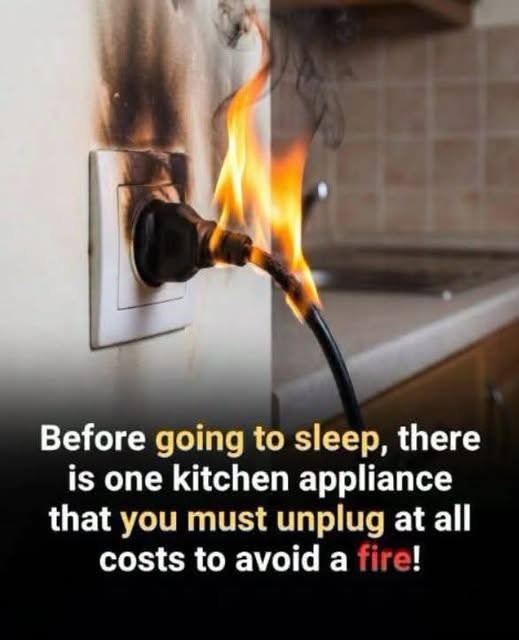
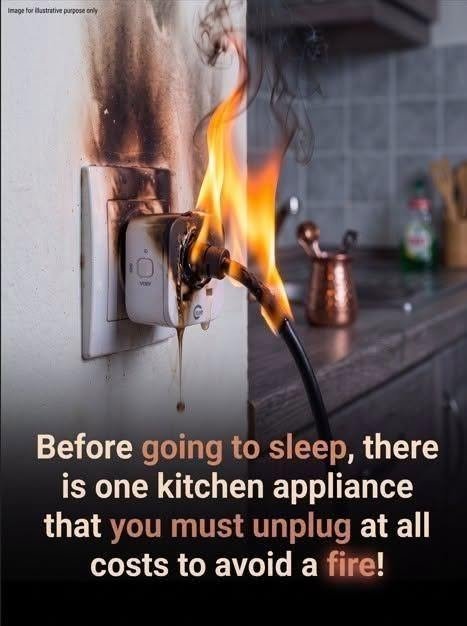
Before Going to Sleep, There Is One Kitchen Appliance You Must Unplug at All Costs to Avoid a Fire!
Why is the toaster at the top of the “must unplug” list? It is a combination of its design, its function, and the environment in which it operates.
The Crumb Tray of Doom: Every time you make toast, microscopic particles of bread fall to the bottom of the toaster. Over weeks and months, these crumbs accumulate in the crumb tray. Bread is highly flammable, and when it dries out, it becomes excellent tinder. The heating elements inside a toaster are designed to reach temperatures of over 600 degrees Fahrenheit to toast bread quickly. If a large crumb falls directly onto a live heating element, it can catch fire almost instantly. If the toaster is unplugged, the fire will likely smother itself or burn out without spreading. However, if the toaster is plugged in, the heating element remains live. The fire can spread to the plastic casing, and from there, to the cabinets, the wallpaper, or the curtains.
Mechanical Failure and “Stuck” Switches: A toaster works via a mechanical lever that pushes the bread down and engages the circuit. Over time, the mechanism can become sticky from grease or dust, or the internal thermostat (which pops the toast up when done) can fail. If the thermostat fails while the toaster is plugged in, the heating elements will continue to glow red hot indefinitely. The toaster will eventually melt, ignite the plastic, and set the kitchen on fire. Unplugging the device physically severs the connection to the power grid, rendering this scenario impossible.