Meta Description: Bake tender, melt-in-your-mouth Hungarian kifli cookies filled with apricot and plum jam. A classic Central European holiday treat with a rich, flaky dough.
Primary Focus Keyword: Hungarian kifli cookies
Secondary Keywords: jam-filled kifli, Hungarian jam cookies, lekváros kifli, traditional Hungarian cookies, apricot kifli, plum jam cookies, Hungarian Christmas cookies, omlós kifli, crescent cookies
Search Intent: Informational and transactional (home bakers seeking a traditional cookie recipe)
Suggested WordPress Categories: Hungarian Recipes, Cookies & Bars, Holiday Baking, Traditional Desserts
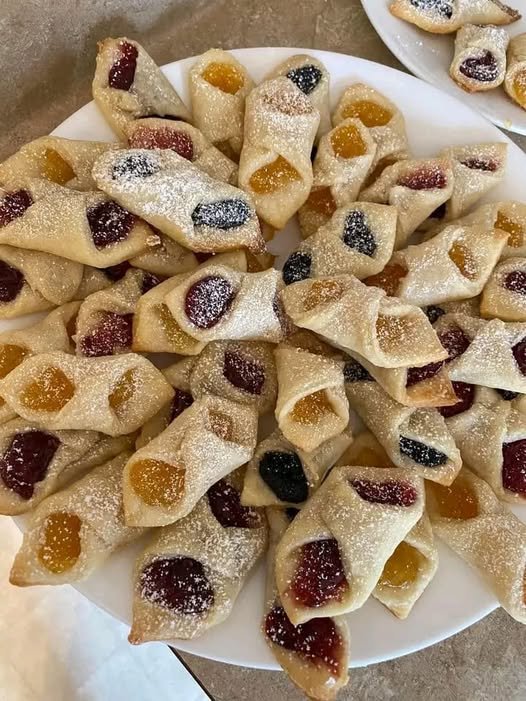
Suggested Featured Image Alt Text: A platter of golden Hungarian kifli cookies dusted with powdered sugar, with apricot and plum jam visible at the ends.
Introduction
Hungarian kifli cookies are the kind of pastry that disappears from a holiday platter before anything else. Small, crescent-shaped, and generously dusted with powdered sugar, they hold a pocket of thick jam—most often apricot or plum—at their center. The dough is tender and buttery, with a texture that is often described as omlós, a Hungarian word that translates roughly to “crumbly” or “melting.” It is a cookie that asks very little of the baker in terms of decoration and everything in terms of technique: cold butter, a gentle hand, and a filling that is thick enough to stay put.
This recipe brings together the two most beloved versions of the Hungarian kifli tradition. One dough is built on cream cheese and butter, producing a rich, tangy pastry that rolls out beautifully and bakes into a pale, tender crescent. The other uses sour cream and egg yolks, yielding a dough that is slightly more robust but still delicate, with a subtle richness from the yolks. Both are filled with jam—apricot and plum are the classics—and both are finished with a snowfall of powdered sugar. The cookies in the photograph show the characteristic look: golden edges, a soft pale center, and a jewel of jam glinting at each end where the dough was rolled around the filling.
Kifli are deeply embedded in Hungarian home baking, appearing at Christmas, Easter, weddings, and everyday coffee tables. They belong to a broader Central European tradition of crescent-shaped pastries, but the Hungarian version is distinguished by its tender, cream-rich dough and its reliance on thick fruit preserves, known as lekvár . Whether you are baking for a holiday, a weekend afternoon, or simply because the weather calls for something warm and sweet, these cookies reward the effort with a flavor that is both familiar and quietly special. This guide covers the ingredients, the two dough methods, the fillings, the shaping, and the storage—everything you need to make a batch that tastes like it came from a Hungarian grandmother’s kitchen.
Recipe Overview
Detail
Information
Preparation time
40 minutes (plus 1 hour chilling)
Cooking time
15–30 minutes per batch
Total time
Approximately 2 hours (including chilling)
Servings
30–40 cookies
Difficulty level
Medium
Cooking method
Baking
Cuisine
Hungarian
Course
Dessert / Cookie
Estimated calories per cookie
Approximately 90–120 kcal (estimate; varies with filling and dough)
The total time is dominated by chilling the dough, which is essential for handling and for the texture of the finished cookie. The active work is concentrated in mixing, rolling, and shaping. The cookies bake quickly, and the recipe can be divided across two days: make the dough and fillings one day, then roll, shape, and bake the next. This is a forgiving schedule for busy bakers, and the dough actually improves after an overnight rest.
What Are Hungarian Kifli?
The word kifli in Hungarian means “crescent,” and it refers to a family of pastries rather than a single recipe . Savory kifli, such as the small bread rolls served alongside soups and stews, are yeast-leavened and chewy. The sweet kifli discussed here are a different branch of the family: small, tender cookies made from a rich, non-yeasted dough, filled with jam, ground walnuts, poppy seeds, or sweet cheese, and shaped into crescents or rolled logs .
The cookies are closely associated with Hungarian celebrations. They appear on Christmas trays alongside bejgli (walnut and poppy seed rolls), mézeskalács (honey cookies), and hókifli (snow crescents) . They are also a staple of wedding tables and Easter spreads. In many Hungarian families, the recipe is passed down informally, with each household favoring a slightly different dough—some use cream cheese, some use sour cream, some use lard or butter, and some add a little yeast for lift .
The version in the photograph is a jam-filled kifli, with the filling visible at the open ends of the roll. This style is often called lekváros kifli (jam kifli) or omlós lekváros kifli (tender jam kifli). The jam is typically a thick fruit butter—apricot (baracklekvár) and plum (szilvalekvár) are the most traditional—rather than a loose jelly . The dough is rolled thin, cut into squares or circles, filled, and rolled into a crescent or log shape before baking.
Ingredients You Will Need
This recipe offers two dough options. The cream cheese dough is the more common introduction to kifli for bakers outside Hungary, and it is exceptionally easy to work with. The sour cream dough is closer to the version found in many Hungarian home kitchens, with a slightly more complex flavor from the egg yolks. You can choose either, or make one batch of each for a varied platter.
250 g (1 cup plus 2 tablespoons) cold unsalted butter, cubed
4 large egg yolks
120 ml (½ cup) full-fat sour cream
2 tablespoons granulated sugar
1 teaspoon vanilla extract or vanilla sugar
1 pinch fine salt
Powdered sugar, for dusting
For the Fillings
200–250 g (¾–1 cup) thick apricot jam (baracklekvár)
200–250 g (¾–1 cup) thick plum jam (szilvalekvár)
Optional walnut filling: 150 g (1½ cups) finely ground walnuts mixed with 2 tablespoons granulated sugar and 1 egg white, lightly beaten
Important note on the jam: The jam must be thick. Loose jelly or runny preserves will leak during baking and create a sticky mess. If your jam is thin, simmer it gently in a small saucepan for 5–10 minutes to reduce it, then cool completely before using. Traditional Hungarian lekvár is cooked down until it is almost paste-like, and that texture is what keeps the filling inside the cookie.
A note on ingredient consistency: Both doughs use every listed ingredient, and the fillings are used according to your preference. The quantities are calibrated for a batch of 30–40 cookies, depending on how thin you roll the dough and how large you cut the squares. The recipe can easily be halved or doubled.
Choosing the Best Ingredients
The quality of a kifli depends on three things: the fat, the flour, and the filling.
Butter versus cream cheese versus lard. The cream cheese dough relies on the tang and tenderness of full-fat cream cheese. Do not use reduced-fat or fat-free cream cheese; the dough will be dry and crumbly. The sour cream dough uses butter as its primary fat, with sour cream adding moisture and richness. Some traditional Hungarian recipes use lard (sertészsír) for an especially tender, flaky texture, but butter is more accessible and produces a flavor that most bakers expect. European-style butter with a higher fat content is ideal if you can find it.
Flour. All-purpose flour is the standard choice. Hungarian finomliszt is a fine, soft flour similar to American all-purpose, and it works well here. Sifting the flour is not strictly necessary, but it helps distribute the fat evenly and produces a lighter dough.
Jam. The jam is the soul of the cookie. Use a thick apricot or plum jam, ideally one with a simple ingredient list and no added pectin or corn syrup. Homemade lekvár is the gold standard, but a good-quality store-bought fruit butter will work. Apricot brings a bright, tangy sweetness; plum is darker, deeper, and slightly more tart. A combination of the two on the same platter is traditional and visually appealing. The cookies in the photograph show both apricot (golden-orange) and plum or cherry-red fillings, which is exactly the kind of mixed presentation you want.
Walnut filling. If you want to include a nut version, use fresh walnuts and grind them finely. Stale walnuts are bitter and will ruin the filling. Mix the ground walnuts with sugar and a little egg white to bind them; the egg white also helps the filling stay moist.
Powdered sugar. The final dusting is not optional in the Hungarian tradition. Use fresh powdered sugar and apply it generously once the cookies are completely cool. Some bakers dust the cookies twice—once when they are slightly warm and once when they are cold—for an especially snowy finish.
Kitchen Equipment
You do not need special equipment for kifli, but a few tools make the process more consistent.
Essential equipment:
A large mixing bowl and a pastry blender or your fingertips for cutting the cold fat into the flour.
A rolling pin for rolling the dough thin.
A sharp knife or a pastry wheel for cutting the dough into squares.
A baking sheet lined with parchment paper.
A wire cooling rack.
A fine-mesh sieve for dusting the powdered sugar.
Useful but optional equipment:
A stand mixer with a paddle attachment for making the dough quickly, though the dough is easy enough to mix by hand.
A small cookie scoop or teaspoon for portioning the jam evenly.
A bench scraper for lifting the rolled and filled cookies without tearing the dough.
A kitchen scale for weighing the flour and butter, which improves consistency.
Do not use a food processor for the dough unless you are very careful. The blade can overwork the gluten and melt the butter, resulting in a tough cookie. A pastry blender or your hands gives you more control.
Step-by-Step Cooking Instructions
Stage 1: Make the Dough
For the cream cheese dough:
Combine the dry ingredients. In a large bowl, whisk together the flour, sugar, and salt.
Cut in the butter. Add the cold, cubed butter. Using a pastry blender or your fingertips, work the butter into the flour until the mixture resembles coarse crumbs with some pea-sized pieces of butter remaining. The butter should stay cold throughout this process.
Add the cream cheese. Add the cold cream cheese and mix gently until a smooth dough forms. Do not overwork the dough; stop as soon as it comes together.
Chill the dough. Shape the dough into a ball or a flat disk, wrap it tightly in plastic wrap, and refrigerate for at least 1 hour, or overnight.
For the sour cream dough:
Combine the dry ingredients. Whisk the flour, sugar, and salt in a large bowl.
Cut in the butter. Add the cold, cubed butter and work it into the flour until crumbly, as above.
Add the wet ingredients. In a small bowl, whisk together the egg yolks, sour cream, and vanilla. Add this mixture to the flour and butter and stir gently until a soft dough forms. Add a teaspoon of cold water if the dough seems dry, but be careful not to make it sticky.
Chill the dough. Shape into a disk, wrap tightly, and refrigerate for at least 1 hour or overnight.
Stage 2: Prepare the Fillings
Thicken the jam if necessary. If your apricot or plum jam is loose, simmer it gently in a small saucepan over medium-low heat for 5–10 minutes, stirring often, until it coats the back of a spoon thickly. Cool completely before using. If you are using a thick fruit butter, it is ready as is.
Make the walnut filling (if using). Mix the ground walnuts, sugar, and egg white in a small bowl until the mixture holds together when pressed. Set aside.
Stage 3: Roll, Fill, and Shape
Preheat the oven. Set the oven to 350°F (175°C) and line two baking sheets with parchment paper.
Roll out the dough. Remove one portion of dough from the refrigerator and let it sit at room temperature for 5–10 minutes, just long enough to become rollable without cracking. On a lightly floured surface, roll the dough to a thickness of about 2–3 mm (⅛ inch). Keep the remaining dough chilled until needed.
Cut the dough. Using a sharp knife or pastry wheel, cut the rolled dough into squares about 6–7 cm (2½–3 inches) across. You can also cut circles with a cookie cutter, but squares are traditional for this style of rolled kifli.
Fill each square. Place a small amount of jam—about ½ teaspoon—near one corner of each square. Do not overfill, or the jam will leak during baking. If you are making walnut cookies, place a small mound of the walnut filling in the same position.
Roll into a crescent or log. Starting from the corner with the filling, roll the dough gently toward the opposite corner, tucking the dough around the filling as you go. Pinch the seam lightly to seal. Curve the rolled cookie slightly into a crescent shape if you like, or leave it as a small log. The cookies in the photograph have a rolled, open-ended look, with the jam visible at each end.
Arrange on the baking sheet. Place the shaped cookies seam-side down on the prepared baking sheet, leaving about 2 cm (¾ inch) between them.
Stage 4: Bake and Finish
Bake. Bake in the preheated oven for 15–20 minutes for the cream cheese dough, or 20–25 minutes for the sour cream dough, until the bottoms are lightly golden and the tops are still pale. The cookies should not brown deeply; a pale top is a sign of a tender kifli.
Cool. Let the cookies cool on the baking sheet for 5 minutes, then transfer them to a wire rack to cool completely.
Dust with powdered sugar. Once the cookies are completely cool, sift a generous layer of powdered sugar over them. For an extra snowy finish, dust them a second time just before serving.
Food safety note: The cookies contain raw egg in the dough (sour cream version) and possibly in the walnut filling. They are fully baked, so the egg is cooked, but handle the raw dough with normal food-safety precautions. Store the finished cookies as directed below.
Important Baking Tips
Keep everything cold. The butter and cream cheese should be cold when they go into the flour, and the dough should be chilled before rolling. Warm dough is sticky, difficult to handle, and bakes into a tough, greasy cookie. If the dough becomes warm while you are working, return it to the refrigerator for 15 minutes before continuing.
Do not overwork the dough. Mix just until the ingredients come together. Overmixing develops gluten, which makes the cookies tough rather than tender. A few streaks of butter in the dough are fine; they create flaky layers.
Roll thin, but not too thin. A thickness of 2–3 mm is ideal. If the dough is too thick, the cookies will be doughy and the filling will be overwhelmed. If it is too thin, the dough may tear and the jam may leak.
Use thick jam only. This cannot be overstated. Runny jam will bubble out of the cookies, burn on the baking sheet, and leave you with empty, sticky shells. Reduce the jam if necessary and let it cool completely before filling.
Do not overfill. A little jam goes a long way. About ½ teaspoon per cookie is enough. Overfilled cookies burst open in the oven.
Watch the bottoms, not the tops. Kifli are done when the bottoms are golden and the tops are still pale. If you wait for the tops to brown, the bottoms will be overcooked and the cookies will be dry.
Dust with sugar after cooling. Powdered sugar applied to warm cookies dissolves and disappears. Wait until the cookies are completely cool, then dust generously.
Common Mistakes to Avoid
1. Using warm or room-temperature butter. The dough will be greasy and difficult to roll, and the cookies will spread instead of holding their shape. Start with cold butter and cold cream cheese, and chill the dough thoroughly.
2. Overmixing the dough. A few turns of the spoon or a brief knead is enough. Overmixing produces a tough, bread-like texture instead of a tender, crumbly one.
3. Using runny jam. Loose preserves leak, burn, and leave empty cookies. Use a thick fruit butter or reduce the jam before filling.
4. Rolling the dough too thick. Thick dough produces doughy cookies that lack the delicate texture that defines a good kifli. Aim for 2–3 mm.
5. Skipping the chill. Chilled dough is easier to roll, cuts cleanly, and holds its shape in the oven. Do not try to rush this step.
6. Overbaking. Kifli should be pale on top and lightly golden on the bottom. If the tops are brown, the cookies are overbaked and will be dry rather than tender.
7. DUSTING WITH SUGAR TOO EARLY. Powdered sugar on warm cookies melts into a sticky glaze. Wait until they are fully cool, then dust generously.
Variations and Substitutions
Different jams. Apricot and plum are the classics, but cherry, raspberry, fig, and even thick apple butter work well. Use a jam that is thick and not too tart; the dough is only lightly sweetened, so the filling provides most of the sweetness.
Walnut, poppy seed, and chestnut fillings. Traditional Hungarian kifli are also filled with ground walnuts, poppy seed filling, sweet chestnut puree, or sweet farmer’s cheese (túró). The walnut filling in this recipe is a good starting point; for poppy seed, use a thick commercial poppy seed filling or make one by simmering ground poppy seeds with milk, sugar, and a little semolina until thick.
Cream cheese dough versus sour cream dough. The cream cheese dough is more forgiving and produces a slightly tangier cookie. The sour cream dough is richer and a little more complex. Both are traditional, and both are excellent. You can also use a combination: replace half the cream cheese with sour cream for a hybrid dough.
Gluten-free adaptation. Use a good-quality gluten-free all-purpose flour blend that contains xanthan gum. The dough will be slightly more fragile, so handle it gently and chill it thoroughly. The texture will be a little different, but the cookies will still be enjoyable.
Dairy-free adaptation. Substitute the butter with a high-fat plant-based butter and the cream cheese or sour cream with a plant-based alternative. The flavor and texture will change, but the method remains the same. Choose a thick, full-fat dairy-free cream cheese for the best results.
Adding a glaze. Some Hungarian bakers brush the cookies with a simple glaze made from powdered sugar and a little water or lemon juice before baking, which gives them a slight shine. This is optional; the traditional finish is a dusting of powdered sugar.
Larger or smaller cookies. The size is a matter of preference. Smaller squares produce daintier cookies that bake more quickly; larger squares produce more substantial pastries. Adjust the baking time accordingly.
What to Serve with Kifli
Kifli are traditionally served with coffee, tea, or a glass of milk. They are a natural addition to a holiday cookie platter alongside bejgli, mézeskalács, and hókifli. For a Hungarian-inspired dessert table, serve them with a bowl of fresh fruit—clementines, apples, or grapes—and a pot of strong coffee or black tea.
They also work well as part of an afternoon uzsonna, the Hungarian equivalent of a light afternoon meal, alongside a slice of savory bread and butter or a small glass of fruit brandy (pálinka) for the adults. At Christmas, they sit comfortably next to a plate of zserbó (layered apricot-walnut cake) and a cup of hot chocolate.
If you want to build a complete Hungarian dessert course, start with a light soup such as cold sour cherry soup in summer, followed by kifli and coffee. In winter, a slice of dobos torta or a spoonful of somlói galuska would be a richer finish, but kifli are best enjoyed on their own, with nothing to distract from their tender crumb and bright jam.
How to Store and Reheat Leftovers
Kifli keep remarkably well. Store them in an airtight container at room temperature for up to 4 days, or in the refrigerator for up to 2–3 weeks. The flavor actually improves after a day or two, as the jam mellows and the dough softens slightly. Before serving, dust with a fresh layer of powdered sugar, as the original dusting will have absorbed into the cookies.
For longer storage, freeze the baked and cooled cookies in a single layer on a baking sheet, then transfer to a freezer bag or container. They will keep for up to 2 months. Thaw at room temperature for about 30 minutes, then dust with powdered sugar. Do not thaw in the microwave, as the jam will become molten and the dough will toughen.
The raw dough also freezes well. Shape it into disks, wrap tightly, and freeze for up to 3 months. Thaw overnight in the refrigerator before rolling and baking. This is a useful way to prepare ahead for holidays: make several batches of dough in advance, then bake fresh cookies as needed.
Do not leave kifli in direct sunlight or near a heat source, as the powdered sugar will melt and the butter in the dough will soften. A cool, dry pantry or the refrigerator is ideal.
Make-Ahead and Meal-Preparation Tips
Kifli are an excellent make-ahead cookie. The dough can be made up to 3 days in advance and stored in the refrigerator, or frozen for up to 3 months. The fillings can be prepared and refrigerated for up to a week. The shaped, unbaked cookies can be frozen on a baking sheet until firm, then transferred to a freezer bag and baked directly from frozen, adding a few extra minutes to the baking time.
For a holiday baking session, make the dough and fillings on one day, then roll, fill, and bake on the next. This divides the work into manageable stages and ensures the dough is thoroughly chilled. A realistic timeline is to mix the dough in the morning, chill it through the afternoon, and bake in the evening. The cookies will be ready to dust with sugar before bed and will taste even better the next day.
If you are making multiple batches, label the dough and fillings clearly. The cream cheese dough and sour cream dough look similar, but they handle slightly differently and bake at different rates. Keeping them separate prevents confusion.
Troubleshooting Guide
Why did my cookies spread and lose their shape? The dough was too warm, or the butter was too soft when mixed. Chill the dough thoroughly before rolling, and work quickly so the dough does not warm up on the counter. If the kitchen is hot, return the dough to the refrigerator every 15 minutes.
Why did the jam leak out during baking? The jam was too thin, or the cookies were overfilled. Use a thick fruit butter and reduce runny jam before using. Fill each cookie with only about ½ teaspoon, and pinch the seam firmly to seal.
Why are my cookies tough instead of tender? The dough was overmixed, or the butter melted during mixing. Mix just until the dough comes together, and use cold butter. A few visible streaks of butter are desirable; they create flakiness.
Why are my cookies dry? They were overbaked. Kifli should be pale on top and only lightly golden on the bottom. Check them a few minutes before the suggested baking time and remove them as soon as the bottoms are set.
The powdered sugar disappeared. What happened? The cookies were dusted while still warm. Wait until they are completely cool before sifting the sugar over them. For a thicker coating, dust them twice.
Can I use jam with seeds (like raspberry or blackberry)? Yes, but the seeds will be visible in the filling and may affect the texture. Seedless jams are more traditional for kifli, but seeded jams work if you do not mind the seeds. Strain the jam if you prefer a smooth filling.
My dough cracked when I rolled it. What should I do? The dough was too cold. Let it sit at room temperature for 5–10 minutes before rolling. If it still cracks, knead it gently a few times on a floured surface to soften it slightly, then roll again.
These values are estimates and will vary with the exact size of the cookies, the type of jam, and the specific ingredients used. They are not laboratory-verified and should be treated as a general guide.
Frequently Asked Questions
What is the difference between kifli and other Hungarian cookies like bejgli? Kifli are small, crescent-shaped cookies with a tender, cream-rich dough and a jam or nut filling. Bejgli is a rolled yeast bread filled with walnut or poppy seed paste, sliced into rounds. Both are traditional Hungarian holiday baked goods, but they have different textures and doughs.
Can I use store-bought puff pastry or pie crust instead of making the dough? You can, but the result will be different. Kifli dough is tender and slightly tangy from the cream cheese or sour cream, and it is not laminated like puff pastry. Store-bought pie crust will be flakier and less rich. For the most authentic result, make the dough from scratch.
How thin should I roll the dough? Aim for about 2–3 mm (⅛ inch). If the dough is too thick, the cookies will be doughy; if it is too thin, it will tear and the jam will leak.
Can I make kifli without eggs? The cream cheese dough is naturally egg-free. The sour cream dough contains egg yolks, which contribute richness and structure. You can try replacing the yolks with 2 tablespoons of additional sour cream, but the texture will be slightly different.
What is the best jam for kifli? Apricot and plum are the most traditional. Use a thick fruit butter (lekvár) rather than a loose jelly. Cherry, fig, and raspberry also work well.
Can I freeze kifli? Yes. Baked cookies freeze well for up to 2 months. Thaw at room temperature and dust with powdered sugar before serving. The raw dough also freezes well for up to 3 months.
How long do kifli stay fresh? Store them in an airtight container at room temperature for up to 4 days, or in the refrigerator for up to 2–3 weeks. The flavor improves after a day or two.
Why are my kifli not sweet enough? The dough is intentionally only lightly sweetened; most of the sweetness comes from the jam and the powdered sugar. If you prefer a sweeter cookie, choose a sweeter jam or add an extra tablespoon of sugar to the dough.
Can I use a different shape instead of a crescent? Yes. The rolled log shape shown in the photograph is traditional for jam-filled kifli. You can also fold the squares into triangles or roll them into small cylinders. The shape does not affect the flavor, only the appearance.
Are kifli gluten-free? Traditional kifli are made with wheat flour and are not gluten-free. You can substitute a gluten-free all-purpose flour blend, but the texture will be slightly different. Look for a blend that contains xanthan gum for the best results.
Final Recipe Summary
Hungarian jam-filled kifli are a cookie that embodies the quiet elegance of Central European baking: a tender, buttery dough, a pocket of thick fruit jam, and a generous dusting of powdered sugar. They are simple to make, forgiving of variations, and deeply satisfying to eat. The cream cheese dough is an easy entry point for beginners, while the sour cream dough offers a slightly richer, more traditional flavor. Whichever you choose, the result is a platter of golden crescents that taste like they belong on a holiday table or beside a cup of afternoon coffee. Make a batch, dust them generously, and watch them disappear.
Printable Recipe Card
Traditional Hungarian Jam-Filled Kifli Cookies (Omlós Lekváros Kifli)
Tender, buttery crescent cookies filled with thick apricot or plum jam and dusted with powdered sugar.
Prep time
40 minutes (plus 1 hour chilling)
Cook time
15–25 minutes per batch
Total time
Approximately 2 hours
Servings
30–40 cookies
Cuisine
Hungarian
Course
Dessert / Cookie
Ingredients
For the cream cheese dough (Option A):
300 g (2½ cups) all-purpose flour
200 g (7 oz) cold unsalted butter, cubed
200 g (7 oz) full-fat cream cheese, cold
1 tbsp granulated sugar
1 pinch salt
For the sour cream dough (Option B):
300 g (2½ cups) all-purpose flour
250 g (1 cup plus 2 tbsp) cold unsalted butter, cubed
4 large egg yolks
120 ml (½ cup) full-fat sour cream
2 tbsp granulated sugar
1 tsp vanilla extract
1 pinch salt
For the filling:
200–250 g (¾–1 cup) thick apricot jam
200–250 g (¾–1 cup) thick plum jam
Powdered sugar, for dusting
Instructions
Make the dough: For Option A, whisk flour, sugar, and salt; cut in cold butter until crumbly; add cream cheese and mix until a smooth dough forms. For Option B, whisk flour, sugar, and salt; cut in cold butter until crumbly; mix egg yolks, sour cream, and vanilla and stir in until a soft dough forms. Shape into a disk, wrap, and refrigerate for at least 1 hour.
Preheat oven to 350°F (175°C). Line baking sheets with parchment paper.
Roll the chilled dough to 2–3 mm (⅛ inch) thickness on a lightly floured surface. Cut into 6–7 cm (2½–3 inch) squares.
Place about ½ teaspoon of thick jam near one corner of each square. Roll the dough from the filled corner toward the opposite corner, tucking the filling inside. Pinch the seam to seal. Curve into a crescent if desired.
Place seam-side down on the baking sheet. Bake for 15–20 minutes (cream cheese dough) or 20–25 minutes (sour cream dough), until the bottoms are lightly golden and the tops are pale.
Cool on the baking sheet for 5 minutes, then transfer to a wire rack to cool completely.
Dust generously with powdered sugar before serving.
Storage: Store in an airtight container at room temperature for up to 4 days, or refrigerate for up to 2–3 weeks. Freeze baked cookies for up to 2 months; thaw at room temperature and dust with sugar before serving.
Nutrition per cookie (estimate): 90–120 kcal; Protein 1–2 g; Carbohydrates 10–13 g; Fat 6–8 g; Saturated fat 3–5 g; Sugar 3–6 g.
Internal Linking Suggestions
Anchor text: “traditional Hungarian bejgli (walnut roll)” — link to a recipe for the classic Hungarian holiday roll, a natural companion on a Christmas platter.
Anchor text: “Hungarian poppy seed cookies” — link to a mákos kifli or poppy seed cookie recipe for readers who want a nutty, seed-filled variation.
Anchor text: “homemade lekvar (fruit butter)” — link to a guide on making thick apricot or plum jam at home, which is the key to a successful filling.
Anchor text: “classic Hungarian Christmas cookies” — link to a roundup of Hungarian holiday baking, including mézeskalács and hókifli.
Anchor text: “how to work with cold butter in pastry” — link to a technique guide covering pastry blenders, chilling, and flaky doughs.
External Source Suggestions
For food-safety guidance on egg-containing baked goods and proper storage, the USDA Food Safety and Inspection Service provides current recommendations. For Hungarian culinary terminology and traditional context, TasteAtlas and Wikipedia offer useful overviews of kifli and related pastries. For ingredient sourcing, specialty Hungarian paprika and lekvár are available from Eastern European groceries and online merchants; look for fruit butters with simple ingredient lists and no added pectin. These sources are suggestions for further reading and verification, not endorsements of specific brands or claims.