🍞 Is This Bread Still Safe to Eat? The Truth About Mold and Food Safety
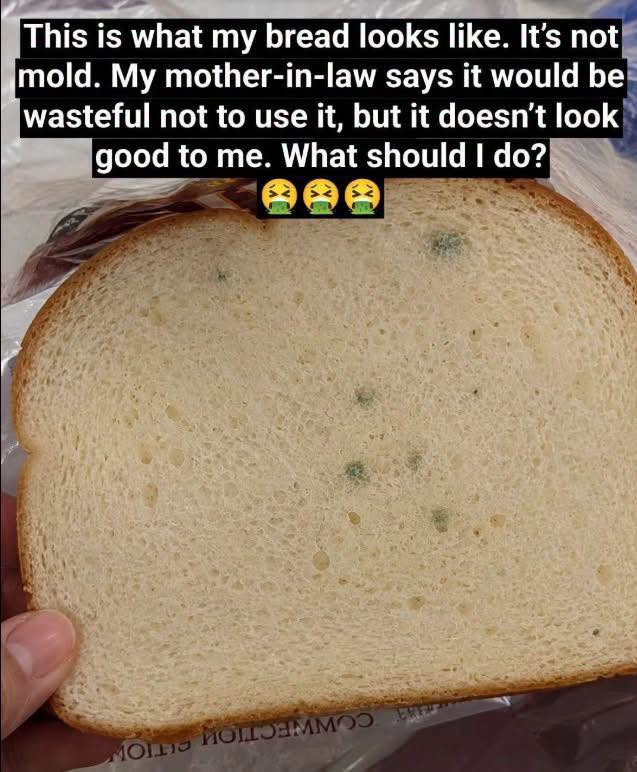
You pull out a slice of bread, and there it is: a few small, greenish-blue spots. Your mother-in-law says it’s fine and would be wasteful to throw away. But your gut tells you something isn’t right.
This is a common dilemma, and the answer is clear: if you see mold, throw it out. Here’s why. 👇
Disclaimer: This post is for informational purposes only and is not a substitute for professional medical advice. When in doubt, throw it out.
🔬 Why You Should Never Eat Moldy Bread
1. Mold is a fungus — and it can be dangerous. Mold grows in the form of a network of tiny, thread-like roots called hyphae. What you see on the surface (the green or blue spots) is just the “flower” of the mold. The roots have already spread deep into the bread, even if you can’t see them.
2. Mycotoxins are the real danger. Many types of mold produce mycotoxins, which are toxic compounds. These toxins can cause allergic reactions, respiratory problems, and in severe cases, long-term health issues.
3. You can’t just cut off the moldy part. Unlike hard cheeses or firm fruits, bread is soft and porous. The mold’s roots can spread throughout the entire slice or loaf. Cutting off the visible mold does not remove the invisible roots or the toxins.
4. The “smell test” doesn’t work. Mold doesn’t always smell bad. By the time you smell it, the mold has already spread extensively.
⚠️ What to Do With Moldy Bread
Throw it away. Do not compost it, as mold spores can spread.
Do not feed it to pets. Mycotoxins can be harmful to animals too.
Check the rest of the loaf. If one slice is moldy, the entire loaf is likely contaminated. Throw it out.
Prevent future mold: Store bread in a cool, dry place, or freeze it if you won’t eat it within a few days.
❓ Frequently Asked Questions
Is it safe to eat bread with a little mold? No. Even a small amount of visible mold means the entire loaf is likely contaminated with invisible roots and potential mycotoxins.
Can I just cut off the moldy part? No. The mold’s roots have already spread through the bread, even if you can’t see them.
What happens if I eat moldy bread? You may experience allergic reactions, digestive issues, or food poisoning. In severe cases, mycotoxins can cause long-term health problems.
Does toasting kill mold? No. Toasting may kill the mold itself, but it does not destroy the mycotoxins. The bread is still unsafe to eat.
What if only one slice is moldy? The entire loaf is likely contaminated. Throw it out.
Can I feed moldy bread to birds or pets? No. Mycotoxins can be harmful to animals too.
How do I prevent bread from molding? Store it in a cool, dry place, keep it in an airtight container, or freeze it. Avoid storing it in a warm, humid environment.
What if I’m not sure if it’s mold? If you’re unsure, it’s safer to throw it out. The risk isn’t worth it.
What does mold on bread look like? It can be green, blue, white, or black, and often appears as fuzzy spots or patches.
Is it safe to eat bread that smells musty? No. A musty smell is a sign of mold growth. Throw it out.