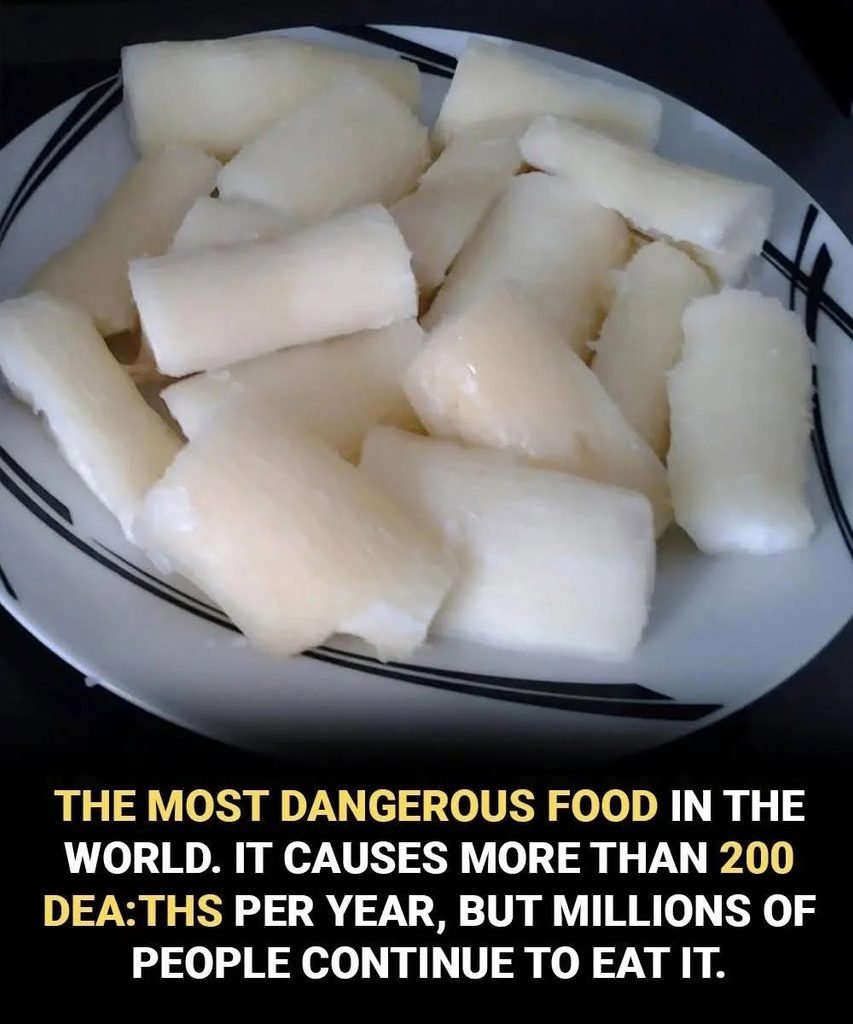
Cassava is a root vegetable native to South America but now grown throughout the tropics . It’s a major source of carbohydrates for millions of people in Africa, Asia, and Latin America.
The danger comes from naturally occurring compounds called cyanogenic glycosides. When the root is eaten raw or improperly prepared, these compounds can release hydrogen cyanide, which is toxic .
Sweet vs. Bitter Cassava:
Sweet cassava – Contains low levels of cyanogenic compounds and is generally safe when peeled and cooked.
Bitter cassava – Contains much higher levels and must be carefully processed (soaked, fermented, and cooked) to be safe.
The “200 deaths per year” claim: This number refers to cases of konzo, a paralytic disease linked to chronic consumption of improperly processed bitter cassava, as well as acute cyanide poisoning. While the exact number varies by year and region, the risk is real when cassava is not prepared correctly .
Important: Cassava is not inherently “poisonous” — it is a valuable food source that has been safely consumed for centuries when traditional processing methods are followed.
🛒 Ingredients
1–2 lbs fresh cassava root (yuca) 🍠
Water for boiling 💧
Salt to taste 🧂
👩🍳 Instructions
How to Prepare Cassava Safely:
Peel the cassava completely, removing the thick brown skin and the inner pinkish layer.
Cut the cassava into manageable chunks and remove the fibrous core.
Soak the pieces in water for at least 24 hours (for bitter varieties), changing the water several times.
Boil the cassava in fresh, salted water for 25 minutes until tender .
Drain the water — do not reuse it for other purposes.
Serve as a side dish, or use in curries and stews .
Pro Tip: Always buy cassava from a reputable source and follow traditional preparation methods. When in doubt, ask someone experienced in preparing it.
❓ Frequently Asked Questions
Is cassava really the most dangerous food in the world? It can be dangerous if eaten raw or improperly processed due to cyanide compounds. However, it is a safe and nutritious staple when prepared correctly .
What are the symptoms of cassava poisoning? Symptoms include dizziness, headache, nausea, vomiting, and in severe cases, difficulty breathing and paralysis.
Is it true that cassava causes over 200 deaths per year? Some estimates link improperly processed cassava to cases of konzo and cyanide poisoning. The risk is highest in regions where bitter cassava is a dietary staple and processing methods are inadequate.
What is the difference between sweet and bitter cassava? Sweet cassava has low cyanide levels and is safe to eat after peeling and cooking. Bitter cassava has high levels and requires extensive processing.
Can I eat cassava raw? No — raw cassava should never be eaten. It must be peeled and thoroughly cooked to remove toxins.
How do you know if cassava is safe to eat? Safe cassava is firm, free of mold, and has no bitter taste after cooking. If it tastes bitter, do not eat it.
What is konzo? Konzo is a paralytic disease caused by chronic consumption of improperly processed bitter cassava. It is irreversible.
Can cassava be healthy? Yes — when properly prepared, cassava is a good source of carbohydrates, vitamin C, and fiber.
What is the recipe for boiled cassava? Peel, cut, and boil the cassava in salted water for 25 minutes until tender. Serve as a side dish or use in stews .